Of mid-market ERP users require at least some customization beyond out-of-the-box configuration to match their actual workflows (Panorama Consulting, 2024 ERP Report)
2.5x
Higher ROI reported by companies that customize ERP to industry-specific workflows vs. those running standard out-of-the-box deployments (Nucleus Research, 2025)
11M+
Businesses worldwide run Odoo, with 12% annual new-user growth driven by manufacturing, retail, and services verticals requiring flexible customization (Odoo, 2024)
25+
Certified Odoo experts at BiztechCS across 19+ years of enterprise ERP delivery, with deep module development experience in manufacturing, healthcare, F&B, and retail verticals
Most ERP software is designed around a generalized business model that covers the common workflow. It handles almost none of the edge cases that actually drive cost and delay in your specific operation. The gap between what the standard platform does and what your process requires is not a software failure. It is a gap that Odoo ERP customization is built to close.
The numbers are consistent on this. Panorama Consulting’s 2024 ERP Report found that 70% of mid-market ERP users require at least some customization beyond standard configuration to match their actual workflows [1]. In industries with complex regulatory requirements, multi-tier product structures, or non-standard billing models, that number climbs further. Businesses in those categories that run Odoo without customization typically configure their operations around the software’s defaults rather than the reverse. The efficiency they leave on the table is measurable.
This article covers what Odoo ERP customization actually involves at the technical level, which five verticals extract the most value from Odoo customization services, and what a rigorous evaluation of a customization partner looks like before you commit a development budget.
The term is used loosely enough that the distinction is worth making precisely: configuration is not customization. Configuration uses Odoo’s built-in tools to adjust behaviour without writing code. Enabling modules, defining approval rules, setting up pricing strategies, and configuring reorder logic: all of this lives at the configuration layer. A large share of what most businesses need from Odoo is achievable at this layer, and starting with configuration before evaluating customization is the correct sequence.Odoo ERP customization starts where configuration ends. It means modifying or extending Odoo’s behaviour through code: building new Python modules in the standard Odoo 17 or Odoo 18 module structure, extending existing models with additional fields and business logic, creating industry-specific reports using the QWeb report engine, or connecting external systems through Odoo’s JSON-RPC and REST APIs. The practical output is that Odoo behaves in a way that the out-of-the-box platform cannot deliver.
Odoo ERP customization starts where configuration ends. It means modifying or extending Odoo’s behaviour through code: building new Python modules in the standard Odoo 17 or Odoo 18 module structure, extending existing models with additional fields and business logic, creating industry-specific reports using the QWeb report engine, or connecting external systems through Odoo’s JSON-RPC and REST APIs. The practical output is that Odoo behaves in a way that the out-of-the-box platform cannot deliver.
Four technical layers exist in practice. Model and field extension adds custom data fields to existing Odoo records without breaking core module behaviour. This uses the standard `_inherit` mechanism to extend the `mrp.production` or `sale.order` model. Business logic development writes Python code that enforces rules the standard module does not, such as multi-level approval chains or industry-specific pricing calculations triggered on the `onchange` event. UI and reporting modifies Odoo’s views using the XML view inheritance system, builds custom dashboards, or generates reports with data structures the standard QWeb templates do not expose. Integration connects Odoo to external platforms (marketplaces, logistics providers, regulatory reporting systems) through REST APIs or xmlrpc-based custom connectors.
One operational reality distinguishes customization from configuration: custom modules require maintenance at each Odoo version upgrade. An upgrade from Odoo 17 to Odoo 18 requires each custom module to be reviewed against API changes in the new version. This cost is real and should be factored in from the start. Custom Odoo development scoped to genuine workflow gaps pays back the maintenance cost; speculative customization that replicates what configuration already handles does not.
Manufacturing: BOM Variants, MRP Rules, and Quality Control Checkpoints
Manufacturing is the vertical where Odoo ERP customization generates the most quantifiable return. The reason is structural: manufacturing workflows contain the most configuration-inaccessible complexity. Standard Odoo 17 Manufacturing handles bill of materials, work orders, routing, and MRP scheduling well. It does not handle the variant logic, exception rules, and quality enforcement that mid-market manufacturers actually operate.
BOM variant customization is the most common manufacturing development request. Manufacturers producing products with high numbers of configurable variants (different material grades, tolerances, finish options, dimensional specifications) need BOM logic the standard product configurator cannot generate. Odoo module development for configurable BOMs typically involves a custom module that reads variant parameters from the sale order line, computes the correct component list and routing from a rules matrix, and creates the manufacturing order with the right BOM structure automatically. The practical gain is that production planners stop manually selecting the BOM on every order. For a manufacturer processing hundreds of configured orders per week, that is not a convenience feature.
MRP rule customization addresses the gap between Odoo’s standard replenishment logic and the actual procurement strategy a manufacturer operates. Vendor-managed inventory agreements, consignment stock, and multi-site replenishment with priority rules are not achievable through the standard `orderpoint` reorder rules or the MTO route alone. A custom procurement rule module that encodes these strategies reduces manual buyer intervention and procurement errors at the same time.
Quality control enforcement is the third high-value manufacturing customization area. Odoo’s Quality module supports checkpoints on production operations. The inspection forms, pass/fail criteria, and escalation paths that regulated manufacturers require in aerospace, automotive, and industrial goods verticals need custom development. Building custom quality control forms through Odoo module development, linked to the routing operation with a mandatory completion gate before the next work order starts, enforces quality rules at the system level. The alternative is enforcing them through supervisor discipline, which is inconsistent by definition.
Retail and eCommerce: Product Configurators, B2B Portals, and Loyalty Programs
Retail and eCommerce operations hit standard Odoo platform limits quickly when they run non-standard catalog structures, B2B customer hierarchies, or loyalty mechanics that require evaluation logic beyond what the standard loyalty.program module provides.
Product configurator customization is common in retail verticals selling items with high option counts: furniture with fabric, finish, and dimension combinations; apparel with size, color, and material matrices; industrial supplies with technical specification choices that affect price and lead time. Odoo’s standard variant architecture handles combinations to a point. Businesses with product matrices running to several thousand effective SKUs, or with real-time pricing that varies by configuration against a cost formula, require custom Odoo development on the configurator. The typical implementation involves a custom rules engine that computes price, validates the option combination for manufacturability, and generates the correct product reference at order entry without requiring the salesperson to look up a price sheet.
B2B portal customization addresses the structural gap between Odoo’s standard `portal` module and what wholesale buyers require. Negotiated price lists by customer, purchase limits by product category, order approval chains before confirmation, and account-level credit balance visibility are commercial relationship requirements the standard portal does not implement. Custom Odoo development for the B2B portal extends the standard portal view with customer-specific pricing display, an order approval workflow linked to the customer’s credit limit, and account statement access. Sales teams spend less time manually managing inbound orders; buyers get a self-service experience that reflects their actual commercial terms.
Loyalty and promotion logic customization handles the gap between what Odoo’s built-in loyalty rules can evaluate and what a multi-tiered or coalition program requires. Tier status computed from rolling 12-month spend, partner redemption across a brand coalition, and promotional mechanics tied to purchase history attribute combinations all need evaluation logic the standard rules engine can’t handle. A custom rule evaluation module reads data from Odoo POS, eCommerce, and CRM at the point of transaction and computes the correct reward or promotion in real time.
Professional Services: Time Tracking, Project Billing, and Resource Planning
Professional services firms (management consulting, engineering, IT services, creative agencies) use Odoo Project and Timesheets as their operational backbone. The standard modules handle project creation, task management, and time recording reliably. The customization demand concentrates in billing logic, resource capacity, and profitability reporting.
Project billing customization is the most frequent professional services development request. Most services firms run multiple contract types simultaneously: fixed-fee engagements, time-and-materials contracts, monthly retainers, and milestone-based billing all coexisting in the same client portfolio. Odoo’s standard billing engine requires manual invoice creation for contract types it does not automate natively. Custom Odoo development for billing automation builds a module that reads the contract type from the `project.project` record, evaluates the applicable billing condition (milestone completion status, retainer cycle date, or T&M hours logged in the period) and generates the invoice with correct line items without accounts manager intervention. For a firm with 30 or 40 active client projects in a billing cycle, this is hours of work per month that no longer happens manually.
Resource planning customization closes the gap between Odoo’s task-level project view and the capacity view a services firm’s resourcing manager actually needs. Standard Odoo Project shows which tasks are assigned to which team members. It doesn’t produce a forward-looking utilization view across concurrent projects. It won’t surface conflicts where the same person is allocated beyond 100% capacity over overlapping timelines, or flag booking gaps where capacity exists but isn’t committed. A custom resource planning module built on the project.task and account.analytic.line data model can generate this view and give the resourcing manager the information needed to make allocation decisions before a staffing gap becomes a delivery commitment problem.
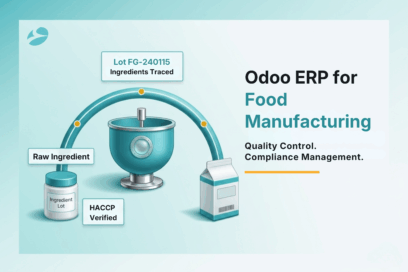
Food and Beverage: Lot Traceability, Shelf Life Management, and Compliance Reporting
Food and beverage manufacturers operate under regulatory frameworks that require complete traceability from raw material receipt to finished goods shipment. Odoo’s inventory and manufacturing modules support lot tracking and expiry date management. The traceability reporting and compliance documentation that food manufacturers need for regulatory audits and retailer requirements, however, consistently requires Odoo customization services that extend the standard lot traceability functions.
Standard lot traceability in Odoo covers the forward and backward trace through the `stock.lot` model: given a finished goods lot, which raw material lots were consumed; given a raw material lot, which finished goods lots received it. Custom Odoo module development for food manufacturers extends this trace report in the direction audit and compliance requirements demand. One-click trace documents formatted to retailer specification, automated traceability package generation at goods receipt, and electronic submission connectors to food safety reporting systems are not available in the standard module and are not achievable through configuration.
Shelf life management customization closes the gap between Odoo’s standard expiry enforcement and the minimum remaining shelf life requirements that retailer contracts impose. Standard Odoo blocks stock with passed expiry dates from sale. It does not evaluate remaining shelf life against a contracted minimum at the point of order picking. A custom rule module that reads the minimum remaining shelf life requirement from the res.partner or product.template record and enforces it during the stock.picking outbound workflow is Odoo module development work, not a configuration option. Food manufacturers selling to major retail chains without this module risk shipping lots that violate their customer contracts.
Compliance reporting for food safety certifications varies by geography and scheme. Custom Odoo development builds the required report structure against the Odoo data model once, and the compliance team generates the required format at audit time rather than extracting and reformatting data manually each cycle.
Healthcare and Life Sciences: Appointment Workflows, Document Control, and Compliance Modules
Healthcare organizations and life sciences companies using Odoo face the most demanding regulatory environment of any vertical that runs the platform. Standard Odoo covers the operational layer (inventory, purchase, accounting, project management), but clinical workflow, document control, and compliance tracking requirements need purpose-built modules.
Appointment and scheduling workflow customization is common in healthcare organizations running operational and administrative Odoo deployments. Custom Odoo development for appointment management typically builds a scheduling interface using Odoo’s calendar.event model as the base. The module adds patient record linkage, appointment type configuration with associated resource requirements, automated reminder generation through the mail.template system, and integration with external clinical record systems through a custom API connector. Odoo handles the operational and administrative layer. The custom integration layer connects it to the clinical record system without requiring staff to maintain both environments separately.
Document control customization covers the version management, approval workflow, and distribution tracking that ISO 13485, FDA 21 CFR Part 11, and similar frameworks require. Standard Odoo Documents supports file storage and basic approval flows. Life sciences organizations need a document control module that enforces sequential version numbering, requires multi-level review and approval with electronic signature capture linked to the user’s Odoo login, and tracks distribution to named personnel with acknowledgment confirmation. It also generates the audit trail reports regulators review. This is a high-value Odoo module development investment. The alternative, a standalone document control system operating parallel to Odoo, creates a data synchronization problem and doubles user system access requirements.
Compliance tracking modules for corrective and preventive actions, non-conformances, and supplier qualification status bring quality management functions inside Odoo rather than running them in a separate QMS. The value of this architecture is data linkage: a CAPA raised against a production non-conformance can be linked directly to the mrp.production order, the stock.lot involved, and the res.partner supplier record without any cross-system manual reference. Custom Odoo development builds these linkages as part of the module design, and the compliance team works within the same environment as operations.
How to Evaluate an Odoo Customization Partner
Selecting an Odoo implementation partner for a customization engagement determines whether the development investment produces a stable, maintainable system or a set of technical debt that creates problems at the next upgrade cycle. Three evaluation dimensions separate capable teams from teams that look capable in a proposal.
The first is vertical depth. An Odoo customization services provider with genuine manufacturing experience describes BOM variant logic, work order enforcement, and production cost variance handling in specific Odoo terms. They reference the mrp.bom and mrp.production models, explain how they use `_inherit` to extend standard behaviour, and can describe a customization they delivered that solved a real workflow problem rather than a generic capability statement. Ask the partner to walk through a customization they built in your vertical. Vague answers about “extensive Odoo experience” without module-specific detail are a clear signal.
The second is upgrade methodology. An experienced Odoo implementation partner maintains documentation for every custom module delivered: the business purpose, the Odoo models extended, the methods overridden, and the test cases used at go-live. When the business moves from Odoo 17 to Odoo 18, that documentation drives the migration analysis and scopes the upgrade work before the project starts. A partner who cannot explain how they handle custom module migration at version upgrades is creating future upgrade surprises.
The third is scope discipline. The strongest Odoo customization services providers push back on development requests that configuration can satisfy. A partner who proposes custom code for every workflow requirement without evaluating the configuration alternative is generating unnecessary upgrade risk. Ask directly: for the workflows I have described, which would you solve with configuration and which need custom development, and why? The answer tells you more about technical judgment than any reference check.
Concrete red flags include vague language about Odoo module architecture, no prior custom module development examples in your vertical, and proposals that do not distinguish configuration tasks from custom development in the timeline or budget.
What is the difference between Odoo customization and Odoo configuration?
Configuration adjusts Odoo’s built-in settings and workflows without code. Customization builds or modifies code to extend Odoo’s behaviour beyond what configuration delivers. Configuration is upgrade-compatible by design. Custom modules require individual review and update at each Odoo version upgrade, from Odoo 17 to 18, for example. The decision to customize rather than configure should be driven by a genuine workflow gap that configuration cannot close.
2
How much does Odoo ERP customization cost?
Light customization runs $2,000 to $8,000. A medium-scope custom module runs $8,000 to $30,000. Complex, multi-module custom development for a vertical-specific workflow can run $30,000 to $100,000 and above. Development hours, integration complexity, and the number of Odoo models the custom code extends drive the cost. The upgrade maintenance cost over the life of the deployment should be included in the total cost of ownership evaluation.
3
How long does Odoo ERP customization take?
A focused custom module with clear, finalized requirements typically takes four to eight weeks from specification to deployment. A complex multi-module engagement typically runs eight to sixteen weeks. Timeline reliability correlates directly with how completely the target workflow is documented before development starts. Requirements changes mid-development extend every timeline.
4
What are the risks of over-customizing Odoo?
The primary risk is version upgrade cost. Every custom module must be reviewed and updated when upgrading Odoo versions. A secondary risk is dependency fragility: custom code that overrides rather than extends core Odoo models using `_inherit` can break when Odoo releases a patch update. The mitigation is to limit custom development to the specific workflow gaps that configuration genuinely cannot address, and to build every custom module using proper Odoo module architecture rather than patching core files.
5
Does Odoo customization affect upgrade compatibility?
Standard configuration is upgrade-compatible. Custom modules require individual review at each major version upgrade. An experienced Odoo implementation partner maintains module documentation and manages the migration analysis as a scoped engagement, so the upgrade cost is known in advance. Ask any customization partner how they handle module migration before the engagement starts, not after the first upgrade cycle arrives.
Uttam Jain is a Lead Odoo Consultant at Biztech Consulting and Solutions with over 13 years of extensive experience in IT Software and Solution Selling across the United States, the Middle East, and India. As an Odoo ERP certified consultant, Uttam specializes in digital transformation, helping businesses streamline their operations through innovative Odoo implementations. He has successfully managed ERP projects for diverse industries including Printing, Modular Furniture Industry, Real Estate, Property Management, Education, Hospitality, and Government sectors. Passionate about building strategic partnerships, Uttam consistently drives business growth and efficiency by delivering tailored ERP solutions.

 23
23 5 min read
 99
99