
Accelerate Digital Transformation with our Full Stack Development Services
Turn ideas into reality with robust end-to-end development solutions. Our full stack web development service delivers smooth, high-performance applications that meet your business needs. As a full stack development company, we build scalable, secure, future-ready solutions that drive growth and innovation.

50+
Products Engineered
500+
Successful Consultations
100+
Expert Developers
30+
Products Re-engineered




Drive Growth with Cutting-Edge Solutions from Our Full Stack Development Expertise
The demand for seamless, efficient digital solutions has never been higher, and businesses are feeling the pressure to deliver. Our full stack development solutions help you meet these challenges by providing comprehensive, end-to-end development services.
We combine expertise in both front-end and back-end technologies to create applications that are not only functional but also scalable and secure. By taking a holistic approach, we ensure that your solutions work flawlessly across all layers, from user interfaces to data management.
Our team works closely with you to understand your business goals and deliver results that drive growth. We focus on creating applications that are designed to evolve, keeping your business agile in a competitive market.
With our solutions, you can improve efficiency, enhance user experiences, and increase customer satisfaction. Our full stack development solutions are built to align with your long-term vision.
Let us help you take your business to the next level by building reliable and innovative digital solutions.







Our Comprehensive Full Stack Web Development Service
Our end-to-end solutions cover everything from stunning user interfaces to seamless backend functionality, a powerful digital experience.
Our Comprehensive Full Stack Web Development Service
Our end-to-end solutions cover everything from stunning user interfaces to seamless backend functionality, a powerful digital experience.

Front End Development
We create beautiful and responsive user interfaces that keep users engaged. Our front-end development ensures fast loading times, smooth navigation and user experience.

API Development
We build secure and scalable APIs that connect your applications seamlessly. Our APIs ensure smooth communication between different systems, more functionality and efficiency.

Full Stack eCommerce Development
We develop powerful eCommerce platforms with intuitive design and secure payment gateways. Our solutions handle high traffic loads, a seamless shopping experience for customers.

Full Stack CMS Development
We create custom CMS solutions that are easy to manage and scale as your business grows. Our CMS platforms offer flexibility to update content without technical expertise.

Full Stack Integration
We integrate third-party services, databases and tools to enhance your system’s capabilities. Our integrations ensure smooth data flow and operational efficiency.

Real-time Application Development
We develop real-time applications that keep users engaged with instant updates and interactions. Whether it’s live chat, notifications or analytics, our solutions deliver real-time performance without delay.
Build Future-Ready Web & Software Solutions – Get a Free Consultation
Let’s make your vision a reality. Book your free consultation today!
Why Top Enterprises Rely on BiztechCS for Full Stack Development Services?
BiztechCS delivers innovative, tailored full-stack solutions that drive enterprise success with efficiency and expertise.

Predictive Scalability
At BiztechCS, we don’t just build applications—we design solutions with future growth in mind. Our team uses predictive modeling techniques to ensure that your full-stack development is not only optimized for today’s needs but also scalable for tomorrow’s demands. This forward-thinking approach guarantees that your application can evolve seamlessly without costly overhauls or major redesigns.
- Future-proof architecture for seamless growth
- Scalable infrastructure that adapts to demand
- Continuous performance optimization for evolving needs

Emerging Tech Integration
BiztechCS stands at the intersection of innovation and application. We integrate cutting-edge technologies like AI, machine learning, and blockchain into our full-stack solutions, providing clients with smart applications that leverage next-gen capabilities. This ensures that enterprises aren’t just staying ahead of the curve but are building the technology of tomorrow today.
- Smart applications with AI and ML capabilities
- Blockchain-enabled security for modern applications
- Cutting-edge tech adoption to stay ahead of the curve

End-to-End Automation
Efficiency and speed are critical for enterprises, and we prioritize this with our advanced automation frameworks. From code deployment to quality assurance, BiztechCS uses intelligent automation tools that speed up the development lifecycle, reduce errors, and ensure faster time-to-market without compromising on quality or functionality.
- Automated workflows for faster development cycles
- Quality assurance through automated testing
- Continuous integration and deployment for rapid delivery

Seamless User Experience
- Unified design across all touchpoints
- Cross-functional collaboration for cohesive interfaces
- Optimized performance for consistent user satisfaction

Robust DevOps
We believe in building robust, fault-tolerant systems that withstand real-world challenges. BiztechCS incorporates advanced DevOps practices into our full-stack development, enabling continuous integration, constant monitoring, and quick issue resolution. This proactive approach ensures the reliability and performance of enterprise applications, even under high-demand conditions.
- Continuous monitoring for proactive issue resolution
- Automated deployments for rapid iteration
- Reliable, fault-tolerant systems for high-demand performance
Technology Stack
- AI Technologies
- Open Source
- Close Source
- Mobile
- Graphic Design
- Microsoft
- Integrations
- Database
- Testing and Automation


























































Industries We Serve
Combining our expertise with industry knowledge, we help businesses from different industries capitalize on digital technology and create stunning digital experiences.

Customer & Support

Customer Service

Insurance

Real Estate

Manufacturing

Retail & eCommerce

Marketing

Customer Relationship management

Travel & Hospitality

Healthcare

Life Science

Fintech

On-demand Services

IT & Software

Education
Words that make an impact







Fernando Delgado
CIO - El Camino Real Charter High School
We can always count on Team Biztech
"BiztechCS has helped us in many ways in the last 5-6 years. We have embarked on several ventures with different applications ranging from ERP to iOS apps to stand-alone applications for inventory management. Specifically, regarding Odoo development, they have helped us overcome many challenges. BiztechCS is very fast and responsive. They are really easy to talk to. We can always count on team BiztechCS in case of any issues. I have worked with them for many years and highly recommend BiztechCS."

Alexander
employee - BigFoot B.V
It was a pleasant journey, I am very happy with the results: Alexander
"I have known Biztech for about 10 years now. This year I had an idea, and my first thought was to ask BiztechCS to help me turn my idea into an app. The 3-month journey went by quickly as Team BiztechCS continually interacted with me to ensure the end product resonated with my vision. It is truly amazing to discover that we were on the same page and BiztechCS was efficiently able to build a unique app based on my requirements."

Alex Wrenn
Director - Essential Aids
They’ve got an experienced team and impressive communication skills: Alex Wrenn
"I wanted to avail myself of customized solutions for our store improvement. With the help of custom store solutions, we wanted to increase the number of satisfied customers and grow with current market trends. Biztech helped us with our website development, design, and eCommerce needs. They've got an experienced team, and I am impressed with their communication skills. I found Biztech very efficient and am pleased with how they handled things for us."

Adam Harvey
Co-founder and CEO of Proofed - Proofed Inc
Biztech felt more like an On-Shore team than an Off-Shore Team
"We’ve been working with BiztechCS for the last 7 years. We find that they are really good at ideation and coming up with new ideas when we face any problems. We have grown with them in the past 7 years, and hope to continue growing with them in the future. We highly recommend Biztech, they are very professional and have excellent technical skills and they felt more like an On-Shore team than an Off-Shore team."

Shamsul Duha
Ecommerce Head - Rocaba Group
Biztech’s expertise in ERP, Magento, and .NET helped us enter a new market: Shamsul Duha
"To meet the latest needs and expand our business further, we were looking to build an Ecommerce website for our products. We connected with Biztech, and they helped us with our website development. They are a partner aligned with what we have been trying to achieve regarding our business needs. With Biztech's expertise, we were able to enter a new market. I very much look forward to working with them in the future and highly recommend their services."

Robbert Morgan
CEO - Intervlag
I believe having Biztech on our side means we can grow faster and more efficiently: Robert Morgan
"We use Odoo ERP to manage operations more efficiently and maintain productivity in our company. Initially, we worked with other companies for our Odoo requirements, but we didn’t get the result that we were seeking. Finally, we entrusted BiztechCS with managing Odoo ERP for our company. BiztechCS understood our requirements aptly and helped us achieve the results that we were looking for. I found BiztechCS very different from other Odoo Developers. BiztechCS was very well-prepared for our needs and understood our requirements very well. I believe having BiztechCS on our side means we can grow faster and more efficiently."

Justin Loera
Director of SEO - Auto Insurance Centre
Quality work for the past 6 years, highly recommend Biztech for development and design: Justin Loera
"We have been working with Biztech for the past 6 years. I believe the work accomplished with BiztechCS has been quite good, and I appreciate team BiztechCS for their commitment to our requirements. BiztechCS has supported us whenever we had a requirement. I highly recommend BiztechCS for all types of project needs, from Code development to Design requirements and themes."

Tim
Creative Director - Balmond
Spot-on service, approachable team understanding for our critical eCommerce needs: Tim
"We wanted to go online to expand our market to the global level. We wanted a Magento store with a reliable shopping cart and a safe payment gateway for an easy and safe business transaction. And we got one with Biztech. After that, I worked with Biztech on a number of projects and was very satisfied with the work. I believe Biztech’s services are spot on and are also very approachable. I highly recommend Biztech for all types of website development and design needs."

Robert Boehmer
Chief Operations Officer - cliftons
Insights on BiztechCS by Robert Boehmer, Chief Operations Officer at Cliftons
“At Clifton's, we faced challenges with the standard calendaring solution provided by Microsoft, particularly with the volume of events we manage. We needed to find a faster, more stable solution that offered greater functionality to meet our needs. After engaging BiztechCS, they introduced us to their Calendar 365 product, which was an excellent fit. This solution has significantly improved our scheduling process, providing the required reliability and enhanced features.”
Success Stories of Digital Transformation Developed By BiztechCS
Our persistence and enthusiasm to work with technologies have helped us go above and beyond our client’s expectations. Here, explore many of our successful projects which digitally transformed businesses.

Shhh
HTML5 , Shopify
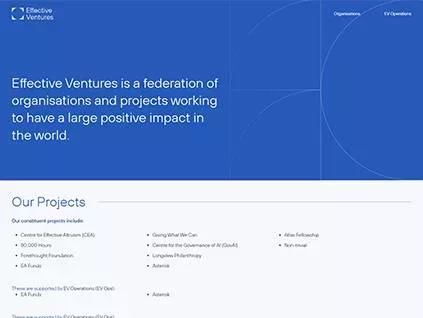
Effective Ventures
HTML5 , WordPress

Legal Network International
HTML5 , WordPress

Optimizing Field Operations with a Tailored Mobile App for Osho Chemical
Executive Summary Osho Chemical Industries Ltd, a prominent provider of agrochemicals and industrial solutions in Africa, faced challenges with manual workflows, inefficient customer assignments, and high...


Fueling OpsCTRL's Digital Transformation With Biztech: A Case Study on Enhanced Productivity
OpsCTRL is internationally renowned for its expertise in dynamic process modeling; especially for model-supported design of process control solutions. This project aimed to streamline their global operations,...

An ERP solution to manage school’s operations
Executive Summary Biztech, a renowned provider of technology solutions, undertook the task of restructuring the Magento website for El Camino Real Charter High School, a prominent educational institution...
Tech Updates from Team BiztechCS
At BiztechCS, we keep you at the edge of technology with the latest updates, news, and trends influencing the IT industry. Our blog has a unique approach and is well-researched to give you a fresh perspective on technology.

How Much Does It Cost To Build An AI App in 2026?
Introduction Creating an AI app in 2025 may prove to be quite challenging, though the process can be an exhilarating experience. The expense required to develop such an app depends...
25+ Profitable AI Business Ideas for 2026
Introduction AI is moving industries faster than ever, opening up new doors for startups and entrepreneurs. By 2025, AI-powered businesses will add over $15 trillion to the global economy....
Why AI Facial Recognition System is the Future of Cybersecurity?
Introduction Traditional security methods are finding it difficult to keep up with the increasing sophistication of cyber attacks. Facial recognition software driven by artificial intelligence...Key Advantages of Leveraging Full Stack Development Solutions
Our approach empowers businesses to enhance agility, streamline workflows, and create impactful digital experiences.

Faster Development Cycle
Full Stack development allows for streamlined workflows by enabling developers to handle both front-end and back-end tasks, reducing the time spent on handoffs and increasing overall project speed.

Cost Efficiency
By hiring a single team skilled in both front-end and back-end development, businesses can reduce the need for multiple specialized developers, cutting down on development costs without sacrificing quality.

Improved Communication and Collaboration
With Full-stack developers working across the entire tech stack, there is less need for inter-team communication, which leads to a more cohesive and collaborative development process.

Greater Flexibility in Scaling
Full-stack development offers the flexibility to scale both the front-end and back-end of applications simultaneously, ensuring smoother growth and adaptability as user needs and traffic increase.

Holistic Problem Solving
Full-stack developers can identify and solve issues across the entire application, ensuring more efficient troubleshooting and reducing the complexity of maintaining separate front-end and back-end teams.

Seamless User Experience
Full-stack developers have a comprehensive understanding of both user-facing and server-side processes, ensuring that the application is optimized for performance, security, and user experience across all layers.

Why Partner with BiztechCS for Full Stack Development Services?
Partnering with BiztechCS means innovative, efficient and scalable full-stack development solutions for your business.
- Expert Full-Stack Developers
- Custom Development Solutions
- Agile Development Process
- Cutting-Edge Technologies
- Scalable Architecture Design
- End-to-End Services
- Robust Security Measures
- Seamless Integration Support
- Timely Project Delivery
- 24/7 Technical Support
Full Stack Development Tailored for Agility and Innovation
Grow with full stack development services designed for quick deployment. We use the latest web technologies and agile approach to deliver faster, scalable, and smart solutions for you.
Let’s shape the digital future together!
Frequently Asked Questions
What are full stack development services?
Full stack development services involve building the complete scope of a web application — both the frontend that users interact with and the backend systems that handle data, business logic, and server operations. A full stack team handles everything from the user interface and client-side behaviour through to the API layer, database architecture, and deployment infrastructure.
This end-to-end approach means a single team is responsible for how the application looks, how it behaves, how data flows through it, and how it is hosted and maintained — rather than separating frontend and backend work across different teams or vendors.
What is the difference between front end, back end, and full stack development?
Frontend development focuses on what users see and interact with directly — the visual layout, navigation, forms, animations, and client-side behaviour of a web application. It typically uses technologies like HTML, CSS, and JavaScript frameworks such as React, Angular, or Vue.js.
Backend development handles the server-side logic that the user does not see — processing requests, managing databases, handling authentication, and executing business rules. It typically involves languages and frameworks like Node.js, Python, PHP, or .NET.
Full stack development covers both. A full stack developer or team can work across the entire application, which reduces the handoff complexity that occurs when separate frontend and backend teams need to coordinate closely on how data is structured and exchanged.
What technologies are typically used in full stack development?
The specific technologies depend on the project requirements and the team’s expertise. Common frontend technologies include React, Angular, and Vue.js. On the backend, Node.js, Python with Django or FastAPI, PHP with Laravel, and .NET are widely used. Databases include both relational options like PostgreSQL and MySQL and NoSQL options like MongoDB. Cloud platforms such as AWS, Azure, and Google Cloud handle deployment and infrastructure.
Popular full stack combinations include the MEAN stack (MongoDB, Express, Angular, Node.js), the MERN stack (MongoDB, Express, React, Node.js), and Django with React for Python-based backends. The right combination depends on the application’s performance requirements, the team’s experience, and the long-term maintenance considerations.
What types of applications can be built with full stack development?
Full stack development can produce virtually any type of web-based application. Common examples include SaaS platforms, eCommerce stores, enterprise web portals, content management systems, real-time applications like dashboards and collaborative tools, social platforms, marketplace applications, and API-driven systems that serve web and mobile frontends.
For startups building an MVP, full stack development is practical because a single team can move quickly across the entire product. For larger organizations, it enables faster iteration because the team understands the full system rather than only one layer of it.
How much do full stack development services cost?
Cost depends on the scope and complexity of the application — the number of features, the complexity of business logic, the number and depth of integrations, infrastructure requirements, and the level of ongoing support needed after launch.
A straightforward web application with standard functionality costs considerably less than a complex multi-tenant SaaS platform with real-time features, multiple third-party integrations, and enterprise security requirements. Because scope varies so significantly between projects, the most reliable path to an accurate estimate is a detailed requirements discussion before any development begins.
How long does full stack development typically take?
A focused application with well-defined requirements — such as an MVP or a single-purpose internal tool — can be built in 6 to 12 weeks. A more comprehensive application with complex business logic, multiple user roles, integrations, and custom design can take 4 to 8 months or longer.
Timeline is most influenced by how clearly requirements are understood at the start and how available decision-makers are to review and approve work during development. Projects where scope is clear and feedback is timely tend to deliver significantly faster than those where requirements evolve throughout the build.
Can full stack development handle both web and mobile applications?
Web-focused full stack development primarily covers browser-based applications, but the backend and API layer built for a web application can also serve a mobile application. A well-designed RESTful or GraphQL API is platform-agnostic — it can deliver data to a web frontend, an iOS app, and an Android app from the same backend.
For teams that want to share more code between web and mobile, frameworks like React Native allow the use of React knowledge and some shared business logic for native mobile development alongside a React web frontend, reducing the total development and maintenance effort.
Does full stack development include database design and optimization?
Yes. Database design is a foundational part of full stack development that significantly affects everything built on top of it. Poorly designed databases are one of the most common causes of performance problems in web applications — slow queries, data inconsistency, and difficulty scaling all typically trace back to decisions made in the data model.
Full stack teams handle schema design, indexing strategy, query optimization, and — for applications with growth expectations — planning for how the database will perform as data volumes and concurrent users increase. For applications migrating from an existing system, database migration planning is also part of the scope.
How does full stack development integrate with existing systems and third-party services?
Integration is typically handled through APIs — the full stack application either consumes third-party APIs to access external services or exposes its own APIs for other systems to connect to. Common integrations include payment gateways, authentication providers, CRM and ERP platforms, email and messaging services, analytics tools, and cloud storage.
Well-built integrations handle authentication securely, manage errors gracefully when external services are unavailable, and are structured so that changes to a third-party integration do not ripple unpredictably through the rest of the application. This last point — how integrations are architected — becomes increasingly important as the number of connected services grows.
What should a business look for when choosing a full stack development company?
The most important factors are demonstrated experience building applications of similar complexity and type, a clear process for requirements gathering and scope management, and transparency about how the project will be structured and communicated throughout.
Full stack development covers a lot of ground, and the quality of decisions made early — in data modeling, API design, and infrastructure planning — has a long-term impact on how maintainable and scalable the application is. A company that asks the right questions before writing any code, and that thinks about the full lifecycle of the application rather than just the initial build, is likely to deliver a more durable result than one focused primarily on speed of delivery.