
AI Development Company
As a leading AI ML development company, our prime focus is delivering AI/ML solutions that improve your operational efficiency, cost-effectiveness, and decision-making. For you, it translates to smarter operations, sustainable growth, and stronger business impact.

50+
Products Engineered
500+
Successful Consultations
100+
Expert Developers
30+
Products Re-engineered




Get Operational Efficiency with AI Development Solutions
As an experienced AI ML development company, our custom AI solutions address inefficiencies our custom AI solutions address inefficiencies by optimizing workflows, reducing errors, and streamlining operations. Through tailored AI Development solutions, we help businesses run smoothly while staying agile and competitive. Focused on key challenges of leadership, our solutions deliver actionable improvements that drive growth and smarter decisions.
Detect Risks Early with ML Development Services
Delays in spotting risks can lead to financial losses and setbacks. Traditional methods lack the speed and clarity needed at the leadership level. Our ML development services provide early visibility into threats by uncovering trends and anomalies in your data. This enables faster responses, minimizes damage, and supports informed decisions, enhancing business stability and profitability.
Achieve Smarter Operations and Sustainable Growth Through Our AI ML Development Solutions
Organizations today need more than just technology—they need AI that turns complexity into clarity. Our AI and ML services help businesses improve efficiency, enhance decision-making, and strengthen resilience by providing actionable insights into risks, trends, and anomalies.
Our AI ML development company address challenges like fragmented data and slow tool adoption with tailored AI strategies that optimize workflows, reduce errors, and streamline processes. Our solutions include predictive analytics, NLP, AI security, and data science—designed to integrate into existing systems for smarter and faster decisions seamlessly.
As your trusted AI development partner, we not only solve current challenges but build long-term advantages, enabling businesses to remain competitive, scale sustainably, and reduce risk. Through AI and ML, we turn data into intelligence and create measurable business impact.









Case-Studies for AI/ML Development We Have Built
Deep dive into the business problems we have solved through our tailor-made, industry-specific AI/ML solutions.
Case-Studies for AI/ML Development We Have Built
Deep dive into the business problems we have solved through our tailor-made, industry-specific AI/ML solutions.

Smart Inventory Forecasting
We help manufacturers and retailers predict material needs based on seasonality, sales patterns, and dealer inputs. This reduces shortages, avoids excess stock, and ensures smoother production cycles.

Predictive Maintenance for Machinery
By analyzing sensor and IoT data, we detect early signs of machine or equipment damage and potential failures. This allows you to schedule servicing in advance, reducing downtime and extending equipment life.

Student Performance Prediction
Educational institutions can identify students at risk of underperformance through attendance, participation, and grade patterns. This enables timely intervention to improve outcomes and reduce dropout rates.

Adaptive Test Generator
We design AI-driven tools that create assessments based on each student’s knowledge level. This helps schools and training providers deliver personalized learning that improves engagement and results.

Fraud Detection Models
Our solutions analyze financial transactions in real time to detect anomalies and unusual activity. This prevents fraudulent actions before they escalate, protecting revenue and ensuring compliance.

Credit Scoring Automation
We use alternative data to assess creditworthiness for borrowers with limited history. This speeds up approvals, expands lending opportunities, and lowers the risk of defaults.
Return Prediction AI
By analyzing order and return history, we predict which products are likely to come back. This allows you to adjust listings, improve product descriptions, or refine shipping policies to cut return costs.
Real-Time Fraud Detection in Claims
Insurance companies face heavy losses due to fraudulent claims. Our models flag irregularities at the point of submission, preventing up to 30% of payouts that would otherwise be lost.
Predictive Maintenance Optimization
Unplanned breakdowns disrupt production and inflate costs. Our AI models analyze machine logs and sensor streams to detect risks early, cutting downtime by up to 40%.
Dynamic Production Scheduling
Factories often struggle with overproduction, idle time, or late deliveries. We integrate demand forecasts with scheduling models, ensuring production matches real demand and reduces waste by up to 25%.
AI-Powered Solutions Just a Call Away
Technology Stack
- AI Technologies
- Open Source
- Close Source
- Mobile
- Graphic Design
- Microsoft
- Integrations
- Database
- Testing and Automation
































































Industries We Serve
Combining our expertise with industry knowledge, we help businesses from different industries capitalize on digital technology and create stunning digital experiences.

Customer & Support

Customer Service

Insurance

Real Estate

Manufacturing

Retail & eCommerce

Marketing

Customer Relationship management

Travel & Hospitality

Healthcare

Life Science

Fintech

On-demand Services

IT & Software

Education
Words that make an impact







Fernando Delgado
CIO - El Camino Real Charter High School
We can always count on Team Biztech
"BiztechCS has helped us in many ways in the last 5-6 years. We have embarked on several ventures with different applications ranging from ERP to iOS apps to stand-alone applications for inventory management. Specifically, regarding Odoo development, they have helped us overcome many challenges. BiztechCS is very fast and responsive. They are really easy to talk to. We can always count on team BiztechCS in case of any issues. I have worked with them for many years and highly recommend BiztechCS."

Alexander
employee - BigFoot B.V
It was a pleasant journey, I am very happy with the results: Alexander
"I have known Biztech for about 10 years now. This year I had an idea, and my first thought was to ask BiztechCS to help me turn my idea into an app. The 3-month journey went by quickly as Team BiztechCS continually interacted with me to ensure the end product resonated with my vision. It is truly amazing to discover that we were on the same page and BiztechCS was efficiently able to build a unique app based on my requirements."

Alex Wrenn
Director - Essential Aids
They’ve got an experienced team and impressive communication skills: Alex Wrenn
"I wanted to avail myself of customized solutions for our store improvement. With the help of custom store solutions, we wanted to increase the number of satisfied customers and grow with current market trends. Biztech helped us with our website development, design, and eCommerce needs. They've got an experienced team, and I am impressed with their communication skills. I found Biztech very efficient and am pleased with how they handled things for us."

Adam Harvey
Co-founder and CEO of Proofed - Proofed Inc
Biztech felt more like an On-Shore team than an Off-Shore Team
"We’ve been working with BiztechCS for the last 7 years. We find that they are really good at ideation and coming up with new ideas when we face any problems. We have grown with them in the past 7 years, and hope to continue growing with them in the future. We highly recommend Biztech, they are very professional and have excellent technical skills and they felt more like an On-Shore team than an Off-Shore team."

Shamsul Duha
Ecommerce Head - Rocaba Group
Biztech’s expertise in ERP, Magento, and .NET helped us enter a new market: Shamsul Duha
"To meet the latest needs and expand our business further, we were looking to build an Ecommerce website for our products. We connected with Biztech, and they helped us with our website development. They are a partner aligned with what we have been trying to achieve regarding our business needs. With Biztech's expertise, we were able to enter a new market. I very much look forward to working with them in the future and highly recommend their services."

Robbert Morgan
CEO - Intervlag
I believe having Biztech on our side means we can grow faster and more efficiently: Robert Morgan
"We use Odoo ERP to manage operations more efficiently and maintain productivity in our company. Initially, we worked with other companies for our Odoo requirements, but we didn’t get the result that we were seeking. Finally, we entrusted BiztechCS with managing Odoo ERP for our company. BiztechCS understood our requirements aptly and helped us achieve the results that we were looking for. I found BiztechCS very different from other Odoo Developers. BiztechCS was very well-prepared for our needs and understood our requirements very well. I believe having BiztechCS on our side means we can grow faster and more efficiently."

Justin Loera
Director of SEO - Auto Insurance Centre
Quality work for the past 6 years, highly recommend Biztech for development and design: Justin Loera
"We have been working with Biztech for the past 6 years. I believe the work accomplished with BiztechCS has been quite good, and I appreciate team BiztechCS for their commitment to our requirements. BiztechCS has supported us whenever we had a requirement. I highly recommend BiztechCS for all types of project needs, from Code development to Design requirements and themes."

Tim
Creative Director - Balmond
Spot-on service, approachable team understanding for our critical eCommerce needs: Tim
"We wanted to go online to expand our market to the global level. We wanted a Magento store with a reliable shopping cart and a safe payment gateway for an easy and safe business transaction. And we got one with Biztech. After that, I worked with Biztech on a number of projects and was very satisfied with the work. I believe Biztech’s services are spot on and are also very approachable. I highly recommend Biztech for all types of website development and design needs."

Robert Boehmer
Chief Operations Officer - cliftons
Insights on BiztechCS by Robert Boehmer, Chief Operations Officer at Cliftons
“At Clifton's, we faced challenges with the standard calendaring solution provided by Microsoft, particularly with the volume of events we manage. We needed to find a faster, more stable solution that offered greater functionality to meet our needs. After engaging BiztechCS, they introduced us to their Calendar 365 product, which was an excellent fit. This solution has significantly improved our scheduling process, providing the required reliability and enhanced features.”
Success Stories of Digital Transformation Developed By BiztechCS
Our persistence and enthusiasm to work with technologies have helped us go above and beyond our client’s expectations. Here, explore many of our successful projects which digitally transformed businesses.

Shhh
HTML5 , Shopify
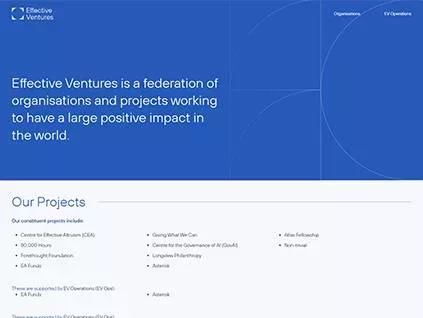
Effective Ventures
HTML5 , WordPress
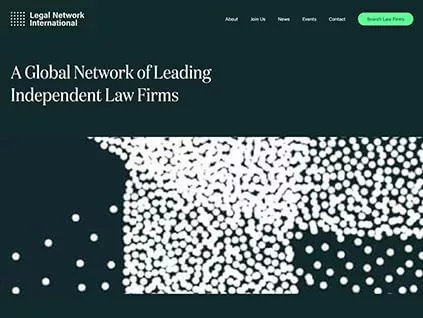
Legal Network International
HTML5 , WordPress

Optimizing Field Operations with a Tailored Mobile App for Osho Chemical
Executive Summary Osho Chemical Industries Ltd, a prominent provider of agrochemicals and industrial solutions in Africa, faced challenges with manual workflows, inefficient customer assignments, and high...


Fueling OpsCTRL's Digital Transformation With Biztech: A Case Study on Enhanced Productivity
OpsCTRL is internationally renowned for its expertise in dynamic process modeling; especially for model-supported design of process control solutions. This project aimed to streamline their global operations,...

An ERP solution to manage school’s operations
Executive Summary Biztech, a renowned provider of technology solutions, undertook the task of restructuring the Magento website for El Camino Real Charter High School, a prominent educational institution...
Tech Updates from Team BiztechCS
At BiztechCS, we keep you at the edge of technology with the latest updates, news, and trends influencing the IT industry. Our blog has a unique approach and is well-researched to give you a fresh perspective on technology.

How Much Does It Cost To Build An AI App in 2026?
Introduction Creating an AI app in 2025 may prove to be quite challenging, though the process can be an exhilarating experience. The expense required to develop such an app depends...
25+ Profitable AI Business Ideas for 2026
Introduction AI is moving industries faster than ever, opening up new doors for startups and entrepreneurs. By 2025, AI-powered businesses will add over $15 trillion to the global economy....
Why AI Facial Recognition System is the Future of Cybersecurity?
Introduction Traditional security methods are finding it difficult to keep up with the increasing sophistication of cyber attacks. Facial recognition software driven by artificial intelligence...Maximize Business Success with Expert AI/ML Development Services
An experienced AI/ML development company enhances your business performance by integrating intelligent automation, data-driven insights, and customer-centric AI strategies into your business plans through continuous innovation.

Understand Your Audience with AI-Powered Insights
AI and ML solutions enable businesses to analyze vast amounts of customer data, identifying behavior patterns and preferences with precision. By leveraging advanced analytics, you can tailor your products and services to meet customer expectations, creating personalized and seamless experiences.

Stay Competitive with Predictive Intelligence
AI-driven insights give you a strategic advantage by anticipating market trends and customer demands. Machine learning algorithms can continuously adapt to new data, allowing you to refine your strategies and stay ahead of competitors. With expert AI/ML development, you can future-proof your business.

Optimize Business Focus with Smart Automation
Outsourcing AI/ML development allows you to concentrate on your core business functions while automation takes care of repetitive tasks. Intelligent systems can streamline processes, enhance productivity, and free up valuable time for innovation and growth.

Strengthen Brand Engagement with AI-Powered Interactions
AI technology enhances customer engagement through chatbots, virtual assistants, and personalized recommendations. Businesses can use AI-driven platforms to foster deeper relationships with customers, respond dynamically to their needs, and create memorable brand experiences.

Make Smarter Decisions with AI-Driven Analytics
AI-powered solutions provide clear insights into operational costs, project feasibility, and performance metrics. Instead of relying on guesswork, businesses can make informed decisions based on real-time data, ensuring efficiency and maximizing outcomes.

Achieve Long-Term Growth with High ROI
While AI/ML implementation requires an initial investment, the long-term benefits—automation, data-driven decision-making, enhanced customer satisfaction, and predictive analytics—significantly outweigh the costs. Partnering with AI/ML experts ensures scalable, high-performing solutions that deliver sustainable returns.
Unlock the full potential of AI/ML technology and accelerate your business growth with expert-driven solutions. The future of innovation starts today!

Your Trusted AI ML Development Company
We have a proven track record of helping companies from different verticals navigate digital platforms. We can help you, too, with our engineering IT services.
- Product Experts
- On-demand Scalability
- Flexible Engagement Models
- Cost-Effective Solution
- On-time Delivery
- Agile Methodology
- Code Authorization
- Streamlined Management
- 100% Customer Satisfaction
- 24*7 Support and Maintenance
AI & ML Solutions Tailored for Speed and Innovation
Transform your business with intelligent, future-ready AI/ML solutions designed for rapid deployment. Our expertise in cutting-edge machine learning models and data-driven insights ensures faster time-to-market and smarter decision-making.
Let’s build the future together!
Frequently Asked Questions
What are AI and ML development services?
AI (Artificial Intelligence) and ML (Machine Learning) development services involve building software systems that can learn from data, identify patterns, make predictions, and automate decisions that would otherwise require human judgment. Rather than following fixed rules, these systems improve their accuracy over time as they process more data.
In practice, this covers a broad range of applications — fraud detection models, demand forecasting systems, predictive maintenance tools, natural language processing for customer interactions, recommendation engines, image recognition, and automated decision-making platforms. The common thread is that the software learns from data rather than being explicitly programmed for every scenario.
What is the difference between artificial intelligence and machine learning?
Artificial intelligence is the broader concept — it refers to any system that performs tasks that would normally require human intelligence, such as understanding language, recognizing images, or making decisions. Machine learning is a subset of AI that refers specifically to systems that learn from data without being explicitly programmed with rules for every situation.
In practical terms, most modern AI applications are built on machine learning. A fraud detection system, for example, learns what fraudulent transactions look like by analyzing historical data rather than having every fraud pattern manually coded in. Deep learning is a further subset of machine learning that uses neural networks to handle complex tasks like image and speech recognition.
What types of applications can be built with AI and ML development?
The range is broad. Common applications include predictive analytics for forecasting demand, sales, or equipment failures; fraud detection systems that flag unusual transactions or claims in real time; recommendation engines that personalize product or content suggestions; natural language processing tools like chatbots, document analysis systems, and sentiment analysis; computer vision applications for image and video recognition; credit scoring models; student performance prediction in education; and dynamic scheduling and production optimization in manufacturing.
The specific application depends on what problem the business is trying to solve and what data is available to train the models.
What data requirements exist for AI and ML development?
The quality and volume of data available is one of the most significant factors in whether an AI or ML project will succeed. Models learn from historical data, which means the data needs to accurately represent the scenarios the model will encounter in production. Sparse, inconsistent, or poorly labeled data produces unreliable models regardless of how sophisticated the algorithm is.
For most ML projects, the data preparation phase — cleaning, structuring, labeling, and transforming raw data into a format suitable for training — takes more time than the model development itself. Businesses considering AI development should expect to invest significantly in understanding and preparing their data before any modeling begins.
How long does AI and ML development typically take?
A focused proof-of-concept or pilot model can sometimes be developed in 4 to 8 weeks, depending on data readiness and problem complexity. A production-ready system with data pipelines, model training, validation, integration with existing systems, and monitoring infrastructure typically takes 3 to 6 months or more.
The timeline is heavily influenced by data quality — projects where clean, well-labeled historical data is readily available move significantly faster than those where substantial data cleaning or collection is needed before modeling can begin.
What is predictive maintenance and how does AI enable it?
Predictive maintenance uses machine learning models trained on sensor data, equipment logs, and operational records to identify early warning signs of machinery degradation or failure — before the failure actually occurs. Rather than servicing equipment on a fixed schedule or waiting for it to break down, maintenance can be scheduled based on actual equipment condition.
The practical impact is a reduction in unplanned downtime, lower repair costs, and longer equipment life. For manufacturing, energy, and logistics operations where equipment reliability directly affects output, predictive maintenance is one of the highest-value applications of machine learning.
How does AI fraud detection work and what industries benefit most?
AI fraud detection models analyze transaction or activity data in real time and compare it against patterns learned from historical fraudulent and legitimate cases. When a transaction exhibits characteristics statistically associated with fraud — unusual location, atypical amount, suspicious timing, or behavioural anomalies — the model flags it for review or blocks it automatically.
Industries where this has the most direct impact include financial services, insurance, eCommerce, and healthcare billing. In insurance, for example, models can flag claim submissions with characteristics consistent with known fraud patterns at the point of submission, before payment is made, rather than discovering the issue during a lengthy manual review process later.
Can AI and ML solutions integrate with existing business systems?
Yes. AI and ML models are typically deployed as APIs or services that connect to existing business systems — feeding predictions, recommendations, or alerts into the workflows and interfaces that teams already use. This means the AI capability can often be added to an existing platform without requiring users to adopt a completely new tool.
Integration complexity depends on how well-structured the existing systems are and how real-time the data needs to be. A model that runs nightly batch predictions on historical data is simpler to integrate than one that needs to make decisions within milliseconds of a transaction occurring
What is involved in monitoring and maintaining an AI model after deployment?
Deploying a model is not the end of the work — it is the beginning of a different kind of work. ML models can degrade in accuracy over time as the real-world data they encounter drifts from the data they were trained on. A fraud detection model trained on last year’s fraud patterns may become less effective as fraudsters adapt their tactics. This phenomenon is known as model drift.
Ongoing maintenance involves monitoring model performance metrics, retraining models periodically on more recent data, updating features as new data sources become available, and auditing predictions for unexpected bias or errors. For business-critical models, establishing this monitoring infrastructure before deployment — rather than as an afterthought — is essential.
What should a business assess before starting an AI or ML development project?
Three questions are worth working through carefully before committing to an AI project. First, is there a well-defined problem that data can plausibly help solve? AI works best on specific, measurable problems — not vague aspirations to be more data-driven. Second, is there sufficient historical data available, and how clean and representative is it? Third, what will success look like and how will the model’s output actually be used in day-to-day operations?
Many AI projects that technically succeed in building a model fail in practice because the model’s predictions are not integrated into the workflows where decisions are made, or because stakeholders do not trust outputs they cannot explain. Addressing the organizational and process questions alongside the technical ones is what separates AI projects that deliver measurable value from those that produce a model that nobody uses.