
AI Agent Development Services
AI agents are mission-critical systems shaping how leading enterprises will operate. For you, this means a future-ready organization that consistently outpaces competition with embedded intelligence and automation in your workflows.

50+
Products Engineered
500+
Successful Consultations
100+
Expert Developers
30+
Products Re-engineered




Operate Smarter with Enterprise-Grade AI Agents
Your leaders need smart assistants. And that is more than just ChatGPT. Your processes need to get smarter, too. Well, there are tools available now and more will be available – but are they tailored to your processes?
You need a next-gen AI enabled technology partner who does not only promise, “Yes, we can.” But, the present day need is to have someone who understands your domain and the AI models. The best way to approach building AI Agents is not to replace the humans, but build smarter systems that help your humans get smarter.
We are proud to say that we have built several of these systems already; for ourselves, for our clients. And, we aim to extend this as the next-gen service we can offer.








Case-Studies for AI Agent Development We Have Built
Our AI agent development expertise is not one-size-fits-all, it is customized, tailored for not only business or industry, to each one of the operations too.
Case-Studies for AI Agent Development We Have Built
Our AI agent development expertise is not one-size-fits-all, it is customized, tailored for not only business or industry, to each one of the operations too.

Order Reconciliation Agent
Ensures accuracy in manufacturing by automatically matching order details with production specifications and BOMs. Flags inconsistencies early, reducing errors, and streamlines workflows to cut down on manual coordination and delays.

CAD Quote Generator Agent
Transforms kitchen floorplans or cabinet specifications into structured, itemized quotes instantly. Ideal for dealers or B2B clients, this agent accelerates quoting for custom builds and reduces dependency on manual estimation.

Student Progress Agent
Analyzes LMS and test data to identify weak areas, recommend remedial content, and trigger alerts to teachers or parents. Helps close learning gaps faster while improving visibility into student performance.

KYC Compliance Agent
Automates the extraction and validation of KYC documents, checks data consistency, and flags suspicious cases for review. Accelerates onboarding while ensuring adherence to compliance and regulatory standards.

Daily Reconciliation Agent
Fetches and compares financial data across payment gateways, ERPs, and banks on a daily basis. Flags mismatches and generates audit-ready reconciliation reports, reducing manual reconciliation time and errors.

Competitive Price Monitor Agent
Continuously monitors competitor websites, compares pricing for similar SKUs, and recommends adjustments. Keeps product catalogs optimized in real time to maintain competitiveness and margin control.

Zero-Touch Commercial Underwriting Agent
Evaluates submissions automatically, gathers third-party risk data, applies underwriting rules, and issues quotes. Cuts underwriting turnaround times by up to 80%, reducing lost opportunities and boosting policy conversion.

Proactive Retention Agent
Monitors lapse risk signals and triggers targeted outreach before contracts or subscriptions expire. Improves retention rates by engaging customers at the right time, reducing churn by as much as 20%.

Material Usage Optimization Agent
Tracks consumption patterns, detects inefficiencies, and adjusts cutting, mixing, or batching processes in real time. Reduces raw material waste by up to 18% while supporting stronger sustainability outcomes.
AI-Powered Solutions Just a Call Away
Technology Stack
- AI Technologies
- Open Source
- Close Source
- Mobile
- Graphic Design
- Microsoft
- Integrations
- Database
- Testing and Automation





























































Industries We Serve
Combining our expertise with industry knowledge, we help businesses from different industries capitalize on digital technology and create stunning digital experiences.

Customer & Support

Customer Service

Insurance

Real Estate

Manufacturing

Retail & eCommerce

Marketing

Customer Relationship management

Travel & Hospitality

Healthcare

Life Science

Fintech

On-demand Services

IT & Software

Education
Words that make an impact







Fernando Delgado
CIO - El Camino Real Charter High School
We can always count on Team Biztech
"BiztechCS has helped us in many ways in the last 5-6 years. We have embarked on several ventures with different applications ranging from ERP to iOS apps to stand-alone applications for inventory management. Specifically, regarding Odoo development, they have helped us overcome many challenges. BiztechCS is very fast and responsive. They are really easy to talk to. We can always count on team BiztechCS in case of any issues. I have worked with them for many years and highly recommend BiztechCS."

Alexander
employee - BigFoot B.V
It was a pleasant journey, I am very happy with the results: Alexander
"I have known Biztech for about 10 years now. This year I had an idea, and my first thought was to ask BiztechCS to help me turn my idea into an app. The 3-month journey went by quickly as Team BiztechCS continually interacted with me to ensure the end product resonated with my vision. It is truly amazing to discover that we were on the same page and BiztechCS was efficiently able to build a unique app based on my requirements."

Alex Wrenn
Director - Essential Aids
They’ve got an experienced team and impressive communication skills: Alex Wrenn
"I wanted to avail myself of customized solutions for our store improvement. With the help of custom store solutions, we wanted to increase the number of satisfied customers and grow with current market trends. Biztech helped us with our website development, design, and eCommerce needs. They've got an experienced team, and I am impressed with their communication skills. I found Biztech very efficient and am pleased with how they handled things for us."

Adam Harvey
Co-founder and CEO of Proofed - Proofed Inc
Biztech felt more like an On-Shore team than an Off-Shore Team
"We’ve been working with BiztechCS for the last 7 years. We find that they are really good at ideation and coming up with new ideas when we face any problems. We have grown with them in the past 7 years, and hope to continue growing with them in the future. We highly recommend Biztech, they are very professional and have excellent technical skills and they felt more like an On-Shore team than an Off-Shore team."

Shamsul Duha
Ecommerce Head - Rocaba Group
Biztech’s expertise in ERP, Magento, and .NET helped us enter a new market: Shamsul Duha
"To meet the latest needs and expand our business further, we were looking to build an Ecommerce website for our products. We connected with Biztech, and they helped us with our website development. They are a partner aligned with what we have been trying to achieve regarding our business needs. With Biztech's expertise, we were able to enter a new market. I very much look forward to working with them in the future and highly recommend their services."

Robbert Morgan
CEO - Intervlag
I believe having Biztech on our side means we can grow faster and more efficiently: Robert Morgan
"We use Odoo ERP to manage operations more efficiently and maintain productivity in our company. Initially, we worked with other companies for our Odoo requirements, but we didn’t get the result that we were seeking. Finally, we entrusted BiztechCS with managing Odoo ERP for our company. BiztechCS understood our requirements aptly and helped us achieve the results that we were looking for. I found BiztechCS very different from other Odoo Developers. BiztechCS was very well-prepared for our needs and understood our requirements very well. I believe having BiztechCS on our side means we can grow faster and more efficiently."

Justin Loera
Director of SEO - Auto Insurance Centre
Quality work for the past 6 years, highly recommend Biztech for development and design: Justin Loera
"We have been working with Biztech for the past 6 years. I believe the work accomplished with BiztechCS has been quite good, and I appreciate team BiztechCS for their commitment to our requirements. BiztechCS has supported us whenever we had a requirement. I highly recommend BiztechCS for all types of project needs, from Code development to Design requirements and themes."

Tim
Creative Director - Balmond
Spot-on service, approachable team understanding for our critical eCommerce needs: Tim
"We wanted to go online to expand our market to the global level. We wanted a Magento store with a reliable shopping cart and a safe payment gateway for an easy and safe business transaction. And we got one with Biztech. After that, I worked with Biztech on a number of projects and was very satisfied with the work. I believe Biztech’s services are spot on and are also very approachable. I highly recommend Biztech for all types of website development and design needs."

Robert Boehmer
Chief Operations Officer - cliftons
Insights on BiztechCS by Robert Boehmer, Chief Operations Officer at Cliftons
“At Clifton's, we faced challenges with the standard calendaring solution provided by Microsoft, particularly with the volume of events we manage. We needed to find a faster, more stable solution that offered greater functionality to meet our needs. After engaging BiztechCS, they introduced us to their Calendar 365 product, which was an excellent fit. This solution has significantly improved our scheduling process, providing the required reliability and enhanced features.”
Success Stories of Digital Transformation Developed By BiztechCS
Our persistence and enthusiasm to work with technologies have helped us go above and beyond our client’s expectations. Here, explore many of our successful projects which digitally transformed businesses.

Shhh
HTML5 , Shopify
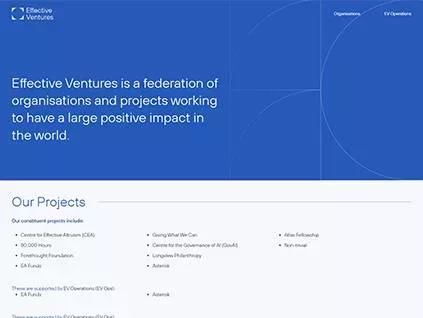
Effective Ventures
HTML5 , WordPress
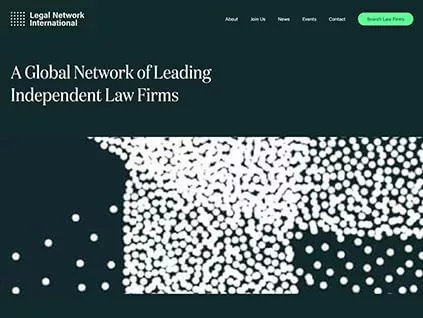
Legal Network International
HTML5 , WordPress

Optimizing Field Operations with a Tailored Mobile App for Osho Chemical
Executive Summary Osho Chemical Industries Ltd, a prominent provider of agrochemicals and industrial solutions in Africa, faced challenges with manual workflows, inefficient customer assignments, and high...


Fueling OpsCTRL's Digital Transformation With Biztech: A Case Study on Enhanced Productivity
OpsCTRL is internationally renowned for its expertise in dynamic process modeling; especially for model-supported design of process control solutions. This project aimed to streamline their global operations,...

An ERP solution to manage school’s operations
Executive Summary Biztech, a renowned provider of technology solutions, undertook the task of restructuring the Magento website for El Camino Real Charter High School, a prominent educational institution...
Tech Updates from Team BiztechCS
At BiztechCS, we keep you at the edge of technology with the latest updates, news, and trends influencing the IT industry. Our blog has a unique approach and is well-researched to give you a fresh perspective on technology.

How Much Does It Cost To Build An AI App in 2026?
Introduction Creating an AI app in 2025 may prove to be quite challenging, though the process can be an exhilarating experience. The expense required to develop such an app depends...
25+ Profitable AI Business Ideas for 2026
Introduction AI is moving industries faster than ever, opening up new doors for startups and entrepreneurs. By 2025, AI-powered businesses will add over $15 trillion to the global economy....
Why AI Facial Recognition System is the Future of Cybersecurity?
Introduction Traditional security methods are finding it difficult to keep up with the increasing sophistication of cyber attacks. Facial recognition software driven by artificial intelligence...Key Benefits of Our Generative AI Development for Businesses
Experience the future of business innovation with our generative AI solutions tailored to your needs.

Creativity
Generative AI drives innovation by unlocking new creative possibilities across various industries. It helps businesses create unique content, designs, and solutions that push the boundaries of traditional methods.

Simulation and Training
Generative AI can simulate real-world scenarios for training and testing, enabling businesses to prepare for various outcomes. This allows for more effective decision-making and risk management.

Personalization
AI-driven personalization helps businesses deliver highly tailored experiences to customers. It ensures that content, products, and services are aligned with individual preferences, improving engagement and satisfaction.

Problem-solving
Generative AI excels at solving complex business problems by processing vast amounts of data quickly. It provides actionable insights and creative solutions that may not be apparent through conventional methods.

Data Augmentation
Generative AI enhances data by creating synthetic data that enriches your existing datasets. This helps improve model training and allows for better predictions, even with limited real-world data.

Automation
Generative AI automates repetitive tasks, saving time and reducing human error. This increases operational efficiency, allowing your team to focus on higher-value activities.

The Trusted AI Agent Development Partner for Enterprises
Enterprises rely on us because we combine deep technical expertise with industry-focused innovation to build AI agents that truly deliver.
- Proven Enterprise Integrations
- Industry-Specific Expertise
- Hybrid AI Architectures
- Compliance-First Mindset
- Multi-Agent Ecosystems
- Customizable Guardrails
- Scalable Infrastructure Readiness
- Continuous Learning Loops
- Enterprise-Grade Monitoring
- Accelerated Deployment Frameworks
AI Agent Development Services That Power Enterprise Evolution
AI agents are no longer futuristic—they’re changing how enterprises run today. Our team develops tailored agents that handle complex tasks, adapt to your workflows, and empower your people to focus on higher-value work.Let’s bring intelligence into every part of your business!
Frequently Asked Questions
What is an AI agent and how is it different from a regular chatbot?
An AI agent is a software system that can perceive its environment, make decisions, take actions, and complete multi-step tasks autonomously — often without requiring human input at each stage. Unlike a basic chatbot that follows predefined scripts or responds to simple questions, an AI agent can reason through a problem, call external tools or APIs, access data from multiple sources, and adapt its approach based on intermediate results.
A customer service chatbot answers questions. An AI agent could handle an entire customer onboarding process — verifying documents, checking eligibility, updating records across systems, and sending communications — without a human managing each step.
What are AI agent development services?
AI agent development services involve designing, building, and deploying autonomous AI systems tailored to specific business workflows and operational processes. This includes defining the agent’s scope and decision logic, connecting it to the relevant data sources and business systems, selecting and integrating the appropriate language models and tools, testing the agent’s behavior across edge cases, and establishing monitoring to ensure it performs reliably after deployment.
The output is not a generic AI tool but a system built around how a particular organization operates — its data, its processes, and the specific outcomes it needs to achieve.
What types of AI agents can be built for enterprise operations?
The range of agent applications is broad and growing. Examples include order reconciliation agents that match production data against specifications and flag discrepancies, KYC compliance agents that extract and validate identity documents automatically, financial reconciliation agents that compare data across payment gateways and ERPs daily, competitive pricing agents that monitor competitor pricing and recommend adjustments in real time, underwriting agents that evaluate insurance submissions and issue quotes with minimal human intervention, and retention agents that identify customers at risk of churning and trigger targeted outreach.
The common thread is that each agent handles a defined, repeatable workflow that previously required significant human time and attention.
How do AI agents integrate with existing business systems?
AI agents connect to existing systems through APIs, database connections, and integration middleware. An agent handling financial reconciliation, for example, would connect to the company’s ERP, payment gateway records, and banking data sources to fetch and compare figures. An agent managing customer retention would connect to a CRM to read engagement signals and trigger communications.
The integration approach depends on what systems are involved and how well-documented their interfaces are. Modern enterprise systems with REST APIs are generally straightforward to connect. Legacy systems with limited API coverage require additional integration work, sometimes involving custom connectors or data extraction pipelines.
What is a multi-agent system and when does a business need one?
A multi-agent system is an architecture where multiple specialized AI agents work together — each handling a defined part of a larger workflow — rather than a single agent trying to do everything. One agent might handle data extraction, another validation, another communication, and another reporting, with each passing outputs to the next in a coordinated pipeline.
Multi-agent systems become relevant when a workflow is too complex or too varied for a single agent to handle reliably, or when different parts of a process require different capabilities or access to different systems. They also allow individual agents to be updated or replaced independently without redesigning the entire workflow.
What technology stack is used to build AI agents?
AI agents are typically built using a combination of large language models for reasoning and natural language understanding, orchestration frameworks that manage how the agent plans and executes tasks, tool integrations that allow the agent to interact with external systems, and memory systems that allow the agent to retain context across a workflow.
Common frameworks in this space include LangChain, LangGraph, CrewAI, AutoGen, Semantic Kernel, and the OpenAI Agents SDK. Workflow automation tools like n8n and Power Automate are also used for connecting agents to broader business process flows. The right combination depends on the complexity of the use case, the systems being integrated, and the reliability and latency requirements of the workflow.
How is security and compliance handled in AI agent development?
Security in AI agent development covers several dimensions. At the data level, agents need to access only the information required for their task — not the entire organizational data estate. Role-based access controls and least-privilege principles apply to agents just as they do to human users.
At the decision level, agents that take consequential actions — approving transactions, communicating with customers, modifying records — should have configurable guardrails that define what they can and cannot do without human review. For industries with regulatory requirements around data handling and automated decision-making, compliance considerations need to be built into the agent’s design from the start rather than added after deployment.
What is the difference between an AI agent and workflow automation tools like Zapier or Power Automate?
Traditional workflow automation tools execute predefined sequences of steps triggered by specific conditions. They are effective for structured, predictable processes where the same inputs always produce the same outputs. They do not handle ambiguity, cannot reason about unexpected situations, and cannot adapt their approach based on intermediate results.
AI agents add a reasoning layer. When an agent encounters a situation that does not fit a predefined rule, it can evaluate the context and decide how to proceed — much as a human would. This makes agents suitable for processes that involve variability, judgment calls, or unstructured inputs like documents and emails, where rule-based automation would either fail or require an impractically large number of rules to cover all cases.
How long does it take to build and deploy an AI agent?
A focused agent built for a well-defined, contained workflow can be developed and tested in 4 to 8 weeks, assuming the relevant data sources and system integrations are accessible. More complex agents that handle multi-step workflows, require integration with several systems, or need extensive testing across edge cases typically take 2 to 4 months.
The most significant variable is the clarity of the process the agent is being built to handle. Workflows that are well-documented and consistently executed are faster to automate than those that rely on implicit knowledge or informal variations that only become apparent during development.
How should a business decide which processes are good candidates for AI agents?
Good candidates share a few characteristics. The process should be repetitive enough to justify the development investment — something that happens frequently across the organization, not just occasionally. It should involve clear inputs and outputs, even if the steps in between require judgment. And the cost of errors should be manageable, particularly during the initial deployment period before the agent’s reliability is fully established.
Processes that involve large volumes of structured or semi-structured data — documents, transactions, records — and that currently consume significant human time on coordination, verification, or routing decisions tend to deliver the clearest return from agent automation. Starting with a specific, bounded workflow rather than trying to automate an entire function at once is usually the more practical path to demonstrable results.