

When Traditional Counseling Fails Students, How Do AI Chatbots Fill the Void?
 5 min read
5 min read
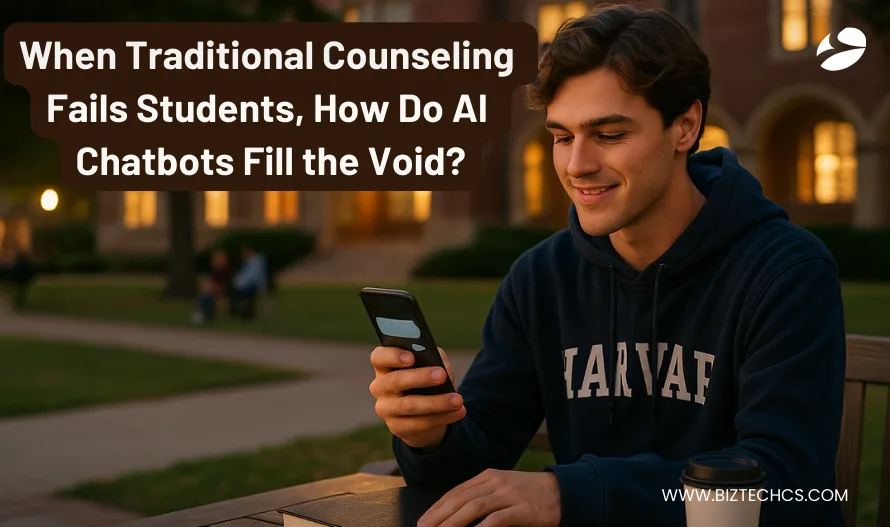
College students have become experts in living on instant noodles and getting by with just three hours of sleep. But the mental battle? That’s where things get tricky. Beyond pulling all-nighters before finals and pretending to be cryptocurrency gurus at networking events, students’ stress levels are rising faster than the utterance of “student loan debt.” The issue of mental health on campuses has become a hot topic.
Recent research underscores just how strained students really are. A 2025 sleep-and-mental-health study found that 57.9% of undergraduates reported poor sleep quality. Many of them also experienced moderate to severe psychological distress — a combination that fuels the already growing mental-health challenges on campuses.
College counseling centers, meanwhile, are facing waitlists longer than the line for the latest iPhone release. Traditional therapy sessions can cost as much as a semester’s worth of textbooks, and trying to secure an appointment. You might have better luck finding a seat in the library during finals week.
Enter AI mental-health chatbots — the digital therapists that never sleep, never judge, and never charge $200 an hour. Built by an experienced AI Development Company, these AI-infused support tools are transforming student care by offering immediate, accessible help when traditional resources fall short. Think of them like emotional-support animals, except they don’t shed on your dorm room carpet.
While no technology can fully replace human connection, these mental-health chatbots have become the unofficial best friends of countless students battling stress at 3 AM — especially when campus counseling centers are closed, and the pressure feels unbearable.
Despite growing awareness around mental well-being, students are finding it harder than ever to tap into the support systems meant to help them.
Student mental-health challenges are multiplying faster than rabbits on steroids. Universities are watching anxiety, burnout, and depression rates surge while their counseling resources move at the speed of dial-up internet.
Recent data shows that over half of college students (55%+) experience some form of academic burnout — and roughly 1 in 5 (≈ 20%) suffer severe psychological distress. That doesn’t even include students dealing with moderate but chronic stress, loneliness, or financial strain, meaning actual demand may be far higher.
Meanwhile, counseling centers remain overwhelmed. With so many students in distress and only a limited number of professional staff, personal attention is about as rare as finding parking on a crowded campus. This explains why many institutions’ mental-health resources get stretched thin — leaving students to cope on their own: scavenging TikTok therapy videos and questionable self-help podcasts.
Because the math doesn’t add up — when demand rises past 50% of the student body, but institutional support stays limited — the system simply can’t keep up. As a result, far too many students fall through the cracks.
The old support system moves so slowly it could give a sedated sloth a run for its money — and every stage feels like another barrier. Students wait weeks just to get an intake appointment, by which time their anxiety has already reached first-boss difficulty. The stigma of asking for help is still more entrenched than the campus coffee machine line, and many students would rather struggle quietly than risk being labeled “the one who goes to therapy.”
With modern AI/ML development services, campuses can finally break this cycle — enabling faster triage, predictive support, and more private, stigma-free ways for students to seek help before they reach a breaking point.
Like a punch in the stomach, the cost — often around US $143 per session for those without insurance — hits just when students are deciding whether to spend on mental health or survive another week of instant noodles (source).
The traditional 9-to-5 counseling hours clash with class schedules, part-time jobs, and the general chaos of student life. Insurance hurdles add yet another layer of bureaucratic nightmare, making tax forms look like child’s play by comparison.
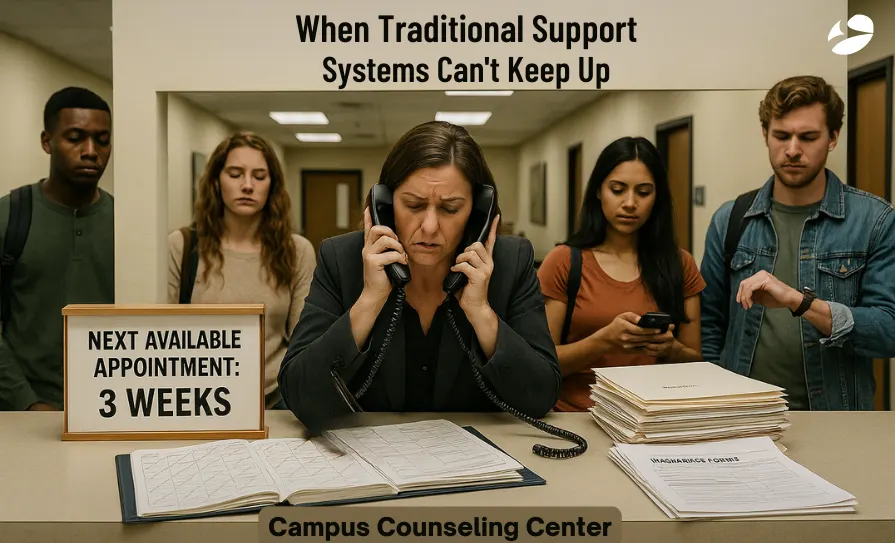
All these obstacles help explain why AI-based therapy tools are increasingly the default choice for students seeking help. This path avoids long waits, unpredictable costs, and the emotional burden of in-person therapy.
Is your institution watching students struggle while traditional support systems fail to keep up? There’s a better way to ensure every student gets the mental health support they deserve.
AI-driven support tools are stepping in to close the gaps that traditional services can’t, offering students immediate, private relief that’s built to scale.
AI mental health chatbots work harder than a caffeinated squirrel, providing round-the-clock support when human counselors are home binge-watching their favorite shows. Students can skip the appointment booking nightmare and get immediate help at 3 AM during exam week when their anxiety throws a rave party in their brain.
No more waiting three weeks for an appointment by which time the crisis has already graduated and moved to another timezone.
Students can finally word-vomit their deepest fears without worrying about running into their therapist at the campus burrito bar. These AI-powered counseling tools create judgment-free zones where vulnerability doesn’t require entering witness protection. They make students more likely to open up than a can of sardines at a seafood convention.
The fear of becoming dormitory gossip evaporates when your therapist is a mental wellness chatbot that couldn’t spill tea even if it were programmed to. But institutional leaders often ask: “How do we ensure these AI systems maintain the same confidentiality standards as human counselors?”
The answer lies in robust encryption protocols and HIPAA-compliant infrastructure that treats every conversation like classified information. With advanced AI/ML development services, these systems don’t just secure data—they continuously learn, detect anomalies, and strengthen defenses in real time. They also offer superior privacy tracking compared to traditional methods, with detailed audit logs showing exactly who accessed what data and when—something even the best human-staffed centers struggle to guarantee.
One chatbot can handle more simultaneous conversations than a customer service center during Black Friday, serving unlimited students without breaking a sweat or the institutional budget. As an AI Development Company, BiztechCS implements cloud-native architectures and microservices that ensure your mental health chatbot scales seamlessly as your student population grows—handling thousands of concurrent conversations while still delivering personalized support to every student.
This cost-effectiveness makes traditional therapy look like buying designer water at an airport while actually delivering consistent quality support to every student who needs it. University administrators frequently wonder: “What’s the actual ROI compared to hiring more counselors?” The math is compelling—one AI system can handle the workload of 10-15 counselors at roughly 20% of the cost, while reducing wait times from weeks to seconds.
Plus, unlike human staff who need benefits, vacation time, and office space, these digital therapists require only server maintenance and periodic updates. This frees up budget for other critical student services or allows institutions to offer hybrid models where AI handles initial screenings and human counselors focus on complex cases.
Wondering how to scale mental health support without breaking your budget? A custom AI solution could transform your student wellness services while cutting costs by 80%.
They rely on a blend of intelligent language understanding and therapeutic design to deliver support that feels both responsive and personalized.
AI mental health chatbots decode emotional word salad better than a therapist who charges $200 to ask “how does that make you feel?” These systems analyze text patterns to understand when “I’m fine” actually means “I’m drowning in assignments and surviving on energy drinks.”
The NLP engine recognizes distress signals faster than a helicopter parent spotting their kid’s first bad grade. It picks up on subtle cues like changes in typing patterns or specific word choices that scream “help me.”
BiztechCS develops sophisticated NLP models trained on mental health datasets, ensuring your chatbot delivers compassionate, contextually appropriate responses rather than generic fortune-cookie wisdom.
The mental wellness chatbot imitates active listening so perfectly that students are unaware they’re speaking to a machine rather than a therapist who nods with understanding while not-so-secretly glancing at the clock. Powered by advanced AI/ML development services, these systems emit empathy-laden reactions that feel more heartfelt than the average “thoughts and prayers” comment on social media. And thanks to algorithms that learn on the fly, the dialogue keeps flowing like a jazz performer bursting into improvisation.
The chatbot does a better job of keeping the conversation on track than humans, who get distracted and forget what was being discussed, and can recall what was said three messages ago when most people can’t even remember what they had for breakfast.
The AI-assisted counseling software applies cognitive behavioral therapy techniques quicker than students can pronounce “cognitive distortion” themselves, thus delivering scientifically-supported methods devoid of the psychobabble. The software leads students to perform highly effective mindfulness practices, rather than the meditation app gathering dust on their home screens.
BiztechCS integrates evidence-based therapeutic frameworks into the conversation flow, thereby forming a clinically informed support system that provides everything from breathing exercises to journaling prompts that don’t begin with “Dear Diary.”
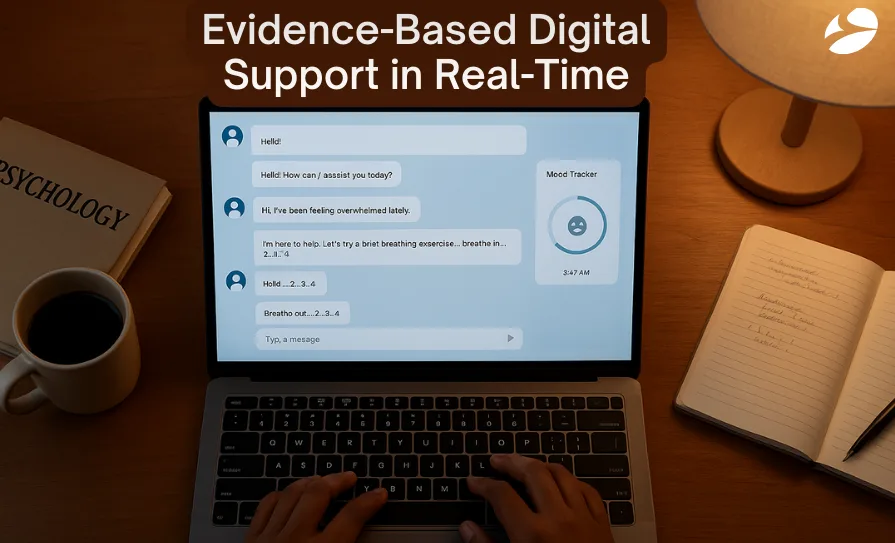
These chatbots offer stress management techniques like a therapeutic buffet, allowing students to choose what works for them without judgment or pressure.
A well-designed mental health chatbot needs more than friendly conversation—it must offer practical, meaningful features that genuinely support student well-being.
AI mental health chatbots must use mood-tracking questionnaires that truly understand students’ feelings and emotions, rather than simply asking them to choose a smiley face emoji.
These tools should detect anxiety, stress, and depression without students feeling like they are taking the SATs again, being overwhelmed with questions, and anxious about the results.
BiztechCS devises personalized assessment instruments that meet clinical criteria while still being easy for anyone to use. It’s basically a Fitbit for feelings, tracking a student’s emotional state over time.
Just as generalized breathing exercises are nearly as practical as telling a furious person to “calm down,” mental wellness chatbot systems should provide tailored interventions. It should offer unique mindfulness methods and self-care suggestions tailored to the user’s stress patterns, rather than common ones that have no place even on motivational posters.
Study-life balance tips would have to reflect the truth that students see sleep as an option and view coffee as a food group.
The chatbot becomes a mental health concierge, connecting students to campus counseling services faster than they can find a working printer on campus. BiztechCS implements intelligent routing systems that connect students to appropriate resources based on their specific needs and risk levels. This ensures that crisis hotline information appears instantly when it’s needed.
Educational content and peer support group connections should flow naturally into conversations, making help accessible without feeling like a pushy salesperson hawking therapy. Campus wellness directors often raise a critical concern: “How do we ensure the chatbot knows when to escalate to human intervention?”
Modern AI systems include sophisticated risk assessment algorithms that flag keywords, sentiment patterns, and behavioral indicators suggesting crises.
When detected, these systems immediately provide crisis hotline numbers and alert designated staff members (with student consent). They can even trigger wellness checks, creating a safety net that catches at-risk students faster than traditional appointment-based systems ever could.
AI-powered counseling tools must spot concerning trends like a detective investigating why someone suddenly starts messaging at 4 AM every night. The system should trigger escalation protocols more smoothly than a fire drill, knowing when to sound alarms and when students just need to vent about their roommate’s tuba practice.
BiztechCS builds comprehensive mental health platforms that seamlessly integrate all these features, generating insights that help institutions understand student wellness patterns without becoming Big Brother with a psychology degree.
Is your current system missing critical warning signs in student mental health data? Advanced AI analytics could help you identify and support at-risk students before crises occur.
AI mental health tools are already reshaping student support systems, delivering measurable improvements across multiple learning environments.
Universities deploying AI mental health chatbots are seeing results that make their investment committees do happy dances in boardrooms. One major state university reported a 30% reduction in student stress levels within just one semester, proving that these digital therapists work harder than students cramming for finals.
The integration with existing student services has been smoother than a freshman’s pickup lines, with counseling centers finally able to breathe instead of drowning in appointment requests.
These systems have sparked a 20% increase in help-seeking behavior because, apparently, students prefer confessing their problems to robots rather than to humans who might judge their life choices.
Most impressively, improved student retention rates are making administrators grin wider than when tuition checks clear. Mentally healthier students tend to stick around rather than drop out faster than hot potatoes.
Remote learners are embracing AI-powered counseling tools like introverts embrace cancelled plans — finally getting support without leaving their pajamas. With the help of an AI development company building these intelligent systems, students get far more than the usual “just breathe” advice during exam stress. These platforms step in with real-time interventions right when a failed quiz has them two seconds away from launching their laptops across the room.
The mental wellness chatbot creates digital communities where isolated learners can connect without the awkward small talk that makes everyone want to fake their internet cutting out. A noticeable improvement in academic performance has been observed as students began managing their anxiety through chatbots. It sure beats panicking and consuming whole pizzas while staring blankly at the discussion forums.
The providers of online education report that the students who are in the habit of using mental health chatbots have higher completion rates than the statistics for binge-watching Netflix.
Daily mental health check-ins through wellness apps have become as routine as scrolling through social media, except these actually improve mental health instead of destroying it.
These applications gamify wellness activities brilliantly, turning self-care into an achievement, unlocking that speaks to the generation raised on video game dopamine hits. Preventive mental health care through these apps catches problems earlier than a helicopter parent spots a bad influence friend.
Students engage with these platforms at rates that would make social media companies jealous, logging mood patterns and completing wellness challenges with the dedication usually reserved for maintaining Snapchat streaks.
The data shows users of these applications demonstrate stress management skills that previous generations achieved only through years of expensive therapy or questionable coping mechanisms.
Looking to develop a mental wellness app that students will actually use? BiztechCS specializes in creating engaging, effective AI-powered mental health solutions that meet students where they are.
BiztechCS can play a pivotal role in helping institutions deliver reliable, scalable, and human-centered AI mental health solutions that actually meet students where they are.
BiztechCS can develop AI mental health chatbots that actually work, unlike your nephew’s startup that promised to revolutionize wellness with a chatbot named “Dr. Happy Face.” We can build personalized, scalable solutions that provide real-time support for students. And we can do it without making them feel like they’re talking to a glorified magic 8-ball.
BiztechCS can create mental health resources for universities drowning in student support requests. We can also develop AI assistants for startups that think they can solve anxiety with algorithms — and spoiler: we actually can.
We can design and deploy solutions that put user well-being first, while implementing systems that keep your servers from having a mental breakdown.
BiztechCS can develop custom chatbot solutions for universities that seamlessly integrate with existing student services. Apparently, everyone needs therapy these days — including your IT infrastructure.
We can build end-to-end AI-powered counseling tools from concept to deployment for startups whose founders are too busy disrupting industries to notice their own stress levels.
BiztechCS can implement HIPAA-compliant platforms for healthcare providers who break into cold sweats at the mention of data breaches.
We can develop embedded mental health support features for EdTech companies. That way, learning platforms can actually care about students’ mental health rather than just their credit card numbers.
BiztechCS can implement cloud-native architecture that makes your mental wellness chatbot scale smoother than a tech bro’s pitch deck, growing with your user base faster than student loan debt. We can develop a microservices design where each component scales independently. Nothing says “we care about mental health” like avoiding a system crash during finals week when 10,000 students simultaneously realize they forgot to study.
BiztechCS can configure intelligent load-balancing systems that manage thousands of concurrent conversations without breaking a sweat. Meanwhile, your competition’s chatbot is still buffering on conversation number three.
We can implement caching strategies and optimize response times for peak usage periods when everyone decides they need help at 3 AM.
BiztechCS can develop sophisticated NLP models using TensorFlow and PyTorch that understand human emotions better than most humans do. Which, honestly, isn’t setting the bar very high these days.
We can deploy your solution on AWS, Azure, or Google Cloud with redundancy levels that would make a doomsday prepper jealous. BiztechCS can implement stream processing systems for instant, context-aware responses that respond faster than you can say “quarterly earnings report.”
We can build end-to-end encryption protocols that protect student data like it’s the secret recipe for your grandmother’s cookies, because privacy violations are so last decade.
BiztechCS can create systems that deliver tailored support to every student, whether you have 100 or 100,000 users who all think their problems are unique (newsflash: we can make them feel that way).
We can implement evidence-based therapeutic frameworks validated by actual mental health professionals, not just Silicon Valley life coaches who read one self-help book. BiztechCS can develop AI models that continuously learn and improve based on user interactions. They get smarter faster than your intern who just discovered ChatGPT.
We can build robust systems with 99.9% uptime, ensuring support is available when students need it most. After all, mental health crises don’t schedule themselves around business hours, and your support systems shouldn’t either.
AI mental health chatbots have become the unsung heroes of campus life, catching students before they spiral harder than their GPAs after discovering party life. These digital therapists fill the massive crater between traditional counseling’s capacity and students’ mental health needs. They offer support that’s more reliable than campus WiFi and cheaper than a single textbook.
The technology works best when implemented ethically, with proper safeguards that ensure students receive real support instead of becoming data points in some dystopian experiment. And while the goal is never to replace human counselors with robots, a thoughtful AI development company can build tools that help ensure no student slips through cracks wider than their student loan debt.
BiztechCS is ready to build mental wellness chatbot solutions that deliver results, not empty promises wrapped in tech jargon. Ready to stop watching students struggle while your counseling center burns out faster than a cheap lightbulb?
The mental health crisis on campus won’t solve itself, but you don’t have to tackle it alone. BiztechCS can help you implement an AI-powered solution that transforms student support from reactive to proactive.

Artificial Intelligence (AI)
 43
43

By Devik Gondaliya
Artificial Intelligence (AI)
41
By Devik Gondaliya

Artificial Intelligence (AI)
90

By Nandeep Barochiya