

Why Should Cabinet Manufacturers Trust AI Over Gut Instinct For Demand Planning?
 5 min read
5 min read
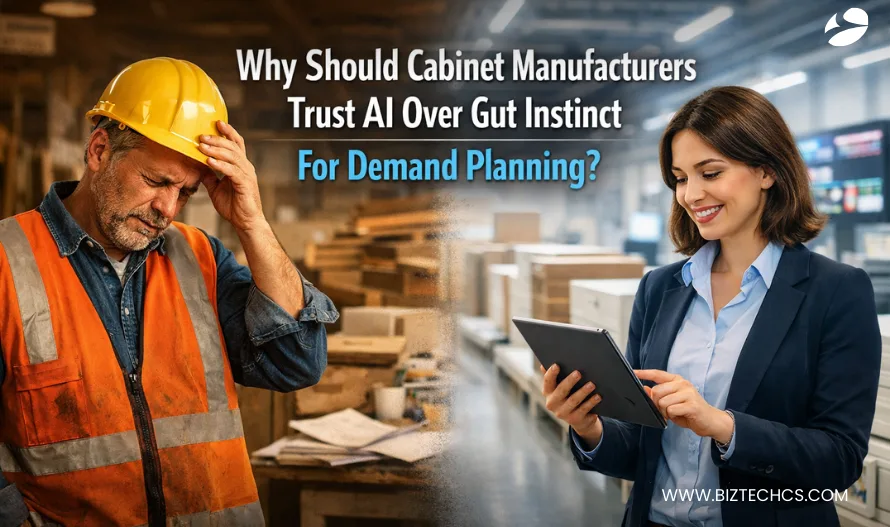
Building a kitchen cabinet today feels less like manufacturing and more like a high-stakes game of Tetris played in a hurricane. Most facilities are drowning in a sea of wood scraps and “almost-finished” carcasses while North America’s fragmented market laughs from the sidelines. It is a chaotic mess of custom requests and broken promises. This industry is currently battling a 30% inventory inefficiency rate that eats margins for breakfast.
If the warehouse looks like a lumberyard had a midlife crisis, you are likely part of that statistic. According to the Kitchen Cabinet Manufacturers Association, sales and quantities have been down 5.6% throughout 2025. This makes wasting nearly a third of your stock a form of corporate masochism. Relying on gut feelings and legacy spreadsheets is basically throwing money into the wood chipper.
AI-powered demand forecasting is no longer a shiny toy for the tech-obsessed. It is a strategic necessity for anyone who wants actually to stay in business. Kitchen cabinet supply chain optimization requires more than just a better forklift driver. You need predictive production planning that understands real-world chaos before it hits your floor.
Integrating ai/ml development services in ERP and MES systems creates a modular supply chain architecture that moves as fast as a homeowner changes their mind about granite. Stop guessing and start surviving.
Clinging to a dinosaur-era ERP system while expecting modern efficiency is like trying to win a Formula 1 race in a horse-drawn carriage. Most manufacturers are still white-knuckling their way through basic BI dashboards that offer about as much foresight as a broken crystal ball.
Unpredictable demand patterns have turned the warehouse into a chaotic guessing game where the only constant is being wrong. Distributors are now breathing down your neck for 5-day fulfillment windows as if wood grows on trees and dries in seconds. Meanwhile, builders expect real-time updates on fifty projects at once, oblivious to the fact that your data is stuck in a 2005 spreadsheet.
The result is a total car wreck of mismatched inventory and reactive production that burns through cash faster than a midlife crisis. Inefficient procurement means you are constantly panic-buying handles and hinges at premium prices just to keep the lights on. Kitchen cabinet supply chain optimization remains a pipe dream when your systems cannot even talk to each other.
Adopting ai/ml development services in ERP and MES systems is the only way to stop this madness and build a modular supply chain architecture that actually works. Without predictive production planning, you are just rearranging deck chairs on the Titanic while waiting for the next “out of stock” notification to hit.
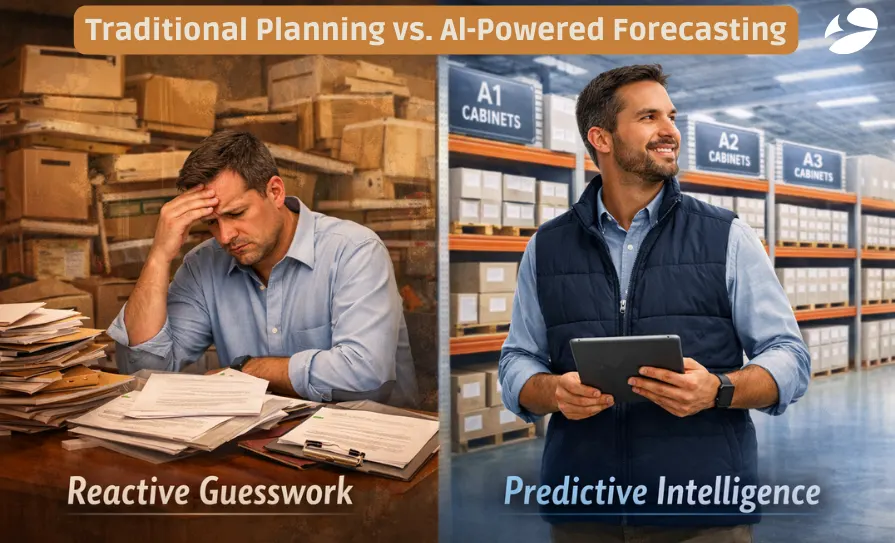
Wait, won’t adding AI just create another layer of complexity for a team already struggling with basic tech? Not if it’s done right. The goal isn’t to pile on more “homework” for your floor managers. By embedding ai/ml development services directly into the ERP and MES systems they already use, the technology acts as an invisible co-pilot.
It cleans up the data in the background and presents clear, actionable choices rather than just more noise. Instead of fighting the software, your team finally gets a tool that removes the friction from their daily grind.
Before diving into tactics and technology, leaders need to confront the hard, operational questions that quietly determine whether growth feels controlled—or constantly chaotic.
Staring at a warehouse full of oak cabinets that nobody wants is a special kind of corporate torture. These dust-collectors eat up valuable floor space while the popular Shaker styles are nowhere to be found.
AI-powered demand forecasting stops this madness by telling the machines to quit making what stays on the shelf forever. It prevents the tragedy of turning expensive lumber into high-end firewood that just sits there mocking the balance sheet.
Relying on a wing and a prayer to meet a massive builder contract is a recipe for a heart attack. The shop floor should not be surprised by a hundred-unit order that was signed weeks ago in a distant office.
Predictive production planning scans the horizon so the wood is already cut before the client even sends a frantic email. Stop treating major contracts like surprise parties nobody actually wanted to attend.
Writing a check for new tech feels like pulling teeth if the results are just more confusing charts. The real money shows up when AI in ERP and MES systems finally stops the constant bleeding of overtime pay and rush shipping fees.
Efficiency is not just a fancy word when the bottom line actually starts looking healthy for a change. It is about making sure the investment doesn’t end up being another expensive paperweight in the IT department. How do we ensure the data we’re feeding the AI isn’t just ‘garbage in, garbage out’? This is the primary hurdle for any legacy operation. AI doesn’t need “perfect” historical data to start adding value; it needs a structured pipeline.
A modular platform identifies the cleanest data sets first—like recent sales or procurement logs—and uses those to build a baseline. Over time, the system “self-cleans” by comparing its predictions against real-world outcomes, effectively teaching itself to ignore the “garbage” that used to lead your gut instinct astray.
Every homeowner wants a unique kitchen that looks exactly like a Pinterest board brought to life. Trying to mass-produce these special snowflakes usually turns the factory into a disorganized circus of errors. A modular supply chain architecture allows for these custom tweaks without bringing the entire assembly line to a grinding halt. This approach ensures kitchen cabinet supply chain optimization is a reality instead of a fever dream.
Are you tired of watching your margins shrink every time a customer requests a “minor” customization? Don’t let your shop floor turn into a chaotic circus of manual workarounds.
We’ll assess your current systems, identify the biggest efficiency gaps, and design a phased implementation plan that fits your operation.
An intelligent forecasting platform isn’t a single piece of software—it’s a coordinated system of modular capabilities that work together to turn uncertainty into operational control.
Historical data usually gathers dust in a drawer while the market swings like a pendulum. A proper engine chews through seasonality and builder contracts to find the signal in the noise. It even watches macroeconomic trends, so a sudden interest rate hike does not catch the factory flat-footed.
We at BiztechCS can develop ai ml development models tailored to your specific market segments and product lines to ensure the math actually adds up.
A factory floor without real-time optimization is just a very expensive way to produce splinters and stress. Most facilities treat constraints like a surprise party they never wanted to attend.
The right system adjusts throughput on the fly so a broken machine does not paralyze the entire month. We at BiztechCS can implement adaptive scheduling systems that respond to demand fluctuations before the chaos becomes unmanageable.
Waiting for wood glue or hinges to arrive while customers scream is a pathetic way to run a business. End-to-end visibility ensures the left hand actually knows what the right hand is ordering from across the globe.
Proactive restocking keeps the assembly line moving so nobody has to play “hide and seek” with the inventory. We at BiztechCS can build API integrations with your existing supplier networks to kill the manual paperwork once and for all. What happens to our supplier relationships if the AI suddenly changes procurement orders? Far from damaging relationships, AI actually stabilizes them. Suppliers hate “panic orders” as much as you do.
When your system provides them with high-probability forecasts months in advance, you become their favorite customer. You move from being a source of chaos to a source of predictable revenue, often giving you the leverage to negotiate better bulk pricing and guaranteed shipping slots that your competitors can’t touch.
Shipping heavy cabinets across three states because of poor planning is a great way to set money on fire. Zone-based optimization helps keep the heavy lifting close to home and keeps the freight companies from getting rich off your mistakes.
Smart dashboards show exactly where the fat needs to be trimmed without requiring a PhD to read a chart. This level of kitchen cabinet supply chain optimization ensures the product reaches the kitchen without the shipping cost exceeding the cabinet price.
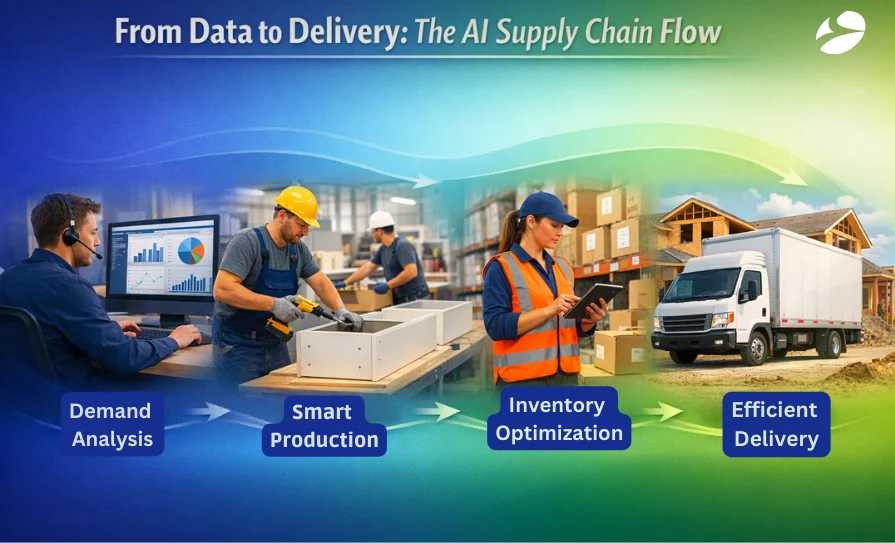
The key to implementing AI without operational chaos is not speed, but control—introducing intelligence in a way that protects production while confidence and capability grow in parallel.
Ripping out the old system and hoping for the best is a fantastic way to go bankrupt by Tuesday. Running a parallel pilot lets the new tech prove its worth in a sandbox without burning the actual factory down. This safety net ensures the wheels stay on the wagon while the gears of predictive production planning begin to turn.
Trusting a machine with your life’s work is terrifying when you have spent decades relying on gut instinct. Shadowing allows the software to make quiet guesses in the background while you keep doing things the old-fashioned way.
Once the math consistently beats your “lucky guess,” the transition to AI-powered demand forecasting feels less like a leap of faith and more like common sense. Can we keep our ‘tribal knowledge’ in the loop, or does the machine take total control? The most successful plant owners treat AI as an advisor, not a replacement for seasoned expertise. The system provides the data-driven “what,” but your veterans provide the “why.”
By using an “augmented intelligence” approach, your senior forecasters can override AI suggestions based on local insights the machine might not have yet.
These insights might include a local strike or a specific regional builder’s quirk. The ai ml development data-driven forecasts, while experienced teams apply real-world context. Together, they create a hybrid model that is far more accurate than either could be alone.
Trying to fix every department at once is a recipe for a corporate nervous breakdown and a lot of wasted wood. Start with one product line or a single region to see how the modular supply chain architecture handles the pressure. This slow and steady pace prevents the entire operation from choking on too much change at the same time.
Throwing the “AI switch” to maximum on day one is asking for a logistical car crash of epic proportions. Gradual activation means turning on features one by one so the team can actually keep their heads above water. This measured approach ensures AI in ERP and MES systems becomes a helpful partner rather than a digital dictator that ruins everyone’s weekend.
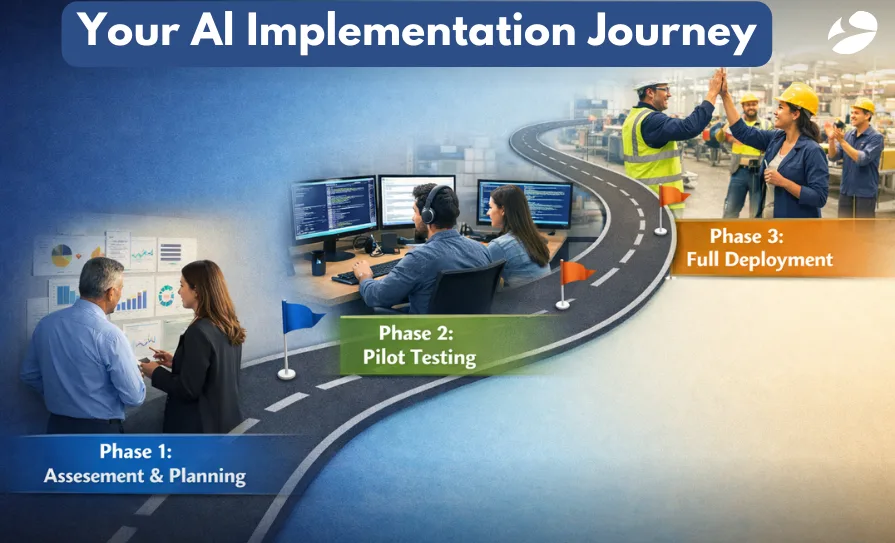
AI transformation succeeds or fails at the execution layer, and this is where the right partner turns strategy into measurable results without disrupting daily operations.
BiztechCS can perform a brutal assessment of current infrastructure to see if it belongs in a museum or a factory. We identify the embarrassing gaps that make production look like a game of broken telephone.
Our team develops a phased strategy that prevents the entire operation from biting off more than it can chew. We pinpoint exactly where AI-powered demand forecasting can stop the bleeding of wasted materials. The roadmap is built to ensure the transition is smooth rather than a chaotic scramble for the exit.
We make sure every dollar spent actually lands where it counts. This plan keeps the ship on course while others are still trying to find the compass. We treat the implementation like a surgical strike instead of a blind guess. Every step is calculated to keep the bottom line from taking a nosedive.
We can develop custom API connections that play nice with the clunky legacy systems currently gathering dust. BiztechCS can implement a modular supply chain architecture that fits like a glove without requiring a total digital overhaul. There is no need to set the existing software on fire just to get some modern intelligence.
We build scalable microservices that grow at a pace that does not break the bank. This approach allows AI in ERP and MES systems to start working before the coffee gets cold. We handle the heavy lifting of backend integration so the shop floor never notices the switch. It is about adding a brain to the operation without performing an expensive heart transplant.
Our experts ensure that data flows through the pipes without any messy leaks or system crashes. We make the technical wizardry feel like a walk in the park for the production team.
BiztechCS can synchronize real-time data so the sales team stops promising magic tricks that the factory cannot perform. We implement automated alert systems that scream for attention before a shortage turns into a full-blown catastrophe. Our team builds performance monitoring dashboards that are actually readable by humans rather than just data scientists.
We bridge the gap between what is sold and what is actually sitting in the warehouse racks. This feedback loop ensures that kitchen cabinet supply chain optimization is not just a buzz phrase on a slide deck. We stop the endless cycle of “he said, she said” between the office and the assembly line.
Every order is tracked with surgical precision to keep the promises from falling flat. We create a transparent environment where the truth is finally visible to everyone involved. This level of clarity keeps the inventory from turning into a pile of expensive firewood.
We can establish risk-free testing environments that let the technology fail safely before it ever touches a real customer order. BiztechCS can implement a gradual scaling methodology that treats the rollout like a marathon rather than a frantic sprint.
We track success metrics with an obsessive eye to prove the math is working in the real world. This cautious approach keeps the reputation of the brand intact while the kinks are ironed out.
We start with a single plant to demonstrate how predictive production planning saves the day. Our team ensures the lessons learned in one region make the national deployment a total breeze.
We provide safety goggles for the digital age so nobody gets hurt during the transition. Scaling only happens when the evidence is staring everyone in the face. We make sure the pilot is a victory lap before the main event even begins.
Relying on old-school manufacturing methods in a demand-driven market is essentially corporate suicide with extra steps. AI serves as the ultimate de-risking tool, ensuring you aren’t just guessing which cabinet door style will be the next big hit.
Transitioning to a smarter model is the only way to survive the relentless pressure of modern fulfillment windows. Companies that ignore this shift are just waiting for their stock to become expensive firewood. We can help you build a modular supply chain architecture that actually grows alongside your business instead of holding it back.
BiztechCS can implement ai/ml development services in ERP and MES systems to turn your chaotic floor into a precision machine. We can develop the AI-powered demand forecasting tools needed to keep your inventory lean and your customers from jumping ship. Our team can build predictive production planning models that spot trouble before it hits your balance sheet.
We can do the heavy technical lifting so your team can focus on building kitchens rather than fighting data. Let us implement a scalable platform that makes your competitors look like they are stuck in the Stone Age. We can develop a customized roadmap that ensures your digital transformation is a victory lap, not a disaster.
Is your manufacturing facility ready to stop guessing and start scaling with precision? Many leaders recognize that the cost of waiting is far higher than the cost of innovating.

ERP
Odoo
 78
78

By Uttam Jain

Artificial Intelligence (AI)
Odoo
113
By Uttam Jain
Odoo
216
By Uttam Jain