
 27
27
How a Mid-Size Manufacturer Cut Production Delays by 40% Using Odoo MRP
 5 min read
27
5 min read
72%
Manufacturers who discover a shortage only after the delay is unavoidable (LeanDNA, 2026)
360 hours
Average facility downtime per year, about 30 hours a month (L2L, 2025)
6 in 10
Manufacturers whose downtime costs top $250,000 a year (L2L, 2025)
A mid-size manufacturer we worked with, a few hundred people, a couple of plants, a catalog in the thousands of SKUs, had a problem that didn’t show up in any one place. Their products were good. Their people were good. And they still missed roughly a third of their promised ship dates. Customers noticed. So did the margin. An Odoo implementation was what turned it around.
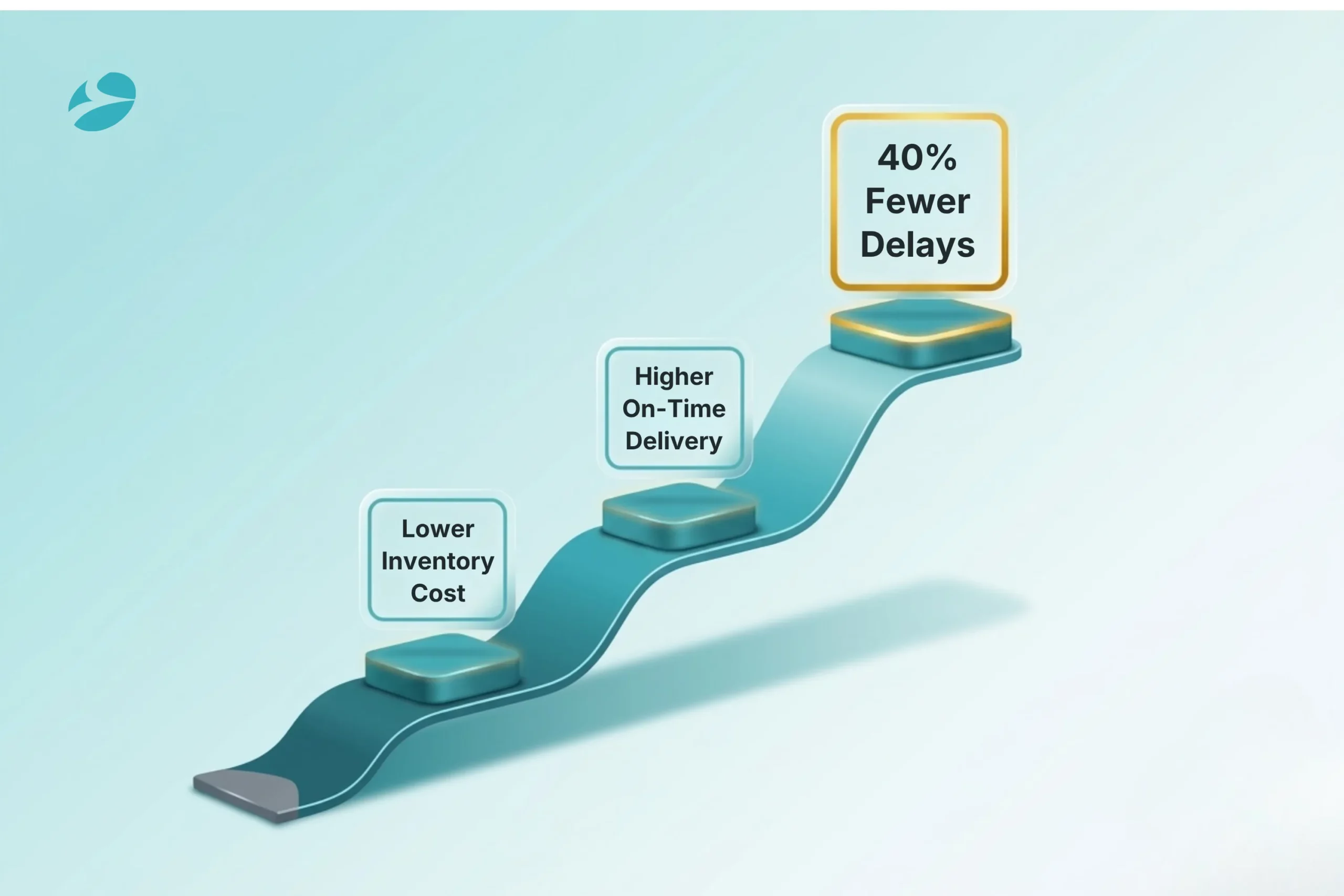
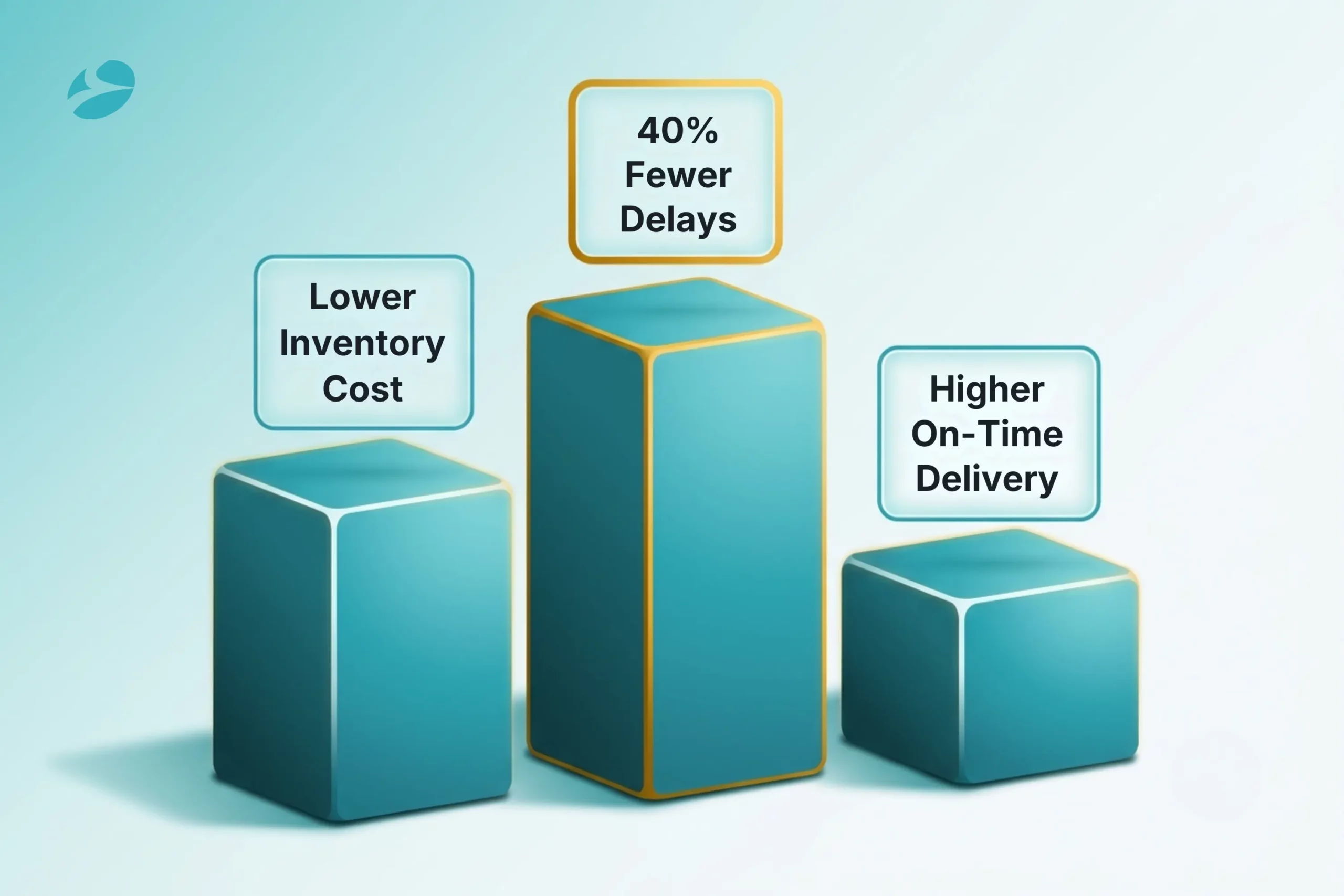
A year after they moved their planning onto Odoo MRP, those production delays were down about 40%. Same plants, same products, mostly the same people. What changed wasn’t effort. It was when they found out about a problem.
That last point is the whole story, and it’s the part most write-ups about Odoo MRP for manufacturing miss. The delays weren’t really a forecasting failure. They were a visibility failure. So before the features, here’s what was actually breaking, because the fix only makes sense once you see the cause.
On paper, the plant looked organized. Planning ran out of a set of spreadsheets that a very capable production manager kept alive by hand. Purchasing worked off those sheets. The floor worked off printed schedules. Inventory lived in a separate system that was right about as often as it was wrong.
The trouble was that none of it talked to anything else in real time. A sales order would promise a date. The schedule would assume the parts were there. And somewhere down the line, a component that the inventory screen said was in stock turned out not to be, or to be reserved for another job, and the whole work order stalled while purchasing scrambled to expedite a part that should have been ordered three weeks earlier.
Multiply that across a busy month and you get the pattern: not one catastrophic failure, but a steady drip of small, avoidable stalls that added up to a third of orders shipping late. The kind of production delays you can’t pin on any single person, because the system itself had no way to see them coming.
Here’s the uncomfortable thing we found, and the industry data backs it up. The plant rarely knew about a shortage until it was already too late to do anything but firefight.
That’s not unusual. In LeanDNA’s 2026 survey of manufacturing decision-makers, 72% said they discovered a material shortage only after a production delay was already unavoidable. Read that again, because it reframes the whole problem. The issue isn’t that manufacturers can’t forecast. It’s that the warning arrives after the damage is done.
For this manufacturer, the reasons were structural. Inventory, purchasing, and production were three islands, so no system could look across all three and say “this work order is going to be short on Tuesday.” Reordering was reactive, someone noticed a bin was low and placed an order. Bill-of-materials accuracy drifted, so the parts list the schedule trusted wasn’t always the parts list reality used. And the floor had no live view, so a problem at a work center took hours to surface in the office.
None of those is a forecasting problem. Every one of them is a visibility problem. And that distinction is exactly what decided which fix would work.
When we mapped their actual delay causes against Odoo’s manufacturing tools, the fit was almost one-to-one. That’s the part worth seeing, because Odoo MRP for manufacturing isn’t one magic button, it’s a set of features that each close a specific gap.
Material shortages were the big one. Odoo’s reordering rules and the MRP engine watch demand, on-hand stock, and inbound deliveries together, and raise a purchase order automatically when a component is heading below threshold, so parts arrive before the work order needs them rather than after. The manual schedule became a Master Production Schedule that plans manufacturing orders against real work-center capacity and deadlines, and reschedules itself when something upstream moves. The three islands became one system, where live inventory feeds the plan and a sales order’s date sets the manufacturing order’s deadline directly.
But the single feature that mattered most was the one nobody advertises. Odoo’s manufacturing Delays report flags orders as Late or Late Availability against their deadlines, which means a planner sees “this order won’t have its parts in time” days ahead, while there’s still room to act. That one report is the direct antidote to the 72% problem. It turns an after-the-fact discovery into a before-the-deadline alert.
Not sure where your own delays actually originate?
We didn’t try to switch everything on at once, because the fastest way to add delays is to throw a half-configured system at a busy plant.
The first phase was unglamorous and decisive: clean the bills of materials and the item data, because MRP is only as good as the BoMs it plans from. Then we set up the chart of work centers with real capacities and the reordering rules for the components that actually drove the stalls, the fast-moving and long-lead-time parts first. Inventory, purchasing, and production moved onto Odoo Manufacturing together, so the islands genuinely merged rather than just sharing a logo. We put the shop-floor tablet view at the work centers so operators could report progress in real time instead of on paper at shift end.
Then we ran it alongside the old spreadsheets for a few weeks, watched where Odoo’s plan and the manual plan disagreed, and tuned until Odoo was the more trustworthy of the two. Only then did the spreadsheets get retired.
About a year in, the delays had genuinely closed. Orders that used to slip now mostly shipped when promised, and the ones that did slip slipped less.
The reason was almost boringly direct: most of the old delays came from material shortages discovered too late, and the reordering rules plus the Delays report meant those shortages got caught early, while a planner could still expedite or reschedule on purpose instead of in a panic. A few things moved alongside it. Inventory holding came down because reordering against real demand beats reordering against a nervous guess. On-time delivery climbed, which the sales team felt before anyone in operations mentioned it. And the production manager got their evenings back, because the plan no longer lived or died on one heroic spreadsheet.
A fair caveat: 40% was this plant’s number, off a baseline of manual scheduling and reactive purchasing. A manufacturer already running disciplined planning will see less, because they’ve already solved part of the problem by hand. The size of the win tracks the size of the visibility gap you start with.
Three choices did most of the work, and none of them was a feature exactly.
The first was treating it as a data project before a software project. The weeks spent cleaning BoMs and inventory weren’t overhead; they were the reason the plan could be trusted, and a plan nobody trusts gets overridden back into spreadsheets within a month. The second was configuring Odoo rather than customizing it. The plant adapted a few of its habits to Odoo’s standard manufacturing flow instead of rebuilding Odoo to match the old habits, which kept the system clean and, not incidentally, upgradeable. The third was making the Delays report part of the daily routine, a five-minute morning look at what’s at risk, so the early warning actually got used instead of sitting in a menu.
That’s the difference between buying Odoo MRP for manufacturing and getting value from it. The tool surfaces the risk. Someone still has to look, and act, while there’s time.
If your plant looks anything like this one, a few things carry over.
Find out where your delays actually start before you shop for software, and be honest about it. Most production delays trace back to material availability discovered too late, not to a scheduling algorithm that’s too simple. Clean your BoMs and item data first, because no MRP system can plan accurately from inaccurate parts lists. Merge inventory, purchasing, and production into one source of truth, since the gap between them is where shortages hide. And whatever system you choose, make its early-warning view a daily habit, not a report you pull after something’s already late.
Get those right and the software does what it’s supposed to. Skip them and you’ve just digitized the same delays.
1
Mostly by catching material shortages early. Odoo’s reordering rules and MRP engine watch demand and stock together and raise purchase orders before parts run short, and the Delays report flags orders at risk against their deadlines so a planner can act in advance. Since most delays come from shortages discovered too late, surfacing them early is what moves the number.
2
Yes. You set reordering rules per component, and the MRP engine generates the purchase or manufacturing orders needed to keep stock above the threshold, factoring in supplier lead times so the parts land before the work order needs them rather than after.
3
It’s a strong fit for the mid-market specifically, because it brings inventory, purchasing, manufacturing, and sales into one system without the cost and complexity of a heavy enterprise ERP. The win for mid-size plants is usually the same one in this use case: closing the visibility gap between the plan and the floor.
4
It depends on data quality and complexity. A focused manufacturing rollout for a mid-size plant typically runs a few months, and the biggest variable is almost always how clean your bills of materials and inventory data are at the start, not the software itself.
5
Maybe, maybe not, and an honest Odoo ERP implementation company will tell you that. The 40% in this use case came off a baseline of manual scheduling and reactive purchasing. The larger your current visibility gap, the larger the likely gain; a plant already planning well will see a smaller, still worthwhile improvement.
Artificial Intelligence (AI)
 21
21

By Nandeep Barochiya
Odoo
27

By Uttam Jain

Artificial Intelligence (AI)
102
By Nandeep Barochiya