
Bespoke CMS Development Services





















On Board the Right CMS Development Team from Biztech
Team up with the right custom CMS development company, Biztech, for CMS development services, migration services, and more. Choose from the pool of our skilled developers with years of experience and knowledge to build the exact solution that suits your needs.
We help you build enterprise-level applications using our CMS web application development services. Having been in the industry for over a decade, we have experience working with many customers in different industries. Our skilled developers have plenty of experience and knowledge and can easily understand your complex business requirements. Build the next-gen CMS solutions and provide your employees with ease to share rich content.
Reach out to web and CMS development company, Biztech, and build interactive custom solutions which provide your users with a great customer experience. Expand your business, reach out to more customers, and provide them with a top-notch experience.
CMS Services by Biztech
Scale your digital transformation with our custom CMS website development services and build highly intuitive solutions for a compelling user experience.
CMS Services by Biztech

CMS Development

CMS Customization

Plugin/Module Development

eCommerce Solutions

Migration and Upgradation

Support and Maintenance
Get in Touch with Biztech, A Talented CMS Development Company
Share your ideas with us and get a free consultation from the CMS expert, along with a detailed quote.
Why Choose Biztech for Custom CMS Development

Result-Oriented Workflow
We follow agile methodology and standard CMS development practices to ensure that UI and UX are not compromised in any way.
Dedicated Team
Our custom CMS development team has experience delivering robust CMS solutions to businesses from different verticals, specific to your business needs and compliant with international web standards.
Start-of-Art Tools and Skill Sets
We have proven expertise in well-known open-source CMS platforms such as WordPress, Drupal, Joomla, SquareSpace, Wix, and Hubspot.
Custom Support and Maintenance
Leverage our custom CMS development services and get your queries resolved quickly. We provide 24*7 support with on-time delivery and turnaround times.
Words that make an impact





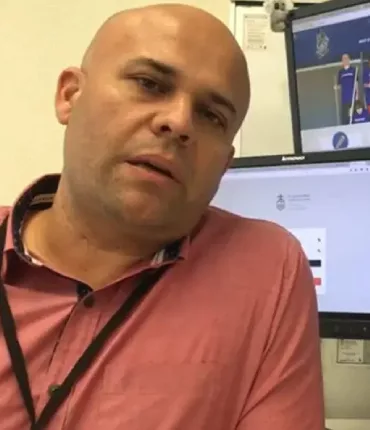

Fernando Delgado
CIO - El Camino Real Charter High School
We can always count on Team Biztech
"BiztechCS has helped us in many ways in the last 5-6 years. We have embarked on several ventures with different applications ranging from ERP to iOS apps to stand-alone applications for inventory management. Specifically, regarding Odoo development, they have helped us overcome many challenges. BiztechCS is very fast and responsive. They are really easy to talk to. We can always count on team BiztechCS in case of any issues. I have worked with them for many years and highly recommend BiztechCS."

Alexander
employee - BigFoot B.V
It was a pleasant journey, I am very happy with the results: Alexander
"I have known Biztech for about 10 years now. This year I had an idea, and my first thought was to ask BiztechCS to help me turn my idea into an app. The 3-month journey went by quickly as Team BiztechCS continually interacted with me to ensure the end product resonated with my vision. It is truly amazing to discover that we were on the same page and BiztechCS was efficiently able to build a unique app based on my requirements."

Alex Wrenn
Director - Essential Aids
They’ve got an experienced team and impressive communication skills: Alex Wrenn
"I wanted to avail myself of customized solutions for our store improvement. With the help of custom store solutions, we wanted to increase the number of satisfied customers and grow with current market trends. Biztech helped us with our website development, design, and eCommerce needs. They've got an experienced team, and I am impressed with their communication skills. I found Biztech very efficient and am pleased with how they handled things for us."

Adam Harvey
Co-founder and CEO of Proofed - Proofed Inc
Biztech felt more like an On-Shore team than an Off-Shore Team
"We’ve been working with BiztechCS for the last 7 years. We find that they are really good at ideation and coming up with new ideas when we face any problems. We have grown with them in the past 7 years, and hope to continue growing with them in the future. We highly recommend Biztech, they are very professional and have excellent technical skills and they felt more like an On-Shore team than an Off-Shore team."

Shamsul Duha
Ecommerce Head - Rocaba Group
Biztech’s expertise in ERP, Magento, and .NET helped us enter a new market: Shamsul Duha
"To meet the latest needs and expand our business further, we were looking to build an Ecommerce website for our products. We connected with Biztech, and they helped us with our website development. They are a partner aligned with what we have been trying to achieve regarding our business needs. With Biztech's expertise, we were able to enter a new market. I very much look forward to working with them in the future and highly recommend their services."

Robbert Morgan
CEO - Intervlag
I believe having Biztech on our side means we can grow faster and more efficiently: Robert Morgan
"We use Odoo ERP to manage operations more efficiently and maintain productivity in our company. Initially, we worked with other companies for our Odoo requirements, but we didn’t get the result that we were seeking. Finally, we entrusted BiztechCS with managing Odoo ERP for our company. BiztechCS understood our requirements aptly and helped us achieve the results that we were looking for. I found BiztechCS very different from other Odoo Developers. BiztechCS was very well-prepared for our needs and understood our requirements very well. I believe having BiztechCS on our side means we can grow faster and more efficiently."

Justin Loera
Director of SEO - Auto Insurance Centre
Quality work for the past 6 years, highly recommend Biztech for development and design: Justin Loera
"We have been working with Biztech for the past 6 years. I believe the work accomplished with BiztechCS has been quite good, and I appreciate team BiztechCS for their commitment to our requirements. BiztechCS has supported us whenever we had a requirement. I highly recommend BiztechCS for all types of project needs, from Code development to Design requirements and themes."

Tim
Creative Director - Balmond
Spot-on service, approachable team understanding for our critical eCommerce needs: Tim
"We wanted to go online to expand our market to the global level. We wanted a Magento store with a reliable shopping cart and a safe payment gateway for an easy and safe business transaction. And we got one with Biztech. After that, I worked with Biztech on a number of projects and was very satisfied with the work. I believe Biztech’s services are spot on and are also very approachable. I highly recommend Biztech for all types of website development and design needs."

Robert Boehmer
Chief Operations Officer - cliftons
Insights on BiztechCS by Robert Boehmer, Chief Operations Officer at Cliftons
“At Clifton's, we faced challenges with the standard calendaring solution provided by Microsoft, particularly with the volume of events we manage. We needed to find a faster, more stable solution that offered greater functionality to meet our needs. After engaging BiztechCS, they introduced us to their Calendar 365 product, which was an excellent fit. This solution has significantly improved our scheduling process, providing the required reliability and enhanced features.”
Success Stories of Digital Transformation Developed By BiztechCS
Our persistence and enthusiasm to work with technologies have helped us go above and beyond our client’s expectations. Here, explore many of our successful projects which digitally transformed businesses.

Shhh
HTML5 , Shopify
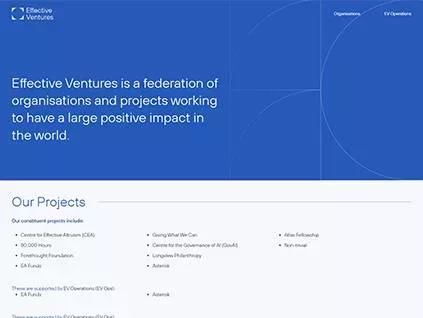
Effective Ventures
HTML5 , WordPress

Legal Network International
HTML5 , WordPress

Optimizing Field Operations with a Tailored Mobile App for Osho Chemical
Executive Summary Osho Chemical Industries Ltd, a prominent provider of agrochemicals and industrial solutions in Africa, faced challenges with manual workflows, inefficient customer assignments, and high...


Fueling OpsCTRL's Digital Transformation With Biztech: A Case Study on Enhanced Productivity
OpsCTRL is internationally renowned for its expertise in dynamic process modeling; especially for model-supported design of process control solutions. This project aimed to streamline their global operations,...

An ERP solution to manage school’s operations
Executive Summary Biztech, a renowned provider of technology solutions, undertook the task of restructuring the Magento website for El Camino Real Charter High School, a prominent educational institution...
Tech Updates from Team BiztechCS
At BiztechCS, we keep you at the edge of technology with the latest updates, news, and trends influencing the IT industry. Our blog has a unique approach and is well-researched to give you a fresh perspective on technology.

Top 10 Ways AI & Machine Learning Services Are Cutting Business Costs in 2026
The pitch for AI and ML has shifted. A few years ago the conversation was about what AI could theoretically do. Now the conversation is about what organizations are actually saving....
What to Look for When Hiring an AI ML Development Company
Only 6% of organizations are what McKinsey calls AI high performers, the ones where AI generates measurable financial returns. The other 94% are spending real money on AI and mostly...
ML Model Development Process: From Raw Data to Production-Ready Models
87% of machine learning projects fail to move from experimentation to production. The technology isn’t the reason most of them fail. The process is. Draw the ML workflow on a...Advantages of Partnering with a Professional CMS Development Company
With technology experience and experts, we help you build an SEO-optimized and user-friendly CMS. We ensure your website receives huge traffic with organic leads.
- Skilled CMS Developers
- On-demand Scalability
- Flexible Engagement Models
- Cost-Effective Solution
- On-time Delivery
- Agile Methodology
- Source Code Authorization
- 100% Customer Satisfaction
- 24*7 Support and Maintenance

Optimize Customers’ Digital Experience
Let’s develop a content management system to personalize customer interactions and optimize the website for conversion across all devices.
Frequently Asked Questions
What are CMS development services?
CMS development services involve building, customizing, and maintaining Content Management Systems — software platforms that allow organizations to create, organize, and publish digital content without needing to write code for every update. A well-built CMS puts content control in the hands of editors and marketers rather than requiring developer involvement for routine updates.
Services in this area cover building custom CMS solutions from scratch, customizing established platforms like WordPress, Drupal, or Joomla, developing custom plugins and modules, migrating from one CMS to another, and providing ongoing support and maintenance.
What is the difference between a custom CMS and an off-the-shelf platform like WordPress or Drupal?
Off-the-shelf platforms like WordPress, Drupal, and Joomla are general-purpose systems designed to work for a broad range of websites and use cases. They come with extensive plugin ecosystems and communities, which makes them fast to get started with. However, they can be difficult to adapt when a business has highly specific content structures, publishing workflows, or integration requirements that the platform was not designed for.
A custom CMS is built specifically around how a particular organization creates and manages content. It has exactly the features needed and none of the bloat from features that do not apply. This tends to result in a more intuitive experience for content teams and a more maintainable system for developers over time — at the cost of a higher initial build investment.
Which CMS platforms are most commonly used and how do they differ?
WordPress is the most widely used CMS globally, powering a large share of the web. It is well-suited for content-heavy websites, blogs, and mid-sized business sites, with a vast plugin ecosystem that extends its functionality. Drupal is more complex and flexible, commonly chosen for large organizations with complex content structures or strict security and compliance requirements. Joomla sits between the two in terms of complexity and flexibility.
For businesses that need content to be delivered across multiple channels — websites, apps, digital displays — headless CMS platforms separate content management from content delivery, allowing the same content to be distributed anywhere via API. The right platform depends on the volume and type of content, the technical capacity of the team managing it, and how it needs to integrate with other systems.
What is a headless CMS and when does it make sense?
A headless CMS stores and manages content but has no built-in frontend — instead, content is delivered through an API that any frontend can consume. This decoupled approach means the same content can be published to a website, a mobile app, a digital signage system, or any other channel without duplicating content management effort.
It makes sense for organizations that publish content across multiple channels, for development teams that want full control over the frontend technology stack, or for businesses building highly performant web experiences where a traditional CMS’s frontend rendering would create bottlenecks. The trade-off is that a headless setup requires more frontend development investment compared to a traditional CMS where the display layer is included.
How long does CMS development typically take?
A straightforward CMS implementation using an established platform with standard customizations can be completed in 4 to 8 weeks. A more complex project — involving custom content types, multi-site management, bespoke workflows, third-party integrations, or migration from an existing system — can take 3 to 6 months or more.
Timeline depends significantly on how clearly content requirements are defined at the start. Understanding what types of content need to be managed, who manages them, and how they relate to each other before development begins prevents significant rework later.
Can a CMS be integrated with other business systems?
Yes. CMS platforms routinely integrate with a range of external systems — CRM platforms for personalizing content based on customer data, eCommerce platforms for product content management, marketing automation tools for campaign coordination, analytics platforms for tracking content performance, and digital asset management systems for media libraries.
The depth of integration needed determines how much development work is involved. Some integrations are handled through existing plugins or connectors, while others require custom API development. Well-planned integrations allow content to flow between systems automatically rather than requiring manual duplication across platforms.
Does CMS development include SEO optimization?
A well-built CMS should make it straightforward for content editors to follow SEO best practices — managing page titles and meta descriptions, structuring URLs cleanly, controlling heading hierarchy, and managing canonical tags. These capabilities are standard in most established platforms, though the degree to which they are accessible to non-technical editors varies.
Beyond on-page SEO controls, technical SEO factors — site speed, mobile responsiveness, structured data markup, and clean HTML output — are largely determined by how the CMS and its theme or frontend are built. A poorly built CMS theme can undermine SEO regardless of how well the content itself is written.
What does CMS migration involve and what are the main risks?
CMS migration involves moving content, media, user data, and configuration from one platform to another — for example, from Drupal to WordPress, from an older version of a platform to a newer one, or from a custom-built system to a modern CMS. The process requires mapping how content is structured in the source system to how it will be structured in the destination, extracting and transforming the data, and importing it while maintaining relationships between content items.
The main risks are content loss or corruption during transfer, broken internal links and media references, loss of SEO equity if URLs change without proper redirects, and functionality gaps where features that existed in the old system need to be rebuilt or replaced in the new one. Thorough testing in a staging environment before going live is essential to catch these issues before they affect real users.
Do CMS development services include security features?
Professional CMS development services include comprehensive security implementing user authentication and authorization, role-based access control, secure content workflows, data encryption, protection against common vulnerabilities, regular security updates, and backup systems. CMS development company teams follow security best practices, implement SSL certificates, conduct security audits, and ensure GDPR compliance. BiztechCS CMS development services prioritize security with penetration testing, vulnerability scanning, and monitoring ensuring CMS development protects content and user data.
Can a CMS support multiple websites from a single installation?
Yes. Both WordPress and Drupal support multi-site configurations where multiple websites are managed from a shared codebase and administration interface. This is useful for organizations that operate multiple brand sites, regional sites, or microsites that share some content and functionality but need to appear as distinct properties.
Multi-site setups reduce the overhead of managing separate installations — updates, security patches, and shared plugins or modules only need to be applied once. The trade-off is that a misconfiguration or security issue in one area of the installation can affect all sites, so governance and access control need to be managed carefully.