
Odoo for Field Service Management






















High-Velocity Service Operations Powered by the Odoo Field Service Module
Modern service enterprises often struggle with disconnected workflows that lead to missed deadlines and inflated overhead. Our Odoo Field Service Management approach bridges this gap by syncing onsite labor directly with live back-end inventory controls.
Our approach ensures that your technical staff always has the right components for every specific task. Executives can monitor all active jobs across territories from a single centralized dashboard.
Using Odoo Field Service Module, your firm can maintain tight control over mobile assets, technician assignments, and warehouse inventory levels across service territories. This visibility helps your financial team cut down on wasted resources and unrecorded expenditures.
We focus on removing the friction that usually occurs between remote workers and office administrators. Implementing a robust Field Service Management Software Odoo solution allows for precise tracking of labor hours, parts usage, and real-time service execution across distributed teams.
Accurate data capture on the ground leads to much faster invoicing cycles and improved cash flow. Decision-makers no longer need to rely on old reports to understand their current market standing.
Your leadership team can successfully manage unexpected changes in customer demand and rising transport costs by using Odoo Field Service Management.
Our Comprehensive Odoo for Field Service Management
Our end-to-end Odoo implementation services are designed to modernize legacy service processes without disrupting your active maintenance schedules.
Our Comprehensive Odoo for Field Service Management

Odoo FSM-SCM

FSM Data Migration

IoT Mobility

Service Transformation

Automated Billing

Route Optimization

Asset-Specific Inventory & Van Stock Tracking
Solving Strategic Field Service Challenges with Odoo Field Service Management
Are you struggling with accurate job costing or recurring maintenance bottlenecks for high-value assets? Let us know your operational hurdles. Our senior consultants will provide a detailed implementation roadmap and a technical solution customized to your service team’s capacity.
Perks of Availing our Odoo for Field Service Management
Built on Odoo’s modular framework, our solutions deliver financial clarity and operational resilience that scale with your service volume.

Increase in First-Time Fix Rates
The system eliminates manual errors through its automated dispatch logic, which provides users with real-time equipment access. Your dispatchers can use Odoo ERP to select the technician with the required skills for each job, helping maintain your business reputation.
Real-Time BI Dashboards for the C-Suite
The system replaces slow end-of-month reporting with real-time Business Intelligence, which tracks Technician Utilization and Individual Job Profitability. The system enables leadership to detect underperforming areas and service bottlenecks that waste resources before they create financial damage.
Contract Compliance and Warranty Traceability
The system enables complete tracking of all service operations ,which assists in managing complex SLAs and warranty claims. Odoo provides a strong architectural system that enables your organization to fulfill its contractual obligations while reducing administrative duties.
Optimized Workforce Scheduling
The integration of availability information, travel time data, and overtime logs into a unified system improves the efficiency of managing hundreds of technicians. The synchronized work process protects technicians from exhaustion while allowing emergency calls to progress through the system without interruptions from standard maintenance work.
Words that make an impact






Fernando Delgado
CIO - El Camino Real Charter High School
We can always count on Team Biztech
"BiztechCS has helped us in many ways in the last 5-6 years. We have embarked on several ventures with different applications ranging from ERP to iOS apps to stand-alone applications for inventory management. Specifically, regarding Odoo development, they have helped us overcome many challenges. BiztechCS is very fast and responsive. They are really easy to talk to. We can always count on team BiztechCS in case of any issues. I have worked with them for many years and highly recommend BiztechCS."
Alexander
employee - BigFoot B.V
It was a pleasant journey, I am very happy with the results: Alexander
"I have known Biztech for about 10 years now. This year I had an idea, and my first thought was to ask BiztechCS to help me turn my idea into an app. The 3-month journey went by quickly as Team BiztechCS continually interacted with me to ensure the end product resonated with my vision. It is truly amazing to discover that we were on the same page and BiztechCS was efficiently able to build a unique app based on my requirements."

Alex Wrenn
Director - Essential Aids
They’ve got an experienced team and impressive communication skills: Alex Wrenn
"I wanted to avail myself of customized solutions for our store improvement. With the help of custom store solutions, we wanted to increase the number of satisfied customers and grow with current market trends. Biztech helped us with our website development, design, and eCommerce needs. They've got an experienced team, and I am impressed with their communication skills. I found Biztech very efficient and am pleased with how they handled things for us."

Adam Harvey
Co-founder and CEO of Proofed - Proofed Inc
Biztech felt more like an On-Shore team than an Off-Shore Team
"We’ve been working with BiztechCS for the last 7 years. We find that they are really good at ideation and coming up with new ideas when we face any problems. We have grown with them in the past 7 years, and hope to continue growing with them in the future. We highly recommend Biztech, they are very professional and have excellent technical skills and they felt more like an On-Shore team than an Off-Shore team."

Shamsul Duha
Ecommerce Head - Rocaba Group
Biztech’s expertise in ERP, Magento, and .NET helped us enter a new market: Shamsul Duha
"To meet the latest needs and expand our business further, we were looking to build an Ecommerce website for our products. We connected with Biztech, and they helped us with our website development. They are a partner aligned with what we have been trying to achieve regarding our business needs. With Biztech's expertise, we were able to enter a new market. I very much look forward to working with them in the future and highly recommend their services."

Robbert Morgan
CEO - Intervlag
I believe having Biztech on our side means we can grow faster and more efficiently: Robert Morgan
"We use Odoo ERP to manage operations more efficiently and maintain productivity in our company. Initially, we worked with other companies for our Odoo requirements, but we didn’t get the result that we were seeking. Finally, we entrusted BiztechCS with managing Odoo ERP for our company. BiztechCS understood our requirements aptly and helped us achieve the results that we were looking for. I found BiztechCS very different from other Odoo Developers. BiztechCS was very well-prepared for our needs and understood our requirements very well. I believe having BiztechCS on our side means we can grow faster and more efficiently."

Justin Loera
Director of SEO - Auto Insurance Centre
Quality work for the past 6 years, highly recommend Biztech for development and design: Justin Loera
"We have been working with Biztech for the past 6 years. I believe the work accomplished with BiztechCS has been quite good, and I appreciate team BiztechCS for their commitment to our requirements. BiztechCS has supported us whenever we had a requirement. I highly recommend BiztechCS for all types of project needs, from Code development to Design requirements and themes."

Tim
Creative Director - Balmond
Spot-on service, approachable team understanding for our critical eCommerce needs: Tim
"We wanted to go online to expand our market to the global level. We wanted a Magento store with a reliable shopping cart and a safe payment gateway for an easy and safe business transaction. And we got one with Biztech. After that, I worked with Biztech on a number of projects and was very satisfied with the work. I believe Biztech’s services are spot on and are also very approachable. I highly recommend Biztech for all types of website development and design needs."

Robert Boehmer
Chief Operations Officer - cliftons
Insights on BiztechCS by Robert Boehmer, Chief Operations Officer at Cliftons
“At Clifton's, we faced challenges with the standard calendaring solution provided by Microsoft, particularly with the volume of events we manage. We needed to find a faster, more stable solution that offered greater functionality to meet our needs. After engaging BiztechCS, they introduced us to their Calendar 365 product, which was an excellent fit. This solution has significantly improved our scheduling process, providing the required reliability and enhanced features.”
Success Stories of Digital Transformation Developed By BiztechCS
Our persistence and enthusiasm to work with technologies have helped us go above and beyond our client’s expectations. Here, explore many of our successful projects which digitally transformed businesses.
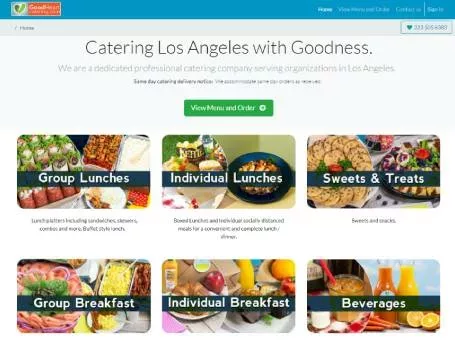
GoodHeart Catering
CSS3 , HTML5 , jQuery , Odoo , Python
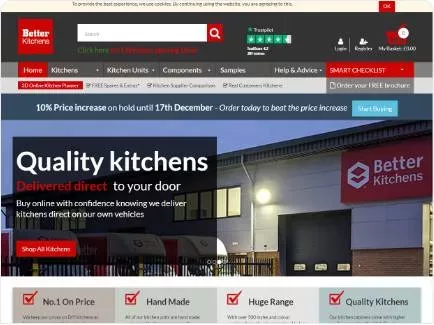
Better Kitchens
HTML5 , Odoo , Python

IDID HRMS App
Android , iOS , Kotlin , Odoo , Python , Swift

Optimizing Field Operations with a Tailored Mobile App for Osho Chemical
Executive Summary Osho Chemical Industries Ltd, a prominent provider of agrochemicals and industrial solutions in Africa, faced challenges with manual workflows, inefficient customer assignments, and high...


Fueling OpsCTRL's Digital Transformation With Biztech: A Case Study on Enhanced Productivity
OpsCTRL is internationally renowned for its expertise in dynamic process modeling; especially for model-supported design of process control solutions. This project aimed to streamline their global operations,...

An ERP solution to manage school’s operations
Executive Summary Biztech, a renowned provider of technology solutions, undertook the task of restructuring the Magento website for El Camino Real Charter High School, a prominent educational institution...
Tech Updates from Team BiztechCS
At BiztechCS, we keep you at the edge of technology with the latest updates, news, and trends influencing the IT industry. Our blog has a unique approach and is well-researched to give you a fresh perspective on technology.

The Future of Odoo Development: Trends Every Business Should Watch
Introduction Odoo has quickly become one of the most comprehensive open-source ERP systems that revolutionized business management with its modularity and intuitive interface. Looking...
Which Tools and Extensions Can Boost Your Odoo Development Efficiency?
Introduction Most developers who are working with Odoo are always searching for tools and modules that could help them save time and be more efficient. Such tools may assist in code...
Complete Guide to Odoo Development: Pro Techniques for Scalable Business Applications
Introduction Odoo development offers a unique way to create custom solutions for businesses. Mastering this platform can significantly enhance your project’s efficiency. To succeed,...Why BiztechCS is the Right Choice for Implementing Odoo ERP for Field Service?
Selecting the right partner is as critical as the ERP itself. We bring a balance of technical depth and industry-specific accountability.
- Deep Service Industry Expertise
- Certified Odoo Specialists
- Round-the-Clock Support
- Scalable Cloud Infrastructure
- High-Availability Systems
- Precision Data Migration
- IoT & Fleet Integration
- Real-Time Profitability Analytics
- Automated SLA Tracking
- Mobile Workforce Integration

Revolutionize Your Service Business with Odoo ERP and Field Service Management
Running a field service organization involves hundreds of moving parts. Your operations require a system that understands your business needs because you need to manage technician schedules and van inventory while calculating custom quotes and tracking job statuses in the field. We deliver Odoo ERP solutions because we provide field service businesses with dedicated services that guarantee dependable operational processes.
Frequently Asked Questions
What is Odoo Field Service Management and what does it cover?
Odoo Field Service Management is a module within the Odoo ERP platform that helps businesses manage the full lifecycle of field service operations — from scheduling and dispatching technicians to tracking parts, capturing job data on-site, and generating invoices after work is completed.
It brings together functions that are often handled by separate disconnected tools — dispatch software, spreadsheets, paper-based logs, and standalone inventory systems — into a single platform where data flows automatically between each step.
How does Odoo improve technician scheduling and dispatch?
Odoo’s scheduling tools allow dispatchers to assign jobs based on technician availability, skillset, location, and current workload. Rather than relying on phone calls or manual spreadsheets to coordinate who goes where, the system provides a visual overview of all active jobs and technician status in real time.
When a new job comes in, dispatchers can identify the most suitable available technician and assign the work order directly through the platform. The technician receives the job details on their mobile device without any back-and-forth communication.
Can Odoo track van stock and mobile inventory for field technicians?
Yes. One of the more operationally significant capabilities is the ability to treat each technician’s vehicle as its own inventory location. Parts loaded into a van are tracked as mobile stock, and when a technician uses a component on a job, that consumption is recorded against the work order.
This eliminates the common problem of parts being used without being logged, which leads to inventory discrepancies, unbilled materials, and difficulty understanding true job costs. It also helps ensure technicians are stocked with the right parts before heading to a job rather than discovering shortages on-site.
How does Odoo handle multi-branch or multi-territory field service operations?
Each regional office or service territory can maintain its own technician pool, inventory rules, and scheduling logic within the same Odoo instance. Financial reporting can be centralized across all branches, giving leadership a consolidated view of performance without losing the operational separation that each region needs.
Intercompany transactions — such as one branch supplying parts to another or sharing technician resources — can be handled with automated billing between entities, which reduces the administrative overhead of managing cross-branch operations manually.
Can Odoo integrate with GPS tracking and vehicle telematics systems?
Yes. Odoo can be integrated with GPS and fleet tracking systems so that real-time vehicle location data feeds into the dispatch and route planning functions. This allows managers to see where technicians actually are relative to where they are scheduled to be, and to make reassignments when unexpected situations arise.
Route optimization integrations can also factor in live traffic data to reduce travel time between jobs, which directly impacts how many jobs a technician can complete in a day and the overall fuel cost of running a field service fleet.
How does automated billing work in Odoo for field service?
When a job is completed, Odoo can automatically generate an invoice based on the labor hours recorded, parts consumed, and any applicable service rates or contract terms. This removes the delay that typically occurs when technicians submit paper job sheets that have to be manually processed by an office administrator.
For businesses with complex pricing — variable labor rates, emergency call-out fees, warranty exclusions, or tiered service contracts — Odoo’s billing logic can be configured to handle these automatically, reducing errors and ensuring margins are protected on every job.
How does Odoo support SLA tracking and contract compliance in field service?
Odoo allows service contracts and SLA terms to be attached directly to customer accounts and asset records. When a job is created for a contracted customer, the system is aware of the applicable response time commitments and escalation rules.
Managers can monitor SLA compliance in real time rather than discovering breaches after the fact. For businesses that operate under strict contractual obligations — particularly in facilities management, equipment maintenance, or utility services — this kind of automated tracking reduces the administrative burden of compliance reporting and protects against penalty clauses.
What is the process for migrating from an existing field service platform to Odoo?
Migration from platforms like ServiceMax, Jobber, or legacy SAP-based systems involves several stages: auditing the existing data, mapping records to Odoo’s data structure, cleaning and transforming the data, running test migrations in a staging environment, and then executing the final migration with validation checks.
The most critical data to preserve accurately includes service history, recurring contract terms, asset warranty records, and customer-specific pricing. A poorly executed migration can leave gaps in this history that affect both operations and customer trust, so thorough testing before go-live is essential.
What is IoT integration in the context of Odoo Field Service Management?
IoT integration connects physical equipment — such as HVAC units, industrial machinery, or utility infrastructure — to the Odoo platform via sensors and secure gateways. The equipment can then transmit real-time health data, usage metrics, or fault alerts directly into the system.
When a sensor detects an anomaly, Odoo can automatically generate a work order and assign it to a technician, before the customer even reports a problem. This shifts the service model from reactive to predictive, which improves equipment uptime and reduces the cost of emergency callouts.
What is the typical return on investment from implementing Odoo for field service?
ROI varies depending on the size of the operation and the inefficiencies being addressed, but the main areas where businesses typically see measurable improvement are: reduction in time spent on manual administration, higher first-time fix rates due to better parts planning, faster invoicing cycles that improve cash flow, lower fuel costs through route optimization, and reduced inventory loss from better van stock tracking.
Businesses that were previously managing these functions across multiple disconnected tools often see the most significant gains, since consolidating into a single system removes a large volume of duplicate data entry and communication overhead.