
Odoo for Marketing Automation





















Structured, Accountable Marketing Operations Powered by Odoo Marketing Automation Module
Marketing leadership often struggles when campaign efforts cannot be clearly connected to business results. Our approach focuses on building structure into marketing operations so performance can be reviewed with confidence. The Odoo Marketing Automation Module brings campaign execution closer to customer data and opportunity movement. This structure helps organizations reduce uncertainty around budget usage and outcome measurement.
Senior teams gain clearer visibility into what marketing contributes at each stage of growth. Marketing teams work within defined workflows that reduce operational friction. We support better alignment by ensuring sales teams receive leads with verified engagement context.
Finance teams benefit from transparent tracking that aligns marketing spend with financial records. Odoo Marketing Automation Software integrates seamlessly with the ERP environment used across departments.
This reduces dependency on disconnected tools and manual reconciliation. Our role is to ensure marketing activity supports decision-making at the leadership level. The result is a marketing function that is accountable, measurable, and trusted by top management.
Our End-to-End Odoo Marketing Automation Services
Our services are designed to unify strategy, data, and execution within Odoo’s Marketing Automation Module. This transforms marketing operations into a fully governed, revenue-aligned, and insight-driven function across the organization.
Our End-to-End Odoo Marketing Automation Services

Marketing–CRM Alignment

Campaign Data Consolidation

Customer Journey Orchestration

Marketing Performance Architecture

Budget & Spend Governance

Compliance & Consent Management

Analytics & Executive Reporting
Addressing Strategic Marketing Challenges with Odoo Marketing Automation Software
Are campaign decisions based on partial data? Is marketing spend difficult to justify at the board level? Are lead quality and attribution still debated across teams?
Our senior consultants assess your marketing structure, data maturity, and growth objectives to design an Odoo Marketing Automation implementation that fits your operating model—not a generic template.
Key Advantages of Our Odoo Marketing Automation Implementation
These advantages ensure marketing automation within Odoo delivers operational control, measurable performance, and decision-ready visibility at every level of the organization, supported by the Odoo Marketing Automation Module.

Lead Quality Governance
Automated scoring models ensure sales teams receive leads aligned with defined engagement and intent thresholds. This reduces wasted follow-ups and improves close rates.
Real-Time Executive Insights
The leadership dashboards provide real-time campaign data, helping decision-makers make necessary changes before funding runs out.
Contract & Campaign Accountability
The organization uses systematic tracking methods to monitor marketing activities associated with partner agreements, sponsorships, and SLA-based deliverables. This system helps decrease operational risks and simplifies reporting processes.
Resource & Timeline Control
Campaign calendars, workload allocation, and approval flows are managed in Odoo, preventing last-minute execution failures and burnout across marketing teams.
Words that make an impact






Fernando Delgado
CIO - El Camino Real Charter High School
We can always count on Team Biztech
"BiztechCS has helped us in many ways in the last 5-6 years. We have embarked on several ventures with different applications ranging from ERP to iOS apps to stand-alone applications for inventory management. Specifically, regarding Odoo development, they have helped us overcome many challenges. BiztechCS is very fast and responsive. They are really easy to talk to. We can always count on team BiztechCS in case of any issues. I have worked with them for many years and highly recommend BiztechCS."
Alexander
employee - BigFoot B.V
It was a pleasant journey, I am very happy with the results: Alexander
"I have known Biztech for about 10 years now. This year I had an idea, and my first thought was to ask BiztechCS to help me turn my idea into an app. The 3-month journey went by quickly as Team BiztechCS continually interacted with me to ensure the end product resonated with my vision. It is truly amazing to discover that we were on the same page and BiztechCS was efficiently able to build a unique app based on my requirements."

Alex Wrenn
Director - Essential Aids
They’ve got an experienced team and impressive communication skills: Alex Wrenn
"I wanted to avail myself of customized solutions for our store improvement. With the help of custom store solutions, we wanted to increase the number of satisfied customers and grow with current market trends. Biztech helped us with our website development, design, and eCommerce needs. They've got an experienced team, and I am impressed with their communication skills. I found Biztech very efficient and am pleased with how they handled things for us."

Adam Harvey
Co-founder and CEO of Proofed - Proofed Inc
Biztech felt more like an On-Shore team than an Off-Shore Team
"We’ve been working with BiztechCS for the last 7 years. We find that they are really good at ideation and coming up with new ideas when we face any problems. We have grown with them in the past 7 years, and hope to continue growing with them in the future. We highly recommend Biztech, they are very professional and have excellent technical skills and they felt more like an On-Shore team than an Off-Shore team."
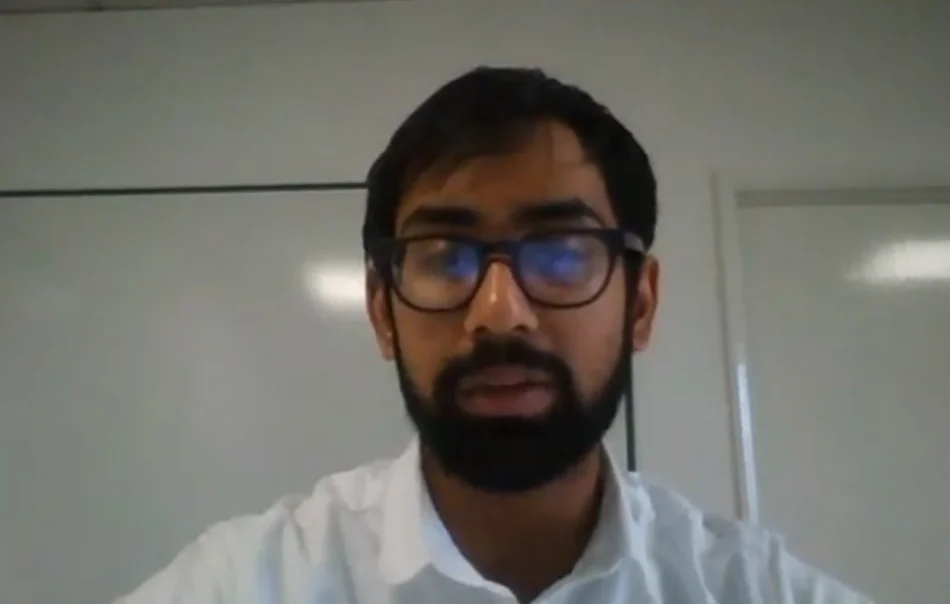
Shamsul Duha
Ecommerce Head - Rocaba Group
Biztech’s expertise in ERP, Magento, and .NET helped us enter a new market: Shamsul Duha
"To meet the latest needs and expand our business further, we were looking to build an Ecommerce website for our products. We connected with Biztech, and they helped us with our website development. They are a partner aligned with what we have been trying to achieve regarding our business needs. With Biztech's expertise, we were able to enter a new market. I very much look forward to working with them in the future and highly recommend their services."

Robbert Morgan
CEO - Intervlag
I believe having Biztech on our side means we can grow faster and more efficiently: Robert Morgan
"We use Odoo ERP to manage operations more efficiently and maintain productivity in our company. Initially, we worked with other companies for our Odoo requirements, but we didn’t get the result that we were seeking. Finally, we entrusted BiztechCS with managing Odoo ERP for our company. BiztechCS understood our requirements aptly and helped us achieve the results that we were looking for. I found BiztechCS very different from other Odoo Developers. BiztechCS was very well-prepared for our needs and understood our requirements very well. I believe having BiztechCS on our side means we can grow faster and more efficiently."

Justin Loera
Director of SEO - Auto Insurance Centre
Quality work for the past 6 years, highly recommend Biztech for development and design: Justin Loera
"We have been working with Biztech for the past 6 years. I believe the work accomplished with BiztechCS has been quite good, and I appreciate team BiztechCS for their commitment to our requirements. BiztechCS has supported us whenever we had a requirement. I highly recommend BiztechCS for all types of project needs, from Code development to Design requirements and themes."
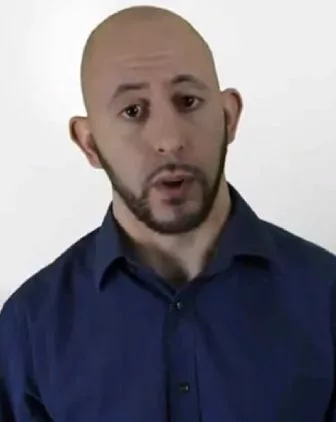
Tim
Creative Director - Balmond
Spot-on service, approachable team understanding for our critical eCommerce needs: Tim
"We wanted to go online to expand our market to the global level. We wanted a Magento store with a reliable shopping cart and a safe payment gateway for an easy and safe business transaction. And we got one with Biztech. After that, I worked with Biztech on a number of projects and was very satisfied with the work. I believe Biztech’s services are spot on and are also very approachable. I highly recommend Biztech for all types of website development and design needs."

Robert Boehmer
Chief Operations Officer - cliftons
Insights on BiztechCS by Robert Boehmer, Chief Operations Officer at Cliftons
“At Clifton's, we faced challenges with the standard calendaring solution provided by Microsoft, particularly with the volume of events we manage. We needed to find a faster, more stable solution that offered greater functionality to meet our needs. After engaging BiztechCS, they introduced us to their Calendar 365 product, which was an excellent fit. This solution has significantly improved our scheduling process, providing the required reliability and enhanced features.”
Success Stories of Digital Transformation Developed By BiztechCS
Our persistence and enthusiasm to work with technologies have helped us go above and beyond our client’s expectations. Here, explore many of our successful projects which digitally transformed businesses.
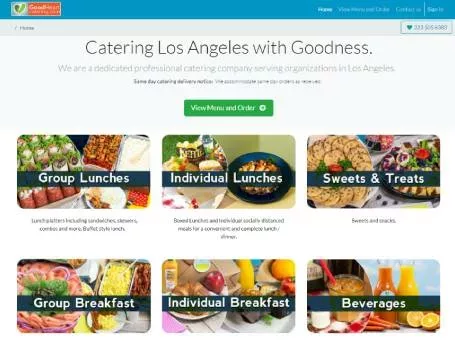
GoodHeart Catering
CSS3 , HTML5 , jQuery , Odoo , Python
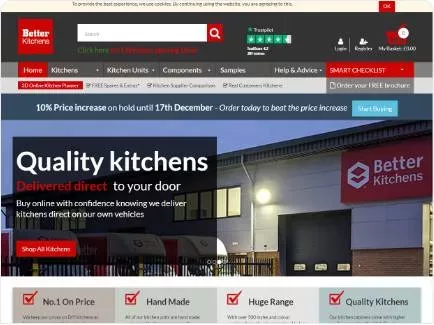
Better Kitchens
HTML5 , Odoo , Python
IDID HRMS App
Android , iOS , Kotlin , Odoo , Python , Swift

Optimizing Field Operations with a Tailored Mobile App for Osho Chemical
Executive Summary Osho Chemical Industries Ltd, a prominent provider of agrochemicals and industrial solutions in Africa, faced challenges with manual workflows, inefficient customer assignments, and high...


Fueling OpsCTRL's Digital Transformation With Biztech: A Case Study on Enhanced Productivity
OpsCTRL is internationally renowned for its expertise in dynamic process modeling; especially for model-supported design of process control solutions. This project aimed to streamline their global operations,...

An ERP solution to manage school’s operations
Executive Summary Biztech, a renowned provider of technology solutions, undertook the task of restructuring the Magento website for El Camino Real Charter High School, a prominent educational institution...
Tech Updates from Team BiztechCS
At BiztechCS, we keep you at the edge of technology with the latest updates, news, and trends influencing the IT industry. Our blog has a unique approach and is well-researched to give you a fresh perspective on technology.

The Future of Odoo Development: Trends Every Business Should Watch
Introduction Odoo has quickly become one of the most comprehensive open-source ERP systems that revolutionized business management with its modularity and intuitive interface. Looking...
Which Tools and Extensions Can Boost Your Odoo Development Efficiency?
Introduction Most developers who are working with Odoo are always searching for tools and modules that could help them save time and be more efficient. Such tools may assist in code...
Complete Guide to Odoo Development: Pro Techniques for Scalable Business Applications
Introduction Odoo development offers a unique way to create custom solutions for businesses. Mastering this platform can significantly enhance your project’s efficiency. To succeed,...Why BiztechCS Is the Right Partner for Odoo Marketing Automation?
Choosing the right implementation partner determines whether marketing automation becomes a growth system or another unused platform through scalable Odoo Marketing Automation Software implementations. We combine ERP engineering discipline with real-world marketing operations experience.
- Enterprise Marketing Domain Expertise
- Certified Odoo Consultants
- Marketing–Finance–Sales Integration Focus
- Scalable Cloud Deployments
- High-Availability System Architecture
- Zero-Loss Data Migration
- Advanced Analytics Configuration
- Compliance-First Design Approach
- Long-Term Support & Optimization

Build a Marketing Operation That Leadership Can Trust
Marketing today is accountable for revenue contribution, not just brand activity. Managing campaigns, audiences, spend, and outcomes requires a system designed for operational discipline—not disconnected tools.
Our Odoo ERP for Marketing Automation solutions are built for organizations that need clarity, control, and measurable impact across every marketing initiative using the Odoo Marketing Automation Module.
Frequently Asked Questions
What is Odoo Marketing Automation and what does it do?
Odoo Marketing Automation is a module within the Odoo ERP platform that allows businesses to plan, execute, and track marketing campaigns within the same system used for sales, finance, and operations. It enables automated workflows that trigger communications based on customer behavior, engagement history, and lifecycle stage — without requiring manual intervention at each step.
Because it sits within the broader Odoo environment, marketing data connects directly to CRM records, sales opportunities, and financial data, rather than living in a separate tool that has to be reconciled manually with the rest of the business.
How is Odoo Marketing Automation different from standalone marketing tools like HubSpot or Mailchimp?
Standalone marketing tools are purpose-built for campaign execution, but they operate in isolation from the rest of a business’s systems. Data has to be exported, synced, or manually reconciled with CRM and finance platforms, which creates delays, inconsistencies, and reporting gaps.
Odoo Marketing Automation sits inside the same platform as your CRM, sales pipeline, and financial records. This means a lead’s engagement history, purchase behavior, and opportunity status are all accessible within the same system — without integration middleware. For organizations that want marketing to be accountable to revenue outcomes rather than just campaign metrics, this native connection is significant.
What types of marketing workflows can be automated with Odoo?
Odoo supports a range of automated marketing workflows. Common examples include lead nurturing sequences triggered by form submissions or website activity, re-engagement campaigns based on inactivity periods, onboarding email flows for new customers, follow-up sequences tied to sales pipeline stages, and event-based communications triggered by purchase history or contract renewals.
Workflows can be branched based on audience behavior — for example, sending one communication path to contacts who opened an email and a different path to those who did not — allowing for more precise targeting without manual segmentation each time.
How does Odoo Marketing Automation handle lead scoring and qualification?
Odoo allows lead scoring rules to be configured based on engagement signals — such as email opens, link clicks, website visits, and form submissions. As contacts interact with marketing content, their scores update automatically, and when a threshold is reached, the lead can be automatically assigned to a sales representative or moved to a specific pipeline stage.
This reduces the manual work of reviewing and qualifying leads individually and ensures that sales teams are focused on contacts who have demonstrated genuine interest rather than working through unfiltered lists.
Can Odoo Marketing Automation support multi-region or multi-brand marketing operations?
Yes. Odoo’s structure allows different marketing teams, brands, or regional operations to be managed within the same instance while maintaining separation at the campaign, audience, and reporting level. Each region or brand can have its own campaigns, workflows, and performance dashboards while leadership retains a consolidated view across all activity.
This is particularly useful for organizations operating across multiple markets with different languages, compliance requirements, or audience segments, where a single shared tool would otherwise require complex workarounds to keep data and reporting separate.
How does Odoo handle data privacy and marketing compliance?
Odoo includes tools for managing consent and opt-in records, which are essential for compliance with regulations such as GDPR, CAN-SPAM, and other regional data privacy laws. Contacts can be tagged with their consent status, and campaigns can be configured to only reach audiences who have provided the appropriate level of permission.
Opt-out requests are also handled within the system, ensuring that unsubscribes are applied consistently across all future communications. For organizations operating across multiple markets with different regulatory requirements, Odoo’s compliance configuration can be adapted to reflect regional rules rather than applying a single global standard that may not be appropriate everywhere.
How does Odoo connect marketing activity to sales pipeline and revenue?
Because Odoo Marketing Automation shares a data layer with the CRM and sales modules, the journey from a marketing contact to a qualified lead to a closed opportunity can be tracked within a single system. Campaign activity is linked to CRM records, which means it is possible to see which campaigns contributed to which opportunities and ultimately which revenue.
This allows marketing to report on pipeline contribution and revenue influence — not just open rates and click-throughs — which gives leadership a more meaningful view of what marketing is actually delivering for the business.
What is campaign data consolidation and why does it matter during an Odoo implementation?
Campaign data consolidation is the process of bringing historical marketing data — engagement records, audience segments, performance benchmarks — from existing tools into Odoo so that past performance context is not lost when transitioning to a new system.
Without this, teams lose the ability to compare current campaign performance against historical baselines, segment audiences based on past behavior, or maintain continuity in long-running nurture sequences. A well-executed data migration preserves this context and allows marketing operations to continue without a disruptive reset.
How does Odoo Marketing Automation support budget and spend management?
Odoo can integrate marketing budgets and campaign costs directly into its financial framework, meaning marketing spend is tracked alongside other operational expenses rather than managed in a separate spreadsheet or agency report. Campaign budgets can be allocated, monitored, and compared against actual spend in real time.
This gives finance teams visibility into marketing expenditure with the same rigor applied to other business costs, and allows marketing leadership to make spend decisions based on live data rather than waiting for end-of-period reconciliation.
What should an organization assess before implementing Odoo Marketing Automation?
Before implementation, it is worth understanding the current state of your marketing data — where it lives, how clean it is, and how well it connects to your sales and customer records. Organizations with fragmented data spread across multiple tools will need to plan for consolidation and migration before automation can be effective.
It is also important to define what success looks like at the leadership level — whether that is cost per lead, pipeline contribution, conversion rates, or campaign ROI — so that the system is configured to surface the metrics that actually matter for decision-making. Implementing automation without clear performance criteria tends to result in a busier system that is no more accountable than what it replaced.