
ReactJS Development Services
- 19+ Years of Expertise
- 200+ Dynamic Individuals
- 1200+ Completed Projects






















Deliver Excellence With Our ReactJS Development Services
Do you want your website frontend to be more than a pretty picture? Does security, usability, accessibility, and above all customer experience is your priority for website frontend? If yes, then our custom ReactJS development services are tailored for you.Our expertise and hands-on experience in conjunction with the capabilities of ReactJS can work wonders for your website / web app user interface. We help weave fast-performing applications that make your customers’ experience on the app unique and flawless.
Driven by our passion for innovation and 19+ years of experience, we have embraced and adapted to evolving software and frontend development trends. As a leading ReactJS development company, we utilize this expertise to custom-build scalable and high-performance frontend applications just as you envision them.
Custom ReactJS Development Services We Offer
Crafting seamless frontend experiences for your one-of-a-kind business!
Custom ReactJS Development Services We Offer

Custom ReactJS Development

ReactJS UI/UX Development

React Mobile App Development

React JS Enterprise App Development

ReactJS Plugin/ Widget Development

ReactJS App Migration
Hire ReactJS Development Partner for Your Project
Need a reliable team to bring your web project to life with ReactJS? Our ReactJS developers ensure your app is responsive & high-performing.
Why Should You Choose BiztechCS for ReactJS Development?
We have a skilled team of ReactJS developers who create fast, user-friendly web applications tailored to your needs. With a focus on clear communication and timely delivery, we ensure high-quality results every time.
Agile Approach
BiztechCS believes in delivering quality solutions and improving it continuously. Thus, we implement agile development practices to ensure best outcomes for your ReactJS-based project. The developed software is built, tested, and improved on agile practices to ensure top-notch quality and speedy delivery of the project. With continuous improvement and multiple iterations, we ensure the end-product is in line with your vision.
Flexible Engagement Models
With the flexibility to hire developers as per your needs, we enable you to manage cost and develop your project as and how you want. You can either outsource the entire project based on a fixed price model or can hire developers flexibly on an hourly rate. We also let companies hire a dedicated offshore team with developers and project managers if they need so for their project.
Experienced Professionals
We are a team of 300+ professionals who have undergone a rigorous vetting process. Therefore, when you hire our ReactJS developers, you hire from top 1% talent and get to work with some of the best experts experienced in multiple industries. They can combat critical issues for you if the need arises. When you connect with us, you can interview developers and pick your team before starting a project.
Continuous Support and Maintenance
Being a reputed React Development Company, we make sure your entire experience with us is smooth and effortless, be it for development, deployment, or post-deployment. Our team actively keeps the newly-launched software in check for any potential errors or flaws and handles them immediately. So, if your ReactJS application sees an error, our ReactJS experts will make sure your application is up and running smoothly.
Words that make an impact







Fernando Delgado
CIO - El Camino Real Charter High School
We can always count on Team Biztech
"BiztechCS has helped us in many ways in the last 5-6 years. We have embarked on several ventures with different applications ranging from ERP to iOS apps to stand-alone applications for inventory management. Specifically, regarding Odoo development, they have helped us overcome many challenges. BiztechCS is very fast and responsive. They are really easy to talk to. We can always count on team BiztechCS in case of any issues. I have worked with them for many years and highly recommend BiztechCS."

Alexander
employee - BigFoot B.V
It was a pleasant journey, I am very happy with the results: Alexander
"I have known Biztech for about 10 years now. This year I had an idea, and my first thought was to ask BiztechCS to help me turn my idea into an app. The 3-month journey went by quickly as Team BiztechCS continually interacted with me to ensure the end product resonated with my vision. It is truly amazing to discover that we were on the same page and BiztechCS was efficiently able to build a unique app based on my requirements."

Alex Wrenn
Director - Essential Aids
They’ve got an experienced team and impressive communication skills: Alex Wrenn
"I wanted to avail myself of customized solutions for our store improvement. With the help of custom store solutions, we wanted to increase the number of satisfied customers and grow with current market trends. Biztech helped us with our website development, design, and eCommerce needs. They've got an experienced team, and I am impressed with their communication skills. I found Biztech very efficient and am pleased with how they handled things for us."

Adam Harvey
Co-founder and CEO of Proofed - Proofed Inc
Biztech felt more like an On-Shore team than an Off-Shore Team
"We’ve been working with BiztechCS for the last 7 years. We find that they are really good at ideation and coming up with new ideas when we face any problems. We have grown with them in the past 7 years, and hope to continue growing with them in the future. We highly recommend Biztech, they are very professional and have excellent technical skills and they felt more like an On-Shore team than an Off-Shore team."

Shamsul Duha
Ecommerce Head - Rocaba Group
Biztech’s expertise in ERP, Magento, and .NET helped us enter a new market: Shamsul Duha
"To meet the latest needs and expand our business further, we were looking to build an Ecommerce website for our products. We connected with Biztech, and they helped us with our website development. They are a partner aligned with what we have been trying to achieve regarding our business needs. With Biztech's expertise, we were able to enter a new market. I very much look forward to working with them in the future and highly recommend their services."

Robbert Morgan
CEO - Intervlag
I believe having Biztech on our side means we can grow faster and more efficiently: Robert Morgan
"We use Odoo ERP to manage operations more efficiently and maintain productivity in our company. Initially, we worked with other companies for our Odoo requirements, but we didn’t get the result that we were seeking. Finally, we entrusted BiztechCS with managing Odoo ERP for our company. BiztechCS understood our requirements aptly and helped us achieve the results that we were looking for. I found BiztechCS very different from other Odoo Developers. BiztechCS was very well-prepared for our needs and understood our requirements very well. I believe having BiztechCS on our side means we can grow faster and more efficiently."

Justin Loera
Director of SEO - Auto Insurance Centre
Quality work for the past 6 years, highly recommend Biztech for development and design: Justin Loera
"We have been working with Biztech for the past 6 years. I believe the work accomplished with BiztechCS has been quite good, and I appreciate team BiztechCS for their commitment to our requirements. BiztechCS has supported us whenever we had a requirement. I highly recommend BiztechCS for all types of project needs, from Code development to Design requirements and themes."

Tim
Creative Director - Balmond
Spot-on service, approachable team understanding for our critical eCommerce needs: Tim
"We wanted to go online to expand our market to the global level. We wanted a Magento store with a reliable shopping cart and a safe payment gateway for an easy and safe business transaction. And we got one with Biztech. After that, I worked with Biztech on a number of projects and was very satisfied with the work. I believe Biztech’s services are spot on and are also very approachable. I highly recommend Biztech for all types of website development and design needs."

Robert Boehmer
Chief Operations Officer - cliftons
Insights on BiztechCS by Robert Boehmer, Chief Operations Officer at Cliftons
“At Clifton's, we faced challenges with the standard calendaring solution provided by Microsoft, particularly with the volume of events we manage. We needed to find a faster, more stable solution that offered greater functionality to meet our needs. After engaging BiztechCS, they introduced us to their Calendar 365 product, which was an excellent fit. This solution has significantly improved our scheduling process, providing the required reliability and enhanced features.”
Success Stories of Digital Transformation Developed By BiztechCS
Our persistence and enthusiasm to work with technologies have helped us go above and beyond our client’s expectations. Here, explore many of our successful projects which digitally transformed businesses.

Shhh
HTML5 , Shopify
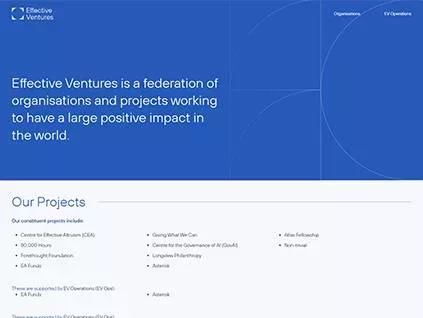
Effective Ventures
HTML5 , WordPress

Legal Network International
HTML5 , WordPress

Optimizing Field Operations with a Tailored Mobile App for Osho Chemical
Executive Summary Osho Chemical Industries Ltd, a prominent provider of agrochemicals and industrial solutions in Africa, faced challenges with manual workflows, inefficient customer assignments, and high...


Fueling OpsCTRL's Digital Transformation With Biztech: A Case Study on Enhanced Productivity
OpsCTRL is internationally renowned for its expertise in dynamic process modeling; especially for model-supported design of process control solutions. This project aimed to streamline their global operations,...

An ERP solution to manage school’s operations
Executive Summary Biztech, a renowned provider of technology solutions, undertook the task of restructuring the Magento website for El Camino Real Charter High School, a prominent educational institution...
Tech Updates from Team BiztechCS
At BiztechCS, we keep you at the edge of technology with the latest updates, news, and trends influencing the IT industry. Our blog has a unique approach and is well-researched to give you a fresh perspective on technology.

Top 10 Odoo Development Companies in the UK for 2026
Finding a reliable Odoo development company in UK is harder than it looks. The partner list on Odoo’s official website runs to hundreds of entries. Certification levels vary....
Odoo Running Slow? 7 Performance Optimization Fixes That Deliver Results
A food manufacturing company runs Odoo 16 with 40 concurrent users across production, warehouse, and finance. The system was fast at go-live with 20 users and 18 months of data. Now,...
Odoo Annual Maintenance Contract (AMC): What’s Included & Why Your Business Needs One
A distribution company went live on Odoo 15 eighteen months ago. The implementation was clean. The go-live was on time. Then the business hired a new logistics coordinator who changed...Perks of Choosing BiztechCS for ReactJS Development
With agile practices and a continuous learning approach, we believe in delivering extra value through our development. Our team is built of highly skilled professionals who make it possible for us to achieve this mission.
- Skilled ReactJS Developers
- On-demand Scalability
- Flexible Engagement Models
- Cost-Effective Solution
- On-time Delivery
- Agile Methodology
- Code Authorization
- Streamlined Management
- 100% Customer Satisfaction
- 24*7 Support and Maintenance

Build Interactive ReactJS Applications With Us
Give your frontend user interface a unique flair and develop a highly interactive and scalable application that keeps your audience amazed. Let our ReactJS experts assist you in this venture.
FAQs
What is ReactJS and what is it used for?
ReactJS is a JavaScript library developed and maintained by Meta (formerly Facebook) for building user interfaces, particularly for web applications that require dynamic, interactive frontends. It allows developers to build interfaces from reusable components, where each component manages its own state and updates efficiently when data changes.
It is commonly used for single-page applications, dashboards, eCommerce frontends, social platforms, enterprise web portals, and any web application where a fast, responsive user experience is a priority. Because ReactJS handles only the view layer, it is often combined with other libraries and frameworks to cover routing, state management, and backend communication.
How is ReactJS different from other JavaScript frameworks like Angular or Vue?
The most fundamental difference is that ReactJS is a library focused specifically on building UI components, while Angular is a full framework that includes routing, form handling, HTTP clients, and more out of the box. Vue sits somewhere in between — more opinionated than React but less comprehensive than Angular.
React’s component-based architecture and virtual DOM give it strong performance characteristics for applications with frequent UI updates. Its unopinionated nature means developers have more freedom in how they structure an application, but it also means more decisions need to be made about which supporting libraries to use. Angular’s more prescriptive structure can be an advantage in large teams where consistency matters more than flexibility.
What types of applications can be built with ReactJS?
ReactJS is well-suited for a wide range of web-based applications. Common examples include single-page applications where the page updates dynamically without full reloads, data-heavy dashboards with real-time updates, eCommerce storefronts, social platforms, content management interfaces, enterprise portals, and SaaS product frontends.
With React Native — a related framework that uses React’s component model for mobile development — the same team and codebase patterns can be extended to build native mobile applications for iOS and Android, making React a practical choice for organizations that want to align their web and mobile development work.
What is the virtual DOM in ReactJS and why does it matter for performance?
The DOM (Document Object Model) is the browser’s representation of a web page. When a web application updates — for example, when a user submits a form or new data arrives — the browser has to re-render parts of the page. Traditional DOM manipulation can be slow when many elements change frequently.
React’s virtual DOM is an in-memory representation of the actual DOM. When the application state changes, React first calculates what changed in the virtual DOM, then applies only the minimum necessary updates to the real DOM. This diffing process significantly reduces the amount of work the browser has to do, which is why React applications tend to feel fast and responsive even with complex, frequently updating interfaces.
Is ReactJS suitable for large-scale and enterprise applications?
Yes. React’s component-based architecture scales well for large applications because functionality is broken into discrete, reusable pieces that can be developed and tested independently. Large teams can work on different components in parallel without constantly stepping on each other’s work.
For enterprise applications with complex state management requirements, React is typically used alongside libraries like Redux or Zustand that provide structured ways to manage application state across many components. React’s maturity, large ecosystem, and the availability of experienced developers make it a practical choice for organizations that need to maintain and extend a frontend over many years.
What is React Native and how does it relate to ReactJS?
React Native is a framework that uses React’s component model and JavaScript to build native mobile applications for iOS and Android. Unlike web-based mobile solutions that wrap a website in a browser container, React Native renders actual native UI components, which means the resulting app looks and behaves like a genuinely native application rather than a web page displayed on a phone.
For organizations that already have a React web application, React Native allows the team’s existing knowledge and some shared code logic to carry over into mobile development, reducing the learning curve and development overhead compared to maintaining entirely separate native iOS and Android codebases.
What is ReactJS app migration and when does a business need it?
ReactJS migration refers to moving an existing web application’s frontend from a different technology — such as Angular, Vue, jQuery, or a server-rendered framework — to React. It becomes relevant when the current frontend technology is difficult to maintain, lacks the performance characteristics needed, or when the development team wants to consolidate around React as the primary frontend technology across projects.
Migration can be done incrementally — replacing parts of the existing frontend with React components gradually — or as a full rebuild. Incremental migration is generally lower risk because it keeps the existing application functional throughout the transition rather than requiring a complete freeze on new features until the migration is done.
What are ReactJS plugins and widgets and how do they extend an application?
Plugins and widgets built with React are self-contained components that add specific functionality to an application — things like date pickers, chart visualizations, map interfaces, rich text editors, or custom data tables. They can be developed as standalone components that plug into any React application or as embeddable widgets that work within a broader platform.
Custom ReactJS widget development is useful when existing open-source components do not fit a specific use case, when precise control over behavior and styling is needed to match brand requirements, or when a widget needs to integrate with business-specific data sources in ways that generic solutions do not support.
How is quality ensured in ReactJS development projects?
Quality in ReactJS development is maintained through a combination of practices. Component-level unit testing — using tools like Jest and React Testing Library — verifies that individual components behave correctly. Integration testing checks how components work together. End-to-end testing simulates real user interactions to catch issues that only emerge in a complete application flow.
Beyond testing, code quality is maintained through peer code reviews, consistent use of linting tools that enforce coding standards, and following established patterns for state management and component structure. Applications that are well-structured from the start are significantly easier to debug, extend, and hand over to a different team if needed.
What should a business consider when choosing a ReactJS development company?
Beyond general development experience, it is worth asking specifically about the team’s depth in the React ecosystem — their familiarity with state management approaches, testing practices, performance optimization, and accessibility standards. React is a flexible library that can be used well or poorly, and the patterns a team uses have a significant long-term impact on how maintainable the codebase is.
It is also worth understanding how they handle the non-React parts of the stack — API design, backend integration, deployment infrastructure — since a frontend application rarely exists in isolation. A team that thinks about the full system rather than just the UI layer will deliver a more reliable and coherent product.