
Magento Development Services
As a leading Magento development company, we deliver intuitive, feature-rich, and omnichannel Magento eCommerce solution that perfectly resonates with your brand identity. Harness the full potential of Adobe Commerce with our Magento development services and save up to 40% on development, maintenance, and support costs. Build engaging eStores and generate higher ROI.- 19+ Years of Expertise
- 200+ Dynamic Individuals
- 1200+ Completed Projects






















Discover Infinite Possibilities With Custom Magento Development Services
Aiming a glitch-free online shopping experience with smooth navigation, accurate checkout system, and intelligent product recommendations for your eCommerce store? Then, our Magento website development services can fix your problem and outgrow, outshine, and outperform your competitors smartly!
With our holistic Magento development and strategy planning services, you can attain improved conversion rates, profit margins, and more satisfied customers. From migrating your online store to Magento to consultation, development, or extension development, our Magento development services can take care of all your eStore needs.
Having worked in the industry for 19+ years, we have extensive experience of 1200+ projects to help you develop custom Magento website with advanced features. As a leading Magento 2 development company, we offer immense flexibility and support so you can focus on your core business operations and potential customers.
Partner with us and for business growth and maximum revenue generation by yourself!
Defy Ecommerce Norms With Our Magento Custom Development Services
Being a prominent Magento development company, Biztech can handle all your eCommerce platforms’ needs. Check our extensive range of Magento 2 development services offered at competitive rates.
Defy Ecommerce Norms With Our Magento Custom Development Services

Custom Magento Web Development

Magento Theme Development

Magento Extension Development

Magento PWA Development

Magento Third-Party Integration and Migration

Magento Support and Maintenance
Collaborate With Our Magento Developers and Turn Your Ideas Into Reality
Ask Magento experts about how our custom Magento development services can drive sales to your store.
Benefits of Custom Magento Development Services

Feature-Rich Stores
Magento offers a wide range of custom features for all your custom business requirements – whether it is store optimization or SEO-compliance. With custom Magento agency USA, you can build robust eCommerce stores that puts you ahead of your competitors. By connecting with a reputed Magento website development company, you can multifold your eCommerce business returns in the long run.
Scalability and Flexibility
Apart from the features and functionalities, Magento custom development allows you to scale your business on your terms without struggling with store expansion. A custom Magento development company can further enhance your eCommerce experience by giving you the flexibility to build your envisioned storefronts.
Increased Security
A custom-developed Magento website provides an extra layer of security. Plus, the custom solution allow you to tend to security patches and tighten it by implementing standard protocols and features like MFA, just the way you want. Hire Dedicated Magento Developers and project managers to ensure all security protocols are maintained for your store.
Support and Maintenance Services
Partner with the best Magento 2 development company and get your queries resolved quickly. We provide complete support and maintenance of your online business so you can reach your business goals without any hindrance. Our Magento eCommerce development services help you with support and maintenance of your Magento store instantly.
Words that make an impact







Fernando Delgado
CIO - El Camino Real Charter High School
We can always count on Team Biztech
"BiztechCS has helped us in many ways in the last 5-6 years. We have embarked on several ventures with different applications ranging from ERP to iOS apps to stand-alone applications for inventory management. Specifically, regarding Odoo development, they have helped us overcome many challenges. BiztechCS is very fast and responsive. They are really easy to talk to. We can always count on team BiztechCS in case of any issues. I have worked with them for many years and highly recommend BiztechCS."

Alexander
employee - BigFoot B.V
It was a pleasant journey, I am very happy with the results: Alexander
"I have known Biztech for about 10 years now. This year I had an idea, and my first thought was to ask BiztechCS to help me turn my idea into an app. The 3-month journey went by quickly as Team BiztechCS continually interacted with me to ensure the end product resonated with my vision. It is truly amazing to discover that we were on the same page and BiztechCS was efficiently able to build a unique app based on my requirements."

Alex Wrenn
Director - Essential Aids
They’ve got an experienced team and impressive communication skills: Alex Wrenn
"I wanted to avail myself of customized solutions for our store improvement. With the help of custom store solutions, we wanted to increase the number of satisfied customers and grow with current market trends. Biztech helped us with our website development, design, and eCommerce needs. They've got an experienced team, and I am impressed with their communication skills. I found Biztech very efficient and am pleased with how they handled things for us."

Adam Harvey
Co-founder and CEO of Proofed - Proofed Inc
Biztech felt more like an On-Shore team than an Off-Shore Team
"We’ve been working with BiztechCS for the last 7 years. We find that they are really good at ideation and coming up with new ideas when we face any problems. We have grown with them in the past 7 years, and hope to continue growing with them in the future. We highly recommend Biztech, they are very professional and have excellent technical skills and they felt more like an On-Shore team than an Off-Shore team."

Shamsul Duha
Ecommerce Head - Rocaba Group
Biztech’s expertise in ERP, Magento, and .NET helped us enter a new market: Shamsul Duha
"To meet the latest needs and expand our business further, we were looking to build an Ecommerce website for our products. We connected with Biztech, and they helped us with our website development. They are a partner aligned with what we have been trying to achieve regarding our business needs. With Biztech's expertise, we were able to enter a new market. I very much look forward to working with them in the future and highly recommend their services."

Robbert Morgan
CEO - Intervlag
I believe having Biztech on our side means we can grow faster and more efficiently: Robert Morgan
"We use Odoo ERP to manage operations more efficiently and maintain productivity in our company. Initially, we worked with other companies for our Odoo requirements, but we didn’t get the result that we were seeking. Finally, we entrusted BiztechCS with managing Odoo ERP for our company. BiztechCS understood our requirements aptly and helped us achieve the results that we were looking for. I found BiztechCS very different from other Odoo Developers. BiztechCS was very well-prepared for our needs and understood our requirements very well. I believe having BiztechCS on our side means we can grow faster and more efficiently."

Justin Loera
Director of SEO - Auto Insurance Centre
Quality work for the past 6 years, highly recommend Biztech for development and design: Justin Loera
"We have been working with Biztech for the past 6 years. I believe the work accomplished with BiztechCS has been quite good, and I appreciate team BiztechCS for their commitment to our requirements. BiztechCS has supported us whenever we had a requirement. I highly recommend BiztechCS for all types of project needs, from Code development to Design requirements and themes."

Tim
Creative Director - Balmond
Spot-on service, approachable team understanding for our critical eCommerce needs: Tim
"We wanted to go online to expand our market to the global level. We wanted a Magento store with a reliable shopping cart and a safe payment gateway for an easy and safe business transaction. And we got one with Biztech. After that, I worked with Biztech on a number of projects and was very satisfied with the work. I believe Biztech’s services are spot on and are also very approachable. I highly recommend Biztech for all types of website development and design needs."

Robert Boehmer
Chief Operations Officer - cliftons
Insights on BiztechCS by Robert Boehmer, Chief Operations Officer at Cliftons
“At Clifton's, we faced challenges with the standard calendaring solution provided by Microsoft, particularly with the volume of events we manage. We needed to find a faster, more stable solution that offered greater functionality to meet our needs. After engaging BiztechCS, they introduced us to their Calendar 365 product, which was an excellent fit. This solution has significantly improved our scheduling process, providing the required reliability and enhanced features.”
Success Stories of Digital Transformation Developed By BiztechCS
Our persistence and enthusiasm to work with technologies have helped us go above and beyond our client’s expectations. Here, explore many of our successful projects which digitally transformed businesses.

MasColori
HTML5 , jQuery , Magento , MySQL
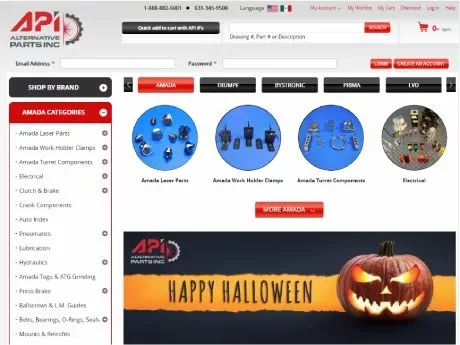
AltParts
Apache Solr , HTML5 , Magento
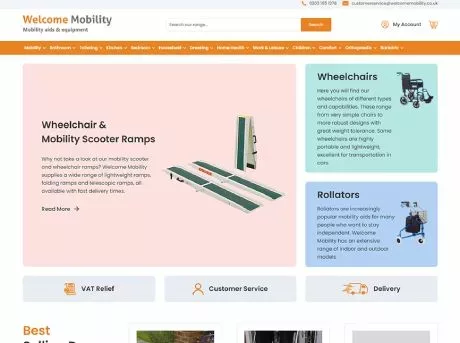
Welcome Mobility
HTML5 , jQuery , Magento , MySQL

Optimizing Field Operations with a Tailored Mobile App for Osho Chemical
Executive Summary Osho Chemical Industries Ltd, a prominent provider of agrochemicals and industrial solutions in Africa, faced challenges with manual workflows, inefficient customer assignments, and high...


Fueling OpsCTRL's Digital Transformation With Biztech: A Case Study on Enhanced Productivity
OpsCTRL is internationally renowned for its expertise in dynamic process modeling; especially for model-supported design of process control solutions. This project aimed to streamline their global operations,...

An ERP solution to manage school’s operations
Executive Summary Biztech, a renowned provider of technology solutions, undertook the task of restructuring the Magento website for El Camino Real Charter High School, a prominent educational institution...
Tech Updates from Team BiztechCS
At BiztechCS, we keep you at the edge of technology with the latest updates, news, and trends influencing the IT industry. Our blog has a unique approach and is well-researched to give you a fresh perspective on technology.

Magento 2.4.6 Release: Features & Updates
Summary Magento 2.4.6 will be released on 14th March 2023. Although it’s a minor release of the open-source Magento platform, developers and business owners can expect some brilliant...
Magento 2.4.7 Release — Key Highlights, Features, & Benefits
Overview Of Magento 2.4.7 Release Great news for the Magento community! Adobe Commerce has released the latest Magento version, 2.4.7. With the Magento 2.4.7 release, we have a wide...
Magento 2.4.8 Beta Guide: Updates & Key Features
Introduction Magento 2.4.8 Beta is here, bringing a host of exciting upgrades for users to explore. This new version includes important improvements in security, performance, and compliance....What You Get With Competent Magento Development Company
Our Ecommerce Development Services guarantee diverse functionalities that delivers smooth customer experience and polished brand visibility. Here are the benefits of partnering with us, the best Magento 2 development company!
- Proficient and Certified Magento Developers
- On-demand Scalability
- Flexible Engagement Models
- Competitive Development Cost
- On-time Delivery
- Agile Methodology
- Code Authorization
- Adobe Solution Partner
- Collaborative and Communicative Approach
- 100% Customer Satisfaction
- 24*7 Support and Maintenance

We Can Meet All Your Magento Store Demands
Being amongst the top Magento development companies, we have helped 300+ clients increase their sales targets by 2X. We can help you too with our custom Magento development and strategy planning services. Trust us and see your Magento commerce store ideas, sales and customer expectations turn into reality.
Frequently Asked Questions
What are Magento development services?
Magento development services involve building, customizing, and maintaining eCommerce stores on the Magento platform — now known as Adobe Commerce in its enterprise edition. This covers building new stores from scratch, developing custom extensions and themes, migrating from older Magento versions or other platforms, integrating with third-party systems, and providing ongoing performance and security maintenance.
Magento is an open-source platform with significant flexibility, which means the quality and scope of what gets built depends heavily on the development team’s experience with the platform’s architecture and capabilities.
What types of eCommerce stores can be built with Magento?
Magento supports a wide range of eCommerce models. It is commonly used for B2C retail stores, B2B commerce platforms with complex pricing rules and account management, multi-store setups where a single Magento instance powers multiple storefronts, and marketplace-style stores. It is also well-suited for stores with large product catalogs, complex product configurations, and high traffic volumes.
Where Magento particularly stands out is in scenarios that require significant customization — unique checkout flows, custom pricing logic, specialized inventory management, or deep integration with backend business systems. Simpler stores with straightforward requirements may find it more than they need.
What is Magento extension development and when is it needed?
Magento extensions are modules that add or modify functionality within a Magento store. The Magento marketplace has a large library of existing extensions, but businesses often need custom extensions when no existing option does exactly what is required, or when existing extensions conflict with each other or with custom store code.
Custom extension development is common for adding features like advanced product configurators, custom pricing engines, unique checkout steps, loyalty programs, or integrations with business-specific tools that do not have ready-made Magento connectors. A well-built custom extension is scoped precisely to what the store needs and does not carry the overhead or compatibility risks of adapting a generic marketplace solution.
What is Magento 2 migration and why does it matter?
Magento 1 reached official end-of-life in June 2020, meaning Adobe stopped releasing security patches for it. Stores still running on Magento 1 are operating on an unsupported platform that receives no security updates, which creates ongoing vulnerability risk.
Migrating to Magento 2 involves transferring products, customer data, order history, and custom functionality to the newer platform, which has a fundamentally different architecture. It is not a simple upgrade — it typically requires rebuilding customizations and extensions because the codebase structure changed significantly between versions. The migration also presents an opportunity to reassess the store’s architecture and address technical debt that accumulated on the older platform.
What is Magento PWA development and how does it differ from a standard mobile website?
A Progressive Web App built on Magento delivers an experience closer to a native mobile app — faster load times, offline functionality, and the ability to be added to a phone’s home screen — without requiring users to download anything from an app store. It runs in a browser but behaves like an app.
The technical difference from a standard mobile-responsive website is significant. A Magento PWA typically uses a headless architecture where the frontend is decoupled from the Magento backend, with the frontend built using modern JavaScript frameworks. This allows for much faster page rendering and a more fluid shopping experience, particularly on mobile devices with slower connections.
How does Magento handle multi-store or multi-brand setups?
Magento has native multi-store functionality that allows a single installation to power multiple storefronts — each with its own domain, design, product catalog, pricing, and language settings. These stores can share a common product catalog and customer base or be entirely separate, depending on how they are configured.
This is a significant advantage for businesses operating multiple brands, selling in multiple regions with different currencies and languages, or running separate B2B and B2C channels. Managing multiple stores from a single Magento admin reduces operational overhead compared to maintaining entirely separate eCommerce installations.
How does Magento handle performance optimization for high-traffic stores?
Magento’s performance depends significantly on how the store is configured and hosted, not just the platform itself. Key factors include server infrastructure, caching configuration, database optimization, image compression, use of a content delivery network, and how efficiently custom code and extensions are written.
Out of the box, Magento includes built-in caching mechanisms, full-page cache support, and Elasticsearch integration for fast product search. However, stores with very large catalogs or high concurrent traffic typically require additional performance tuning beyond the defaults — particularly in areas like database query optimization and cache warming strategies.
How long does Magento development typically take?
A mid-sized Magento store with standard functionality and an existing theme can be built and launched in 2 to 3 months. A fully custom store with bespoke design, custom extensions, complex integrations, and migration from another platform typically takes 4 to 8 months or more depending on scope.
Timeline is most affected by the complexity of custom requirements and the completeness of the initial brief. Projects where requirements are clearly defined and stakeholders are available for timely feedback tend to progress significantly faster than those where scope evolves throughout development.
What ongoing maintenance does a Magento store require after launch?
Magento releases regular security patches and version updates that need to be applied to keep the store protected. These updates need to be tested in a staging environment before being applied to the live store, since they can occasionally affect custom functionality or extension compatibility.
Beyond security, ongoing maintenance typically covers performance monitoring, resolving issues that emerge from real-world usage, updating integrations when third-party APIs change, and managing the compatibility of extensions against new Magento versions. For stores that rely heavily on custom extensions or complex integrations, having a consistent maintenance arrangement in place is particularly important, as changes in one part of the system can have unexpected effects on others.
How long does Magento development typically take?
A mid-sized Magento store with standard functionality and an existing theme can be built and launched in 2 to 3 months. A fully custom store with bespoke design, custom extensions, complex integrations, and migration from another platform typically takes 4 to 8 months or more depending on scope.
Timeline is most affected by the complexity of custom requirements and the completeness of the initial brief. Projects where requirements are clearly defined and stakeholders are available for timely feedback tend to progress significantly faster than those where scope evolves throughout development.