
.NET Development Services
Our .NET development services help businesses enhance agility and reduce operational costs through secure, scalable solutions. We address challenges like complex system integrations and outdated infrastructure, ensuring seamless digital transformation.
With our expertise, we deliver solutions that drive business growth while ensuring data security and reliability.

50+
Products Engineered
500+
Successful Consultations
100+
Expert Developers
30+
Products Re-engineered




Optimize Business Performance by Customizing .NET Development Services for Seamless Cross-Department Collaboration.
Our .NET development services are designed to streamline business processes and optimize performance across departments. By creating custom solutions, we ensure that various systems work in harmony, eliminating silos and improving overall efficiency.
We build .NET web applications that drive cross-department collaboration and reduce manual efforts. Our team tailors solutions that enhance workflow automation, ensuring businesses can meet their goals faster.
With our Custom .NET Development solutions, you can seamlessly integrate legacy systems with modern technologies for smooth operations. Our services help businesses stay competitive by optimizing data flow, improving collaboration, and enabling smarter decisions.
As a trusted .NET development company and expert in .NET web application development, we deliver scalable solutions that grow with your business needs. We provide ongoing support to ensure your applications evolve in tandem with your business growths.







Our Custom .NET Development Services Offerings
Our diverse .NET development services provide tailored solutions that drive business growth and innovation.
Our Custom .NET Development Services Offerings
Our diverse .NET development services provide tailored solutions that drive business growth and innovation.

Custom .NET Application
We develop custom .NET applications tailored to your specific business requirements. Our solutions are designed to optimize efficiency, scalability, and security and address your unique challenges.

.NET Consulting
Our expert consultants help you identify the right .NET solutions for your business needs. We provide strategic advice and roadmap development to ensure you maximize the value from your .NET investments.

.NET Migration
We help businesses migrate their legacy applications to .NET, enhancing performance, security, and scalability. Our team ensures a seamless transition while minimizing disruptions to your daily operations.

.NET App Modernization
We modernize outdated .NET applications to ensure they align with current technology standards. This approach improves performance, enhances user experience, and extends the life of your applications.

.NET Code Audit
Our code audit services analyze your .NET applications for performance, security, and scalability. We identify optimization opportunities and ensure your codebase is clean, secure, and efficient.

.NET Application Integration
We integrate your .NET applications with existing systems, ensuring smooth data flow across departments. This reduces silos and enhances collaboration within your organization.

.NET App Migration to Cloud
We facilitate migrating your .NET applications to the cloud, improving flexibility, scalability, and cost-efficiency. Our cloud migration services ensure secure and seamless transitions.

.NET Software Support and Maintenance
We provide ongoing support and maintenance for your .NET applications, ensuring they remain secure and perform optimally. Our team addresses any issues promptly, minimizing downtime and ensuring business continuity.
.NET Development Services Tailored for You – Book a Free Call
.NET development is transforming businesses—stay ahead of the curve. Our team will assess your needs and deliver Custom .NET Development that enhances performance, boosts scalability, and aligns perfectly with your business goals.
Our Approach to Custom .NET Application Development
Our approach focuses on understanding your unique business needs and delivering tailored .NET solutions that drive success.

1. Requirements Gathering and Analysis
- In-depth business requirement analysis
- Clear identification of project scope
- Tailored solutions for business challenges

2. System Architecture and Design
- Scalable and secure architecture design
- High-performance solutions for growth
- Aligning architecture with business goals

3. Development and Coding
- Agile development for quick results
- Clean, maintainable, and efficient code
- Leveraging the latest .NET technologies

4. Testing and Quality Assurance
- Comprehensive testing for performance
- Ensuring optimal security and functionality
- Identifying and resolving potential issues

5. Deployment and Maintenance
- Precise and smooth application deployment
- Ongoing support for continuous improvement
- Ensuring long-term application reliability
Technology Stack
- AI Technologies
- Open Source
- Close Source
- Mobile
- Graphic Design
- Microsoft
- Integrations
- Database
- Testing and Automation



























































Industries We Serve
Combining our expertise with industry knowledge, we help businesses from different industries capitalize on digital technology and create stunning digital experiences.

Customer & Support

Customer Service

Insurance

Real Estate

Manufacturing

Retail & eCommerce

Marketing

Customer Relationship management

Travel & Hospitality

Healthcare

Life Science

Fintech

On-demand Services

IT & Software

Education
Words that make an impact







Fernando Delgado
CIO - El Camino Real Charter High School
We can always count on Team Biztech
"BiztechCS has helped us in many ways in the last 5-6 years. We have embarked on several ventures with different applications ranging from ERP to iOS apps to stand-alone applications for inventory management. Specifically, regarding Odoo development, they have helped us overcome many challenges. BiztechCS is very fast and responsive. They are really easy to talk to. We can always count on team BiztechCS in case of any issues. I have worked with them for many years and highly recommend BiztechCS."

Alexander
employee - BigFoot B.V
It was a pleasant journey, I am very happy with the results: Alexander
"I have known Biztech for about 10 years now. This year I had an idea, and my first thought was to ask BiztechCS to help me turn my idea into an app. The 3-month journey went by quickly as Team BiztechCS continually interacted with me to ensure the end product resonated with my vision. It is truly amazing to discover that we were on the same page and BiztechCS was efficiently able to build a unique app based on my requirements."

Alex Wrenn
Director - Essential Aids
They’ve got an experienced team and impressive communication skills: Alex Wrenn
"I wanted to avail myself of customized solutions for our store improvement. With the help of custom store solutions, we wanted to increase the number of satisfied customers and grow with current market trends. Biztech helped us with our website development, design, and eCommerce needs. They've got an experienced team, and I am impressed with their communication skills. I found Biztech very efficient and am pleased with how they handled things for us."

Adam Harvey
Co-founder and CEO of Proofed - Proofed Inc
Biztech felt more like an On-Shore team than an Off-Shore Team
"We’ve been working with BiztechCS for the last 7 years. We find that they are really good at ideation and coming up with new ideas when we face any problems. We have grown with them in the past 7 years, and hope to continue growing with them in the future. We highly recommend Biztech, they are very professional and have excellent technical skills and they felt more like an On-Shore team than an Off-Shore team."

Shamsul Duha
Ecommerce Head - Rocaba Group
Biztech’s expertise in ERP, Magento, and .NET helped us enter a new market: Shamsul Duha
"To meet the latest needs and expand our business further, we were looking to build an Ecommerce website for our products. We connected with Biztech, and they helped us with our website development. They are a partner aligned with what we have been trying to achieve regarding our business needs. With Biztech's expertise, we were able to enter a new market. I very much look forward to working with them in the future and highly recommend their services."

Robbert Morgan
CEO - Intervlag
I believe having Biztech on our side means we can grow faster and more efficiently: Robert Morgan
"We use Odoo ERP to manage operations more efficiently and maintain productivity in our company. Initially, we worked with other companies for our Odoo requirements, but we didn’t get the result that we were seeking. Finally, we entrusted BiztechCS with managing Odoo ERP for our company. BiztechCS understood our requirements aptly and helped us achieve the results that we were looking for. I found BiztechCS very different from other Odoo Developers. BiztechCS was very well-prepared for our needs and understood our requirements very well. I believe having BiztechCS on our side means we can grow faster and more efficiently."

Justin Loera
Director of SEO - Auto Insurance Centre
Quality work for the past 6 years, highly recommend Biztech for development and design: Justin Loera
"We have been working with Biztech for the past 6 years. I believe the work accomplished with BiztechCS has been quite good, and I appreciate team BiztechCS for their commitment to our requirements. BiztechCS has supported us whenever we had a requirement. I highly recommend BiztechCS for all types of project needs, from Code development to Design requirements and themes."

Tim
Creative Director - Balmond
Spot-on service, approachable team understanding for our critical eCommerce needs: Tim
"We wanted to go online to expand our market to the global level. We wanted a Magento store with a reliable shopping cart and a safe payment gateway for an easy and safe business transaction. And we got one with Biztech. After that, I worked with Biztech on a number of projects and was very satisfied with the work. I believe Biztech’s services are spot on and are also very approachable. I highly recommend Biztech for all types of website development and design needs."

Robert Boehmer
Chief Operations Officer - cliftons
Insights on BiztechCS by Robert Boehmer, Chief Operations Officer at Cliftons
“At Clifton's, we faced challenges with the standard calendaring solution provided by Microsoft, particularly with the volume of events we manage. We needed to find a faster, more stable solution that offered greater functionality to meet our needs. After engaging BiztechCS, they introduced us to their Calendar 365 product, which was an excellent fit. This solution has significantly improved our scheduling process, providing the required reliability and enhanced features.”
Success Stories of Digital Transformation Developed By BiztechCS
Our persistence and enthusiasm to work with technologies have helped us go above and beyond our client’s expectations. Here, explore many of our successful projects which digitally transformed businesses.

Shhh
HTML5 , Shopify
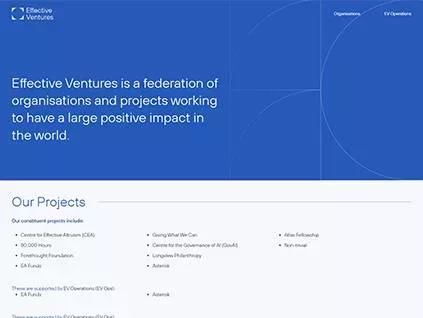
Effective Ventures
HTML5 , WordPress
Legal Network International
HTML5 , WordPress

Optimizing Field Operations with a Tailored Mobile App for Osho Chemical
Executive Summary Osho Chemical Industries Ltd, a prominent provider of agrochemicals and industrial solutions in Africa, faced challenges with manual workflows, inefficient customer assignments, and high...


Fueling OpsCTRL's Digital Transformation With Biztech: A Case Study on Enhanced Productivity
OpsCTRL is internationally renowned for its expertise in dynamic process modeling; especially for model-supported design of process control solutions. This project aimed to streamline their global operations,...

An ERP solution to manage school’s operations
Executive Summary Biztech, a renowned provider of technology solutions, undertook the task of restructuring the Magento website for El Camino Real Charter High School, a prominent educational institution...
Tech Updates from Team BiztechCS
At BiztechCS, we keep you at the edge of technology with the latest updates, news, and trends influencing the IT industry. Our blog has a unique approach and is well-researched to give you a fresh perspective on technology.

How Much Does It Cost To Build An AI App in 2026?
Introduction Creating an AI app in 2025 may prove to be quite challenging, though the process can be an exhilarating experience. The expense required to develop such an app depends...
25+ Profitable AI Business Ideas for 2026
Introduction AI is moving industries faster than ever, opening up new doors for startups and entrepreneurs. By 2025, AI-powered businesses will add over $15 trillion to the global economy....
Why AI Facial Recognition System is the Future of Cybersecurity?
Introduction Traditional security methods are finding it difficult to keep up with the increasing sophistication of cyber attacks. Facial recognition software driven by artificial intelligence...Why Businesses Trust .NET for Building Robust Enterprise Solutions?
.NET offers a comprehensive, reliable framework that meets the complex needs of modern enterprises, driving innovation and growth.

Enterprise Support
.NET provides solid enterprise support for mission-critical applications, ensuring high performance and scalability. It enables businesses to handle large-scale operations with reliability and efficiency.

Rapid Development
With .NET, businesses can rapidly develop and deploy applications, reducing time-to-market. This ensures that organizations stay ahead of the competition with quick, reliable solutions.

Microservices Support
.NET supports microservices architecture, allowing businesses to build modular, scalable systems. This approach improves flexibility, makes updates easier, and enhances system performance.

Advanced Data Management
.NET’s advanced data management capabilities help businesses organize, secure, and process large volumes of data effectively. It allows real-time data analysis, enabling better decision-making and business insights.

Cross-Platform Mobile
.NET enables businesses to create cross-platform mobile applications that work seamlessly across different devices. This enhances user engagement while reducing development costs and time.

Long-Term Viability
Businesses trust .NET for its long-term viability, as the framework is constantly evolving. This ensures that applications built on .NET stay relevant, secure, and scalable as business needs change.

Biztech - Your Trusted .NET Web Application Development Company
At Biztech, we deliver innovative and reliable .NET web application solutions that drive business growth and operational efficiency.
- Expert .NET Developers
- Scalable Solutions
- Custom Applications
- Cross-Platform Support
- Cloud Integration
- Robust Security
- Fast Development
- Continuous Maintenance
- Industry-Specific Expertise
- Proven Track Record
.NET Development Solutions Tailored for Speed and Innovation
Transform your business with high-performance .NET solutions designed for rapid deployment. Our expertise in the latest .NET technologies ensures faster time-to-market and enhanced operational efficiency.
Let’s build the future together!
Frequently Asked Questions
What are .NET development services?
.NET development services involve building web applications, desktop software, APIs, cloud solutions, and enterprise systems using Microsoft’s .NET platform. The framework supports a wide range of application types — from browser-based web apps built with ASP.NET to cross-platform mobile apps, microservices architectures, and cloud-native solutions on Azure.
Businesses use .NET development services when they need robust, scalable applications that integrate well with other Microsoft technologies, meet enterprise-grade security requirements, and need to be maintained and extended over a long period.
What is the difference between .NET Framework and .NET Core or .NET 8?
The original .NET Framework was a Windows-only platform that has been the foundation for enterprise applications since the early 2000s. Microsoft has since developed .NET Core, which evolved into the unified .NET platform — now at version 8 and beyond — that runs on Windows, Linux, and macOS.
The modern .NET platform offers better performance, cross-platform support, improved containerization for cloud deployments, and active long-term development from Microsoft. The original .NET Framework is still supported but receives only security fixes rather than new features. Organizations still running on the older framework are increasingly looking at migration to take advantage of the performance and flexibility improvements in the current platform.
What types of applications can be built with .NET?
.NET supports a broad range of application types. On the web side, ASP.NET Core is used for building web applications and RESTful APIs. For desktop, WinForms and WPF are used for Windows applications. For mobile, .NET MAUI supports cross-platform mobile development across iOS and Android. For cloud and distributed systems, .NET is well-suited to microservices architectures deployed on platforms like Azure.
This breadth means that organizations building multiple types of applications — a web portal, an internal desktop tool, and a mobile app — can potentially use a single technology stack across all of them, which simplifies team structure and code sharing.
Is .NET suitable for enterprise application development?
Yes. .NET has been one of the dominant enterprise application platforms for over two decades. It is designed to handle high transaction volumes, complex business logic, large user bases, and strict security requirements. Microsoft provides long-term support cycles for .NET releases, which gives enterprises confidence in the platform’s stability and longevity.
Its deep integration with the broader Microsoft ecosystem — Azure, Active Directory, SQL Server, Teams, and Power Platform — also makes it a natural fit for organizations already invested in Microsoft infrastructure.
How much do .NET development services cost?
Cost depends on the scope and complexity of the application being built. A focused internal tool or API integration will cost significantly less than a large-scale enterprise platform with complex workflows, multiple integrations, and high availability requirements.
Factors that most influence cost include the number of features, the level of custom business logic involved, integration complexity with existing systems, security and compliance requirements, and the ongoing support arrangement needed after launch. A detailed requirements assessment is the most reliable starting point for arriving at an accurate estimate.
What does .NET application migration involve?
.NET migration typically refers to either moving a legacy application from the older .NET Framework to the modern .NET platform, or migrating an application built on a completely different technology stack into .NET. Both scenarios require a careful audit of the existing codebase to understand what needs to be rewritten, refactored, or simply re-targeted.
The process involves assessing dependencies that may not be compatible with the new platform, planning the migration in phases to avoid disrupting live operations, and thoroughly testing the migrated application before switching over. Applications with significant custom code or third-party library dependencies tend to require more effort than those built primarily on standard framework components.
What is .NET app modernization and when does a business need it?
.NET app modernization refers to updating an existing .NET application — often one built years ago — to bring it in line with current technology standards. This might involve migrating to the latest .NET version, restructuring the application to support microservices, improving the user interface, adding cloud integration, or refactoring code that has become difficult to maintain over time.
Businesses typically reach this point when an application becomes slow, difficult to extend, expensive to host, or when it starts blocking other technology initiatives because it cannot integrate with modern systems. Modernization is usually preferable to a full rebuild because it preserves business logic that is embedded in the existing code — logic that is often poorly documented and difficult to reconstruct from scratch.
What is a .NET code audit and what does it uncover?
.NET code audit is a structured review of an existing application’s codebase to assess its quality, security, performance, and maintainability. It examines how the code is structured, whether security best practices have been followed, where performance bottlenecks exist, and whether the codebase is organized in a way that will support future development efficiently.
Audits are commonly requested before acquiring a software product, before undertaking a major development effort on an existing codebase, or when an application starts exhibiting reliability or performance issues that are difficult to diagnose. The output is typically a prioritized list of issues with recommendations for remediation.
Can .NET applications integrate with other technologies and platforms?
.NET has strong integration capabilities through its Web API framework, which allows .NET applications to expose or consume RESTful and gRPC APIs. This makes it straightforward to integrate with third-party services, external databases, cloud platforms, payment gateways, CRM systems, ERP platforms, and any other system that communicates over standard protocols.
For organizations with mixed technology environments — where different departments or products run on different stacks — .NET’s API capabilities allow it to act as a reliable integration layer that connects disparate systems without requiring everything to be rebuilt on a single platform.
What ongoing support and maintenance does a .NET application require?
After launch, a .NET application needs regular attention to remain secure and performant. This includes applying Microsoft’s periodic .NET updates and security patches, monitoring application performance and error rates, addressing bugs that emerge from real-world usage, and updating integrations when third-party APIs or services change their interfaces.
For applications built on older .NET Framework versions, there is also the longer-term consideration of migration planning — since the older framework will eventually reach end of support, leaving applications on it exposed to security risks without a migration path. Establishing a clear support arrangement that includes version lifecycle planning is worth considering from the start rather than treating it as something to address later.