
Plugin Development Services
Our plugin development services enhance efficiency, automation, and simplicity in critical workflows. We customize and integrate plugins to eliminate manual tasks, letting your teams focus on high-value activities. Let’s streamline your operations and boost productivity.

50+
Products Engineered
500+
Successful Consultations
100+
Expert Developers
30+
Products Re-engineered




Custom Plugin Development for Scalable Solutions That Drive Business Innovation
Transform your business operations with custom-built plugin solutions designed for seamless integration and scalability. As a trusted plugin development company, we specialize in addressing businesses’ specific challenges, such as inefficiencies and manual tasks.
Our custom plugin development solutions help automate workflows, reduce errors, and increase productivity. With our expertise in WordPress plugins development, we create powerful tools that enhance the functionality of your platform.
Our plugin integration services ensure that new and existing systems work harmoniously together, optimizing your entire tech ecosystem. By focusing on scalability, we provide solutions that grow with your business, ensuring long-term success.
As a trusted plugin development company we create tailored plugins that streamline operations and offer a competitive edge in your industry. Through careful design and implementation, we help you reduce costs and increase revenue. Partner with us to unlock smarter, more efficient ways of doing business.







Our Plugin Development Services Include
We provide a comprehensive range of plugin development services designed to address your unique business challenges and enhance operational efficiency.
Our Plugin Development Services Include
We provide a comprehensive range of plugin development services designed to address your unique business challenges and enhance operational efficiency.

Custom Plugin Development
We offer tailored custom plugin development to meet your business’s specific needs and challenges. Our solutions automate manual processes, reduce errors, and improve operational efficiency. By developing plugins unique to your platform, we ensure that your technology supports your growth and long-term objectives.

Plugin Customization
Our plugin customization services allow you to fine-tune existing plugins to match your exact requirements. We enhance functionality, adapt features, and ensure seamless integration with your systems. This customization ensures your tools align perfectly with your business processes and deliver maximum value.

Plugin Integration
We specialize in plugin integration, ensuring new solutions work smoothly with your existing infrastructure. Our services eliminate silos between systems, improving data flow and user experience. We address the challenge of disconnected platforms, helping you build a more cohesive and efficient digital ecosystem.

Plugin Maintenance and Support
As a leading plugin development company, we offer comprehensive plugin maintenance and support services to keep your systems running smoothly. We proactively address any issues, ensure compatibility with updates, and offer continuous improvements. This ongoing support guarantees that your plugins evolve with your business, minimizing downtime and maximizing productivity.
Custom Plugin Solutions Tailored for Your Business – Book a Free Call
Our custom plugin development services are designed to address your specific business challenges and enhance efficiency. Our team will evaluate your requirements and recommend plugin solutions that seamlessly integrate with your existing systems.
The Proven Methodology Behind Our Plugin Development Services
As a Trusted plugin development company our structured approach ensures that every plugin we create is meticulously tailored to meet your unique business needs—empowering your operations with enhanced efficiency, seamless functionality, and sustainable growth.

1. Discovery and Requirements Gathering
- Deep understanding of business challenges
- Detailed requirement collection for alignment
- Clear roadmap for plugin development

2. Custom Design and Planning
- Tailored designs for business needs
- Defined features, integrations, and workflows
- User-friendly, intuitive final product

3. Development and Prototyping
- Iterative development for precise fit
- Early-stage prototyping for feedback
- Real-time adjustments during development

4. Testing and Quality Assurance
- Rigorous testing for flawless functionality
- Comprehensive quality checks for reliability
- Issue resolution before deployment

5. Deployment and Ongoing Support
- Smooth deployment with minimal disruption
- Continuous support and updates
- Scalable solutions to evolve with business
Technology Stack
- AI Technologies
- Open Source
- Close Source
- Mobile
- Graphic Design
- Microsoft
- Integrations
- Database
- Testing and Automation




















































Industries We Serve
Combining our expertise with industry knowledge, we help businesses from different industries capitalize on digital technology and create stunning digital experiences.

Customer & Support

Customer Service

Insurance

Real Estate

Manufacturing

Retail & eCommerce

Marketing

Customer Relationship management

Travel & Hospitality

Healthcare

Life Science

Fintech

On-demand Services

IT & Software

Education
Words that make an impact







Fernando Delgado
CIO - El Camino Real Charter High School
We can always count on Team Biztech
"BiztechCS has helped us in many ways in the last 5-6 years. We have embarked on several ventures with different applications ranging from ERP to iOS apps to stand-alone applications for inventory management. Specifically, regarding Odoo development, they have helped us overcome many challenges. BiztechCS is very fast and responsive. They are really easy to talk to. We can always count on team BiztechCS in case of any issues. I have worked with them for many years and highly recommend BiztechCS."

Alexander
employee - BigFoot B.V
It was a pleasant journey, I am very happy with the results: Alexander
"I have known Biztech for about 10 years now. This year I had an idea, and my first thought was to ask BiztechCS to help me turn my idea into an app. The 3-month journey went by quickly as Team BiztechCS continually interacted with me to ensure the end product resonated with my vision. It is truly amazing to discover that we were on the same page and BiztechCS was efficiently able to build a unique app based on my requirements."

Alex Wrenn
Director - Essential Aids
They’ve got an experienced team and impressive communication skills: Alex Wrenn
"I wanted to avail myself of customized solutions for our store improvement. With the help of custom store solutions, we wanted to increase the number of satisfied customers and grow with current market trends. Biztech helped us with our website development, design, and eCommerce needs. They've got an experienced team, and I am impressed with their communication skills. I found Biztech very efficient and am pleased with how they handled things for us."

Adam Harvey
Co-founder and CEO of Proofed - Proofed Inc
Biztech felt more like an On-Shore team than an Off-Shore Team
"We’ve been working with BiztechCS for the last 7 years. We find that they are really good at ideation and coming up with new ideas when we face any problems. We have grown with them in the past 7 years, and hope to continue growing with them in the future. We highly recommend Biztech, they are very professional and have excellent technical skills and they felt more like an On-Shore team than an Off-Shore team."

Shamsul Duha
Ecommerce Head - Rocaba Group
Biztech’s expertise in ERP, Magento, and .NET helped us enter a new market: Shamsul Duha
"To meet the latest needs and expand our business further, we were looking to build an Ecommerce website for our products. We connected with Biztech, and they helped us with our website development. They are a partner aligned with what we have been trying to achieve regarding our business needs. With Biztech's expertise, we were able to enter a new market. I very much look forward to working with them in the future and highly recommend their services."

Robbert Morgan
CEO - Intervlag
I believe having Biztech on our side means we can grow faster and more efficiently: Robert Morgan
"We use Odoo ERP to manage operations more efficiently and maintain productivity in our company. Initially, we worked with other companies for our Odoo requirements, but we didn’t get the result that we were seeking. Finally, we entrusted BiztechCS with managing Odoo ERP for our company. BiztechCS understood our requirements aptly and helped us achieve the results that we were looking for. I found BiztechCS very different from other Odoo Developers. BiztechCS was very well-prepared for our needs and understood our requirements very well. I believe having BiztechCS on our side means we can grow faster and more efficiently."

Justin Loera
Director of SEO - Auto Insurance Centre
Quality work for the past 6 years, highly recommend Biztech for development and design: Justin Loera
"We have been working with Biztech for the past 6 years. I believe the work accomplished with BiztechCS has been quite good, and I appreciate team BiztechCS for their commitment to our requirements. BiztechCS has supported us whenever we had a requirement. I highly recommend BiztechCS for all types of project needs, from Code development to Design requirements and themes."

Tim
Creative Director - Balmond
Spot-on service, approachable team understanding for our critical eCommerce needs: Tim
"We wanted to go online to expand our market to the global level. We wanted a Magento store with a reliable shopping cart and a safe payment gateway for an easy and safe business transaction. And we got one with Biztech. After that, I worked with Biztech on a number of projects and was very satisfied with the work. I believe Biztech’s services are spot on and are also very approachable. I highly recommend Biztech for all types of website development and design needs."

Robert Boehmer
Chief Operations Officer - cliftons
Insights on BiztechCS by Robert Boehmer, Chief Operations Officer at Cliftons
“At Clifton's, we faced challenges with the standard calendaring solution provided by Microsoft, particularly with the volume of events we manage. We needed to find a faster, more stable solution that offered greater functionality to meet our needs. After engaging BiztechCS, they introduced us to their Calendar 365 product, which was an excellent fit. This solution has significantly improved our scheduling process, providing the required reliability and enhanced features.”
Success Stories of Digital Transformation Developed By BiztechCS
Our persistence and enthusiasm to work with technologies have helped us go above and beyond our client’s expectations. Here, explore many of our successful projects which digitally transformed businesses.

Shhh
HTML5 , Shopify
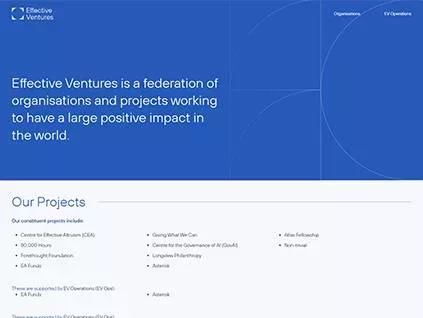
Effective Ventures
HTML5 , WordPress

Legal Network International
HTML5 , WordPress

Optimizing Field Operations with a Tailored Mobile App for Osho Chemical
Executive Summary Osho Chemical Industries Ltd, a prominent provider of agrochemicals and industrial solutions in Africa, faced challenges with manual workflows, inefficient customer assignments, and high...


Fueling OpsCTRL's Digital Transformation With Biztech: A Case Study on Enhanced Productivity
OpsCTRL is internationally renowned for its expertise in dynamic process modeling; especially for model-supported design of process control solutions. This project aimed to streamline their global operations,...

An ERP solution to manage school’s operations
Executive Summary Biztech, a renowned provider of technology solutions, undertook the task of restructuring the Magento website for El Camino Real Charter High School, a prominent educational institution...
Tech Updates from Team BiztechCS
At BiztechCS, we keep you at the edge of technology with the latest updates, news, and trends influencing the IT industry. Our blog has a unique approach and is well-researched to give you a fresh perspective on technology.

How Much Does It Cost To Build An AI App in 2026?
Introduction Creating an AI app in 2025 may prove to be quite challenging, though the process can be an exhilarating experience. The expense required to develop such an app depends...
25+ Profitable AI Business Ideas for 2026
Introduction AI is moving industries faster than ever, opening up new doors for startups and entrepreneurs. By 2025, AI-powered businesses will add over $15 trillion to the global economy....
Why AI Facial Recognition System is the Future of Cybersecurity?
Introduction Traditional security methods are finding it difficult to keep up with the increasing sophistication of cyber attacks. Facial recognition software driven by artificial intelligence...Achieve Faster Time-to-Market with Tailored Plugin Development Solutions
Our custom plugin development services are designed to accelerate your project timelines and deliver efficient, scalable solutions quickly.

Solve Business Challenges
Our plugin development services are designed to solve your business’s most pressing challenges. Whether it’s automating manual processes or improving system efficiency, our tailored plugins address key pain points. By streamlining workflows, we help you reduce errors, cut costs, and optimize your operations.

Seamless System Integration
Partnering with a reliable plugin development company like ours, we ensure seamless integration with your existing systems. We eliminate the complexity of connecting different tools, creating a cohesive digital ecosystem. This integration ensures smoother data flow, better collaboration, and more effective use of your technology stack.

Improve Data Connectivity
Our plugins enhance data connectivity across all your platforms, enabling real-time synchronization and accurate insights. By improving the way data moves through your systems, we help you make more informed, data-driven decisions. This increased connectivity enhances business intelligence and optimizes performance.

Increase Agility & Flexibility
Tailored plugin development empowers your business with greater agility and flexibility. We build scalable solutions that can quickly adapt to changing needs and market conditions. This agility allows your business to stay ahead of the competition and respond faster to new opportunities.

Boost ROI with Automation
By automating key processes, our plugins significantly boost your return on investment. We help you streamline repetitive tasks, freeing up resources for higher-value activities. Automation improves efficiency, reduces human error, and drives long-term cost savings, delivering measurable ROI.

Why do Leading Businesses Rely on BiztechCS for Plugin Development?
Boost your online performance with a trusted plugin development company. We provide tailored plugin development services that address your unique business needs and challenges, helping you stay ahead in a competitive landscape.
- Customized Solutions
- Scalability Support
- Seamless Integration
- Robust Security
- Fast Deployment
- Expertise in Plugins
- Ongoing Support
- Agile Development
- Industry Experience
- Cost-Effective Services
Custom Plugin Solutions Tailored for Efficiency and Growth
Transform your business with custom plugin solutions designed to streamline operations and drive growth. Our expertise in developing tailored plugins ensures seamless integration, enhanced functionality, and improved business performance.
Let’s optimize your business together!
Frequently Asked Questions
What is a plugin and why would a business need one?
A plugin is a piece of software that adds specific functionality to an existing platform or application without modifying the core system itself. Rather than rebuilding an entire platform to add a new capability, a plugin extends what is already there in a modular, contained way.
Businesses need plugins when their existing platform — whether a CMS, eCommerce store, CRM, or web application — does not natively support a workflow or feature they require. Rather than switching platforms or building from scratch, a plugin adds exactly what is needed while leaving the rest of the system intact.
What is the difference between a custom plugin and an off-the-shelf plugin from a marketplace?
Marketplace plugins are built for general use cases and need to work across a wide range of setups. This often means they include features a business does not need, lack features it does need, and may conflict with other plugins or customizations already in place. They also come with ongoing dependency on the original developer for updates and support.
A custom plugin is built specifically for one business’s requirements. It does only what is needed, integrates cleanly with the existing system, and is owned entirely by the business that commissioned it. For workflows that are genuinely specific to how a business operates, a custom plugin tends to be more reliable and easier to maintain long-term than adapting a generic solution.
What types of custom plugins can be developed?
Custom plugins can be built for a wide range of platforms and purposes. Common examples include eCommerce plugins that add custom pricing logic, product configurators, or checkout flows; WordPress plugins that extend CMS functionality for specific content or workflow needs; integration plugins that connect two systems and automate data transfer between them; automation plugins that eliminate manual steps in repetitive processes; and reporting plugins that surface business-specific data in formats that standard tools do not provide.
The scope is largely determined by the platform the plugin is built for and the specific problem it needs to solve.
How long does custom plugin development typically take?
Development time varies considerably depending on the complexity of what the plugin needs to do. A straightforward plugin with a narrow, well-defined function can be completed in a few weeks. A plugin with complex business logic, multiple integrations, or a significant user interface can take several months.
The most important factor in timeline accuracy is how clearly the requirements are defined before development begins. Plugins where the expected behavior is fully mapped out upfront tend to be delivered more predictably than those where the scope evolves during development.
What does plugin customization involve?
Plugin customization refers to modifying an existing plugin — either one sourced from a marketplace or a previously developed custom plugin — to better fit a business’s specific needs. This might involve adding new fields or options, changing the logic of how the plugin behaves in certain conditions, altering its user interface, or extending it to handle edge cases it was not originally designed for.
Customization is often a practical middle ground between using a plugin as-is and building something entirely new. It makes sense when an existing plugin covers most of what is needed but falls short in specific areas that are important to the business.
What is plugin integration and how does it improve business operations?
Plugin integration involves connecting a plugin with other systems in a business’s technology stack so that data flows automatically between them. For example, a plugin on an eCommerce platform might be integrated with an inventory management system, an accounting tool, or a CRM so that orders, stock levels, and customer data stay synchronized without manual intervention.
Without integration, teams often end up re-entering data across multiple systems, which is time-consuming and error-prone. Well-executed plugin integration removes this friction, gives teams a more accurate view of data in real time, and frees up time that was previously spent on manual reconciliation.
How is security handled in custom plugin development?
Security in plugin development starts with following the security standards and coding practices of the platform the plugin is built for. This includes proper input validation to prevent injection attacks, secure handling of any data the plugin processes or stores, appropriate authentication checks before sensitive actions are allowed, and avoiding the exposure of internal system details through error messages or logs.
Custom plugins are generally more secure than widely distributed marketplace plugins in one respect — they are not publicly known targets. Marketplace plugins, particularly popular ones, are regularly probed for vulnerabilities because attackers know they are installed on thousands of sites. A custom plugin built for one business does not carry that same exposure.
What platforms can custom plugins be developed for?
Custom plugins can be developed for most major platforms that support plugin or extension architecture. Common examples include WordPress and WooCommerce, Magento, Shopify, Odoo, Salesforce, various CRM and ERP platforms, and custom web applications built on frameworks like Laravel, .NET, or Node.js.
The technical approach differs by platform — each has its own APIs, hooks, and conventions for how plugins are structured and how they interact with the core system. Choosing a development team that has specific experience with the platform in question matters more than general development experience alone.
What ongoing maintenance do custom plugins require?
Plugins need to be maintained over time for several reasons. The underlying platform they run on releases updates, and plugins need to be tested and updated to remain compatible with each new version. Security vulnerabilities are occasionally discovered in dependencies or in the plugin’s own code, and these need to be patched promptly.
Business requirements also evolve. A plugin that was accurate when first built may need adjustments as processes change, new edge cases emerge, or the plugin needs to be extended to handle additional scenarios. Treating a plugin as a finished product after launch tends to result in it gradually becoming a liability rather than an asset.
How should a business evaluate whether to build a custom plugin or reconfigure their existing system?
The key question is whether the gap between what the current system does and what the business needs is a configuration problem or a functionality problem. If the platform has settings or options that could achieve the desired outcome with the right configuration, custom development is likely unnecessary.
If the platform genuinely does not support the required behavior — no matter how it is configured — then a custom plugin is the appropriate solution. It is also worth considering the cost of the workaround being used in the absence of proper functionality. Businesses that are solving a missing capability through manual effort, spreadsheets, or disconnected tools often find that the cost of a custom plugin pays for itself quickly in time and error reduction.